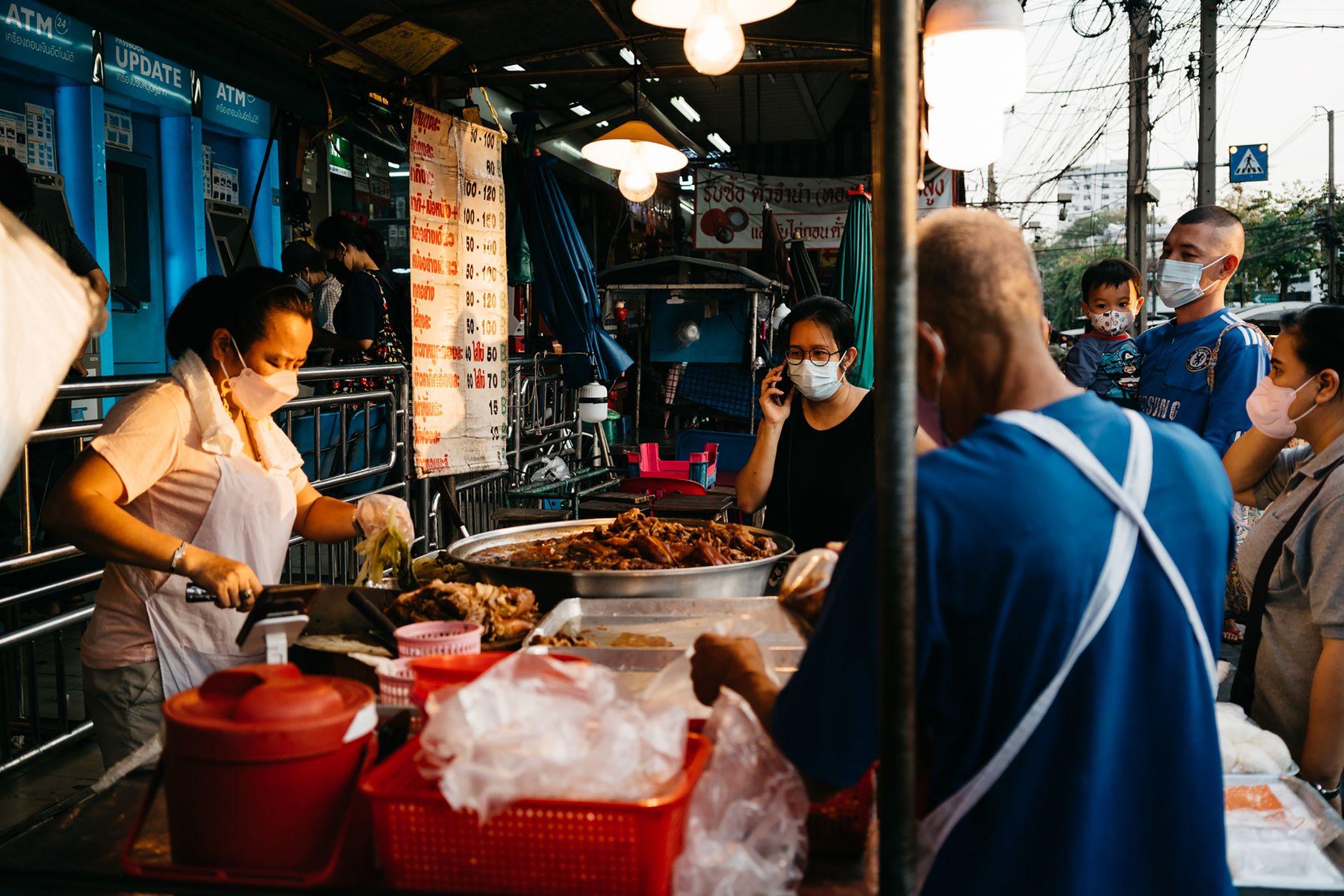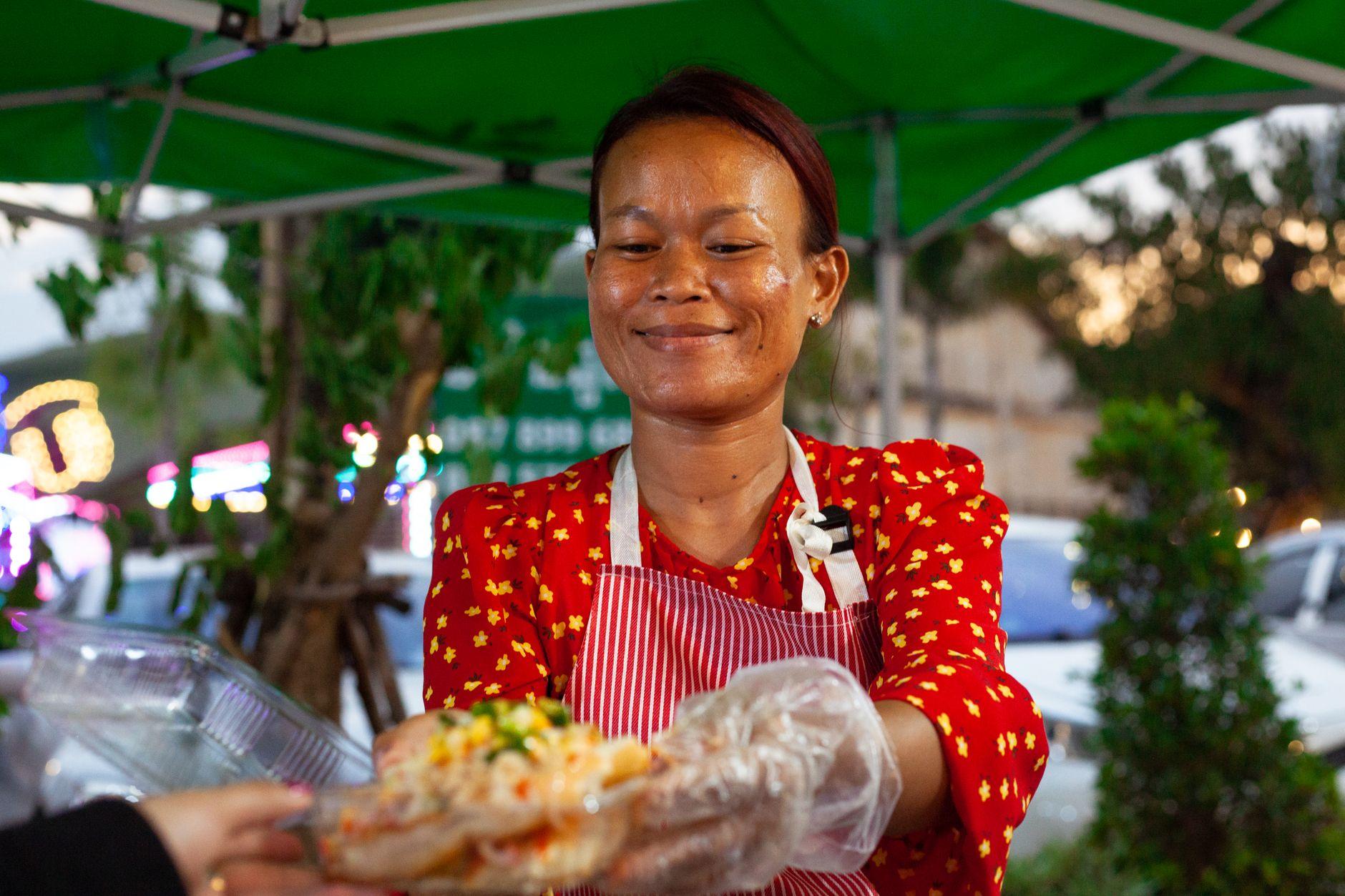

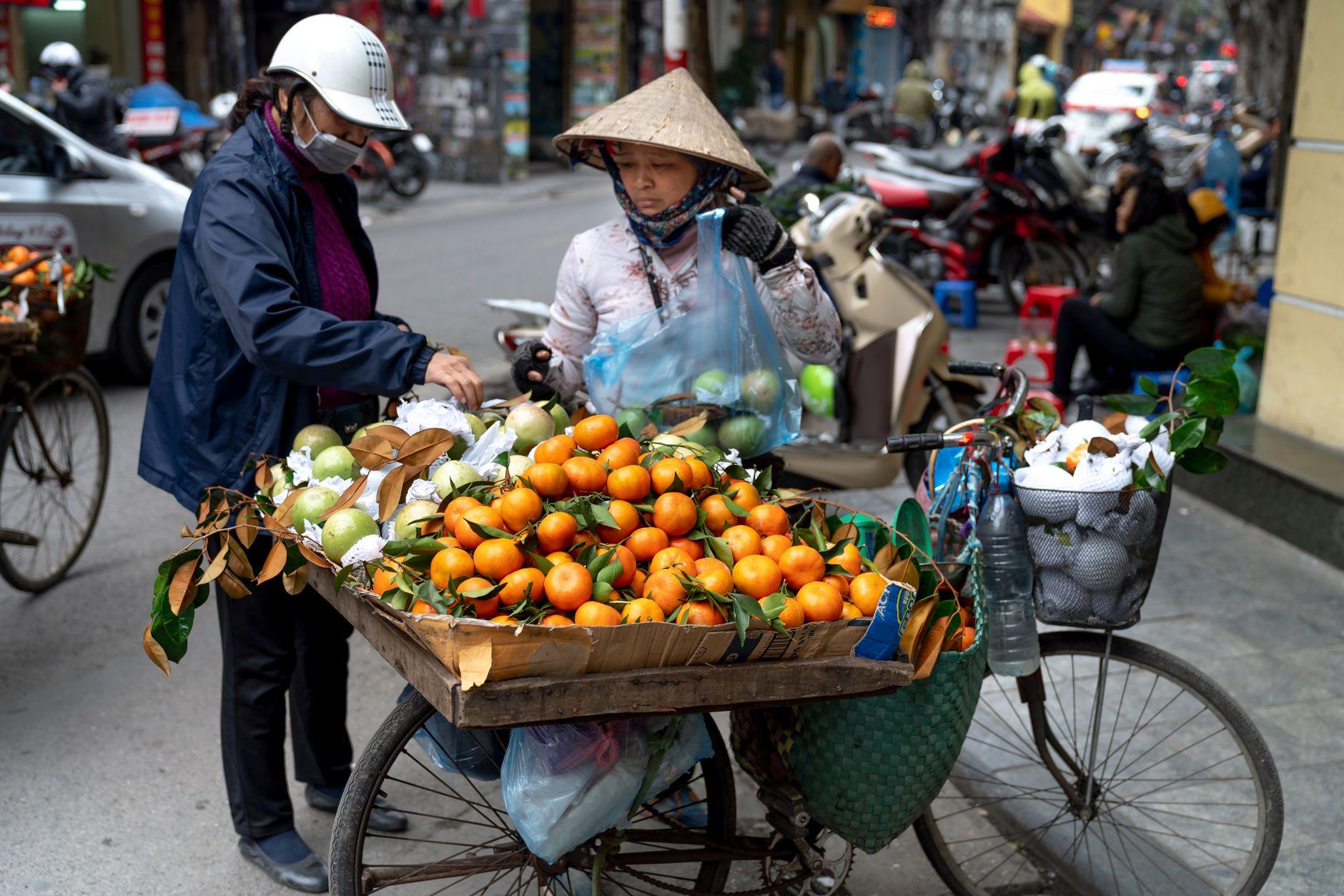
The banh mi cart on Ly Quoc Su street in Hanoi has a glass case, a charcoal grill, a stack of baguettes, and one more piece of equipment: a laminated square of paper zip-tied to the frame. A woman in office clothes orders, points her phone at the square for about two seconds, shows the vendor her screen, and walks off with her sandwich. No wallet ever appears. The next three customers do exactly the same thing.
That laminated square is VietQR, and once you start noticing it, you will see it everywhere: taped to the espresso machine in third-wave coffee shops in Saigon, propped against the fruit scale at the market in Da Lat, stuck to the dashboard of taxis, printed on a sun-faded card at a beach chair rental in Da Nang. For locals, it is simply how you pay. For visitors, it has usually been a window they could look through but not open. That is the part worth fixing before your trip.
How Vietnam ended up paying by bank app
Vietnam leapfrogged the card terminal almost entirely. Instead of every shop buying a machine, the banks agreed on a shared QR standard, and now every Vietnamese banking app can scan every VietQR code. The merchant's cost of accepting digital payment is a printout and a piece of tape, which is why a cart selling sticky rice for pocket change can take QR payments while a mid-range restaurant in the same city might still look at your foreign Visa card with mild suspicion.
And that is the trap for travelers. The places where foreign cards work reliably in Vietnam are hotels, shopping malls, and international chains. Step outside that bubble, into the places you actually came for, and it is QR or cash. The street food stall, the family-run cafe with the tiny plastic stools, the tailor, the motorbike mechanic, the lady selling mangoes off a bicycle: many of them have a VietQR code, and almost none of them have a card machine.
The cash fallback is worse here than you think
Yes, cash still works nearly everywhere in Vietnam, and you should carry some. But relying on it exclusively gets tiring fast. Vietnamese dong comes in large numbers, so a coffee, a meal, and a Grab ride can leave you doing six-digit arithmetic all day. Two of the most common notes are similar shades of blue, and the difference between them is enormous, a classic and expensive mix-up for tired arrivals paying a driver at night. Vendors often struggle to break large notes from the ATM first thing in the morning. And the ATM itself means withdrawal limits, machine fees, your own bank's fees, and planning your day around finding one that works with your card.
Locals quietly solved all of this years ago by scanning instead. The frustrating part for visitors has been that VietQR normally assumes a Vietnamese bank account, which you cannot open on a tourist visa in any practical way. Same story as in several neighboring countries, where the local QR system is brilliant and also closed to outsiders by default. If you have read about paying with QR codes as a foreigner in Cambodia, the shape of the problem will feel familiar.
Scanning the same codes locals scan
This is where Moreta Pay earns its spot on your home screen. You load the wallet before or during your trip from your own bank (US bank connection, ACH, SEPA from Europe, UK Faster Payments, Canadian e-Transfer) or an international card, in your own currency. In Vietnam, you then scan the exact same laminated VietQR code the office worker at the banh mi cart scanned. The app shows you the amount, the exchange rate, and the merchant's name before you confirm anything, converts from your balance, and the vendor gets paid in dong instantly. No Vietnamese bank account, no SIM card requirement, no begging the hotel to break a large note.
The confirmation screen matters more than it sounds. Because you see the FX rate and the dong amount side by side before you tap confirm, the mental math problem disappears. You are no longer squinting at blue banknotes wondering whether that bowl of pho is costing you a reasonable amount or a ridiculous one. The price is right there in a currency your brain actually speaks.
A day in Vietnam, paid by phone
Here is how it plays out in practice. Morning coffee at a cafe in District 3: the QR code is in a little acrylic stand next to the napkins, scan, confirm, done. Lunch at a bun cha place where the menu is a board on the wall: the owner points at the laminated code taped to the cash drawer. Afternoon at Ben Thanh or Dong Xuan market: haggle first, agree on a price, then scan, and note that showing the vendor your confirmation screen is part of the ritual, just as it is for locals. Evening Grab back to your hotel, a late-night banh mi, maybe a fruit smoothie from a cart. Every one of those stops likely has a scannable code, and the total number of banknotes you handled all day could be zero.
It extends beyond the street, too. QR-based checkout shows up on the online platforms travelers in Vietnam actually use, so a Shopee order to your hotel or a booking on Trip.com or Agoda can run through the same wallet instead of a card that may trigger a foreign transaction fee or a fraud block.
Where you still want paper money
Honesty time: Vietnam is not cashless, and you should not try to be. Keep a modest stash of small notes for rural areas, remote stretches of the Ha Giang loop, tiny village stalls, temple donations, public restrooms, and the occasional vendor whose QR printout has faded past the point of scanning. The realistic plan is QR-first with cash as a backup, which flips the usual tourist approach on its head. One moderate cash reserve, topped up rarely, instead of an ATM run every other day.
If Vietnam is one stop on a longer Southeast Asia route, the same wallet carries over. The specific QR system changes at each border, PromptPay in Thailand, DuitNow in Malaysia, but the gesture stays the same, and Moreta Pay handles the local network in each supported country. There are some persistent misconceptions about this in Thailand especially, which we unpacked in our piece on the myths that cost visitors money there.
Before your flight lands in Hanoi or Saigon
Set up takes a few minutes and is far easier done on good wifi at home than in an arrivals hall. Download the app, connect your bank or card, load a balance in your own currency, and you land ready to scan. The first time you pay a street vendor the way every local around you is paying, with the rate shown transparently before you confirm, the laminated square stops being a mystery and starts being the most convenient thing about traveling in Vietnam. Get your wallet ready before the trip at Moreta Pay and leave the ATM map behind.