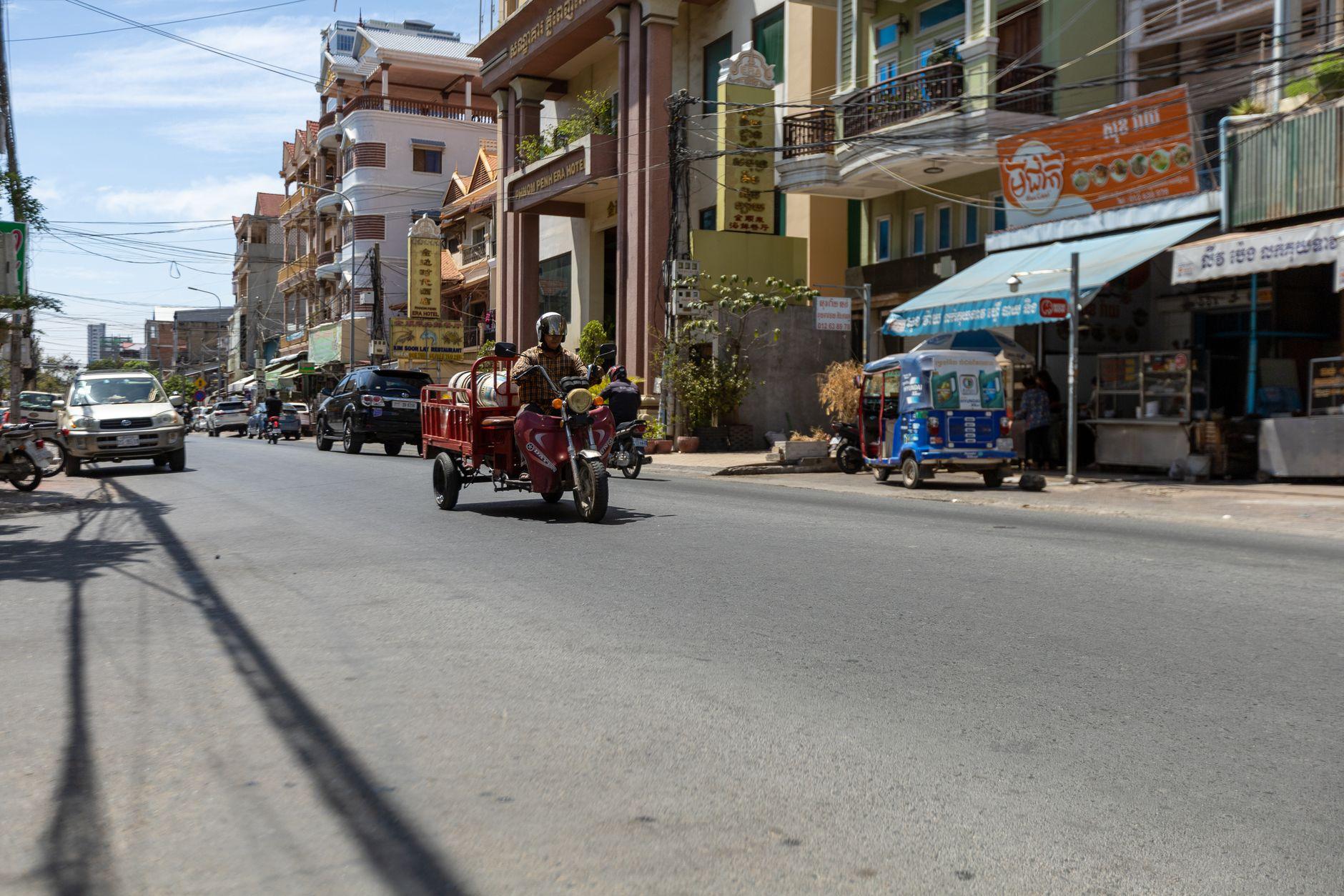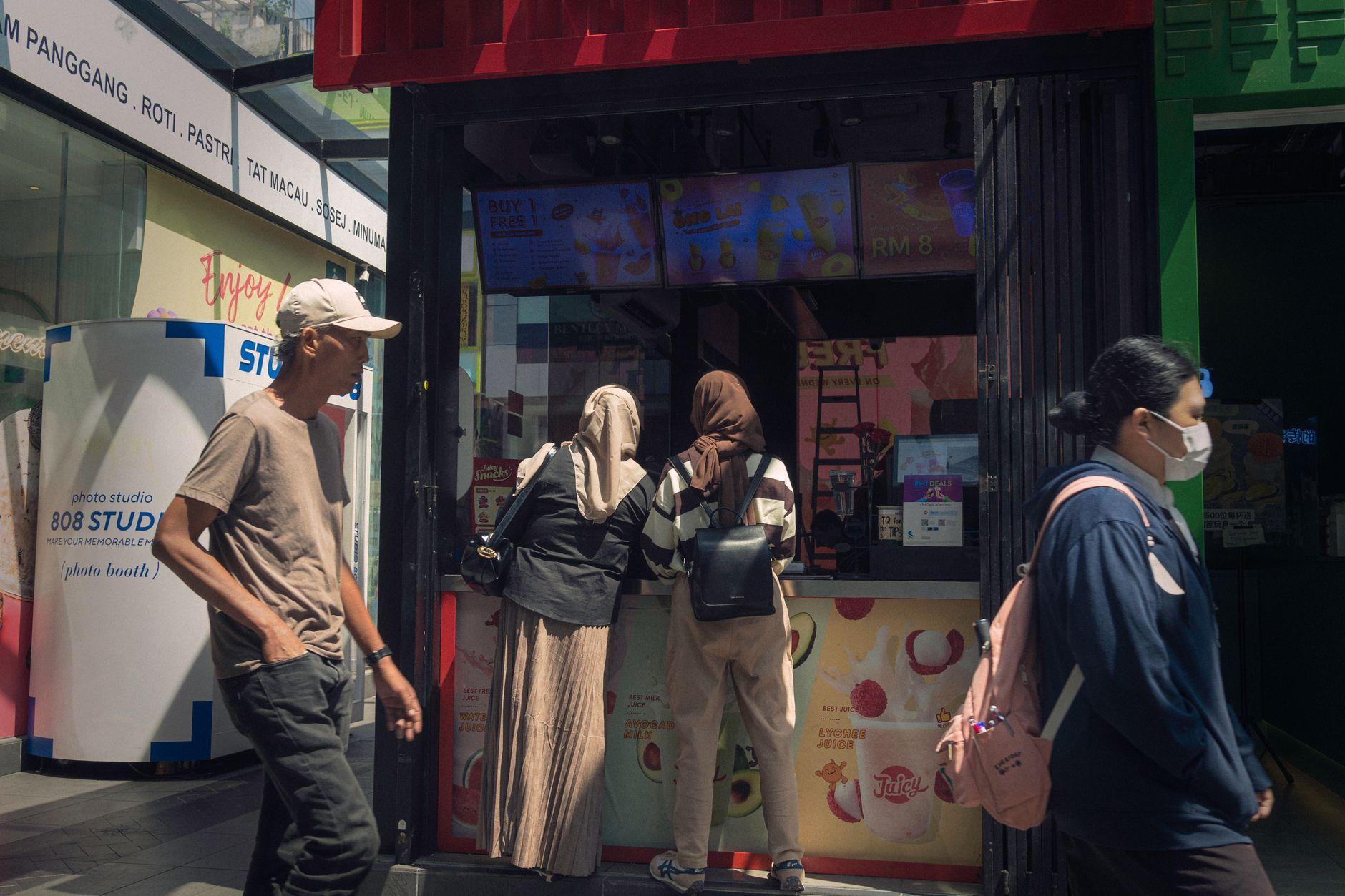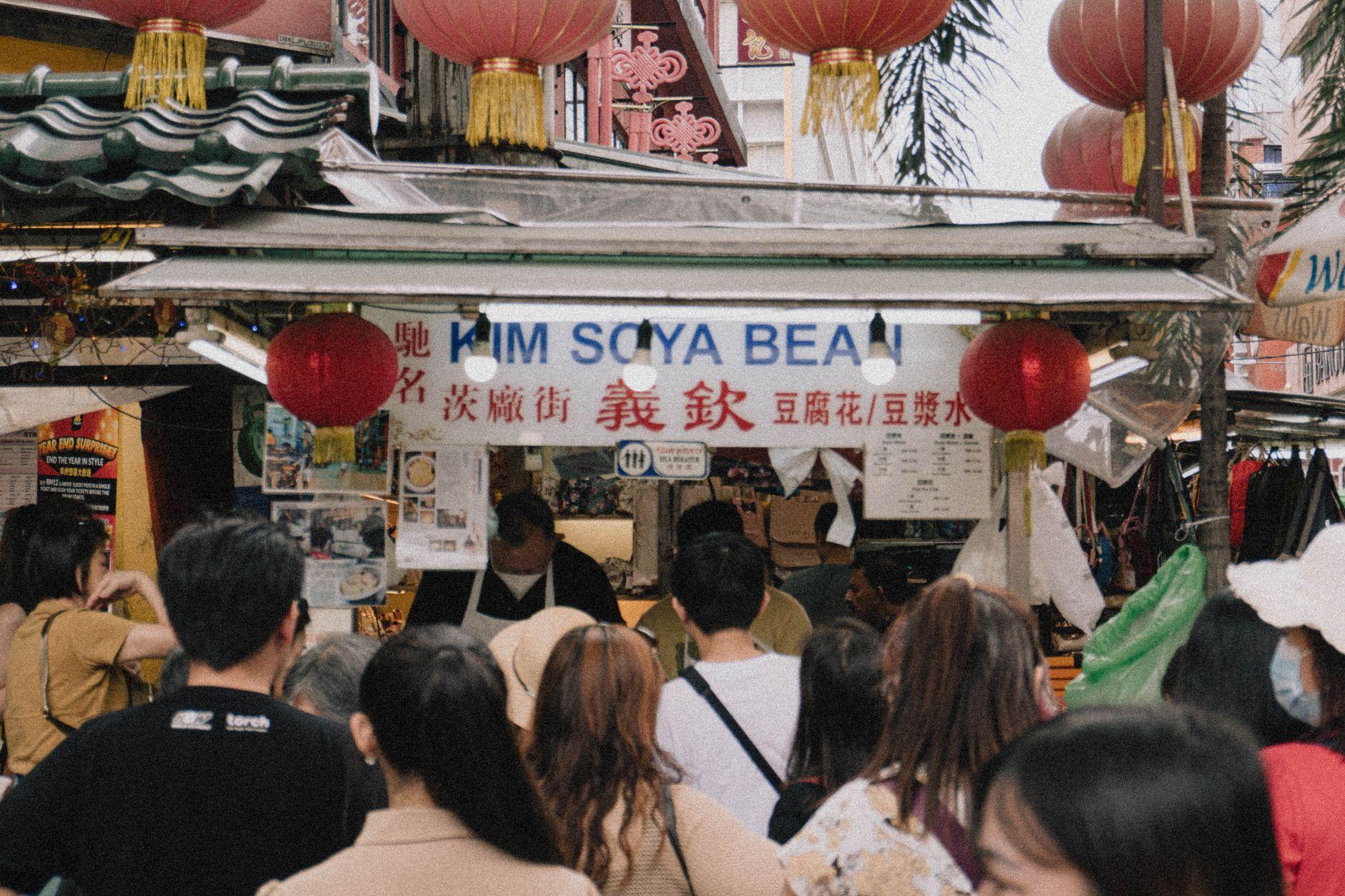

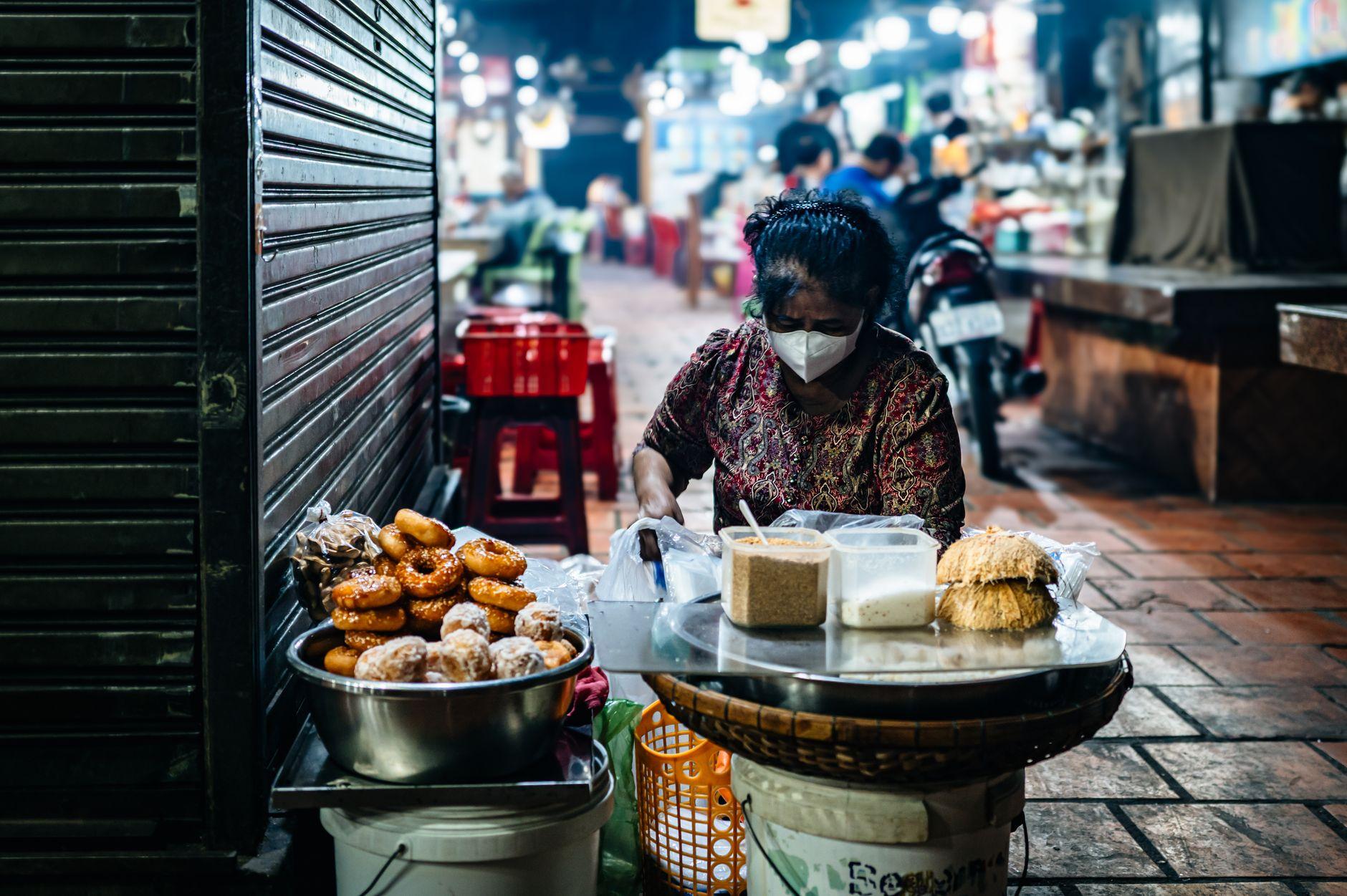
A juice vendor at Phnom Penh's Russian Market props a laminated KHQR card against a pile of dragon fruit. It looks like the Pix QR code taped to a pastel stall in São Paulo, and like the WeChat Pay sticker beside a Chengdu noodle counter. The owners behind them are different. KHQR and Pix belong to central banks. The National Bank of Cambodia and the Banco Central do Brasil set the rules, and any licensed institution in the country can read the code. WeChat Pay belongs to Tencent, a private company, and its codes settle inside its own wallet. For a traveler, the operator decides which app can pay the code. Moreta builds Moreta Pay, a wallet that pays both kinds of network in its supported markets.
A QR code is only a label. The network behind it decides who can pay it. Central bank rails such as Pix, KHQR, Bre-B and Transferencias 3.0 are open to every participating institution and settle in seconds. Private wallets such as WeChat Pay are closed loops. The code pays only from inside that company's wallet. Even the best travel money card runs on card networks, so it cannot pay a QR-only stall. You need an app connected to the local rail.
About the Author: Moreta Global Inc. is a Delaware corporation backed by Y Combinator (Summer 2024 batch) and registered with FinCEN as a money services business. Its app, Moreta Pay, lets travelers without a local bank account pay Pix, KHQR, DuitNow QR and WeChat Pay codes.
Who runs a national QR network like Pix or KHQR?
A national QR network is a payment system run or governed by a central bank. Every participating bank and wallet prints codes in one shared format and settles through one shared system. That shared ownership is why a sticker on a market stall can be read by almost any local app.
- Pix (Brazil): Run by the Banco Central do Brasil. It operates around the clock, settles in a few seconds, and requires institutions with large user bases to take part.
- KHQR (Cambodia): Built on the EMV QR standard and settled in real time on Bakong, the National Bank of Cambodia's system running on Hyperledger Iroha. Each participating bank sets its own limits.
- Bre-B (Colombia) launched in 2025 under the Banco de la República, and Transferencias 3.0 (Argentina) launched in 2021 under the Central Bank of Argentina.
Think of a national rail as a postal address system. Every bank writes addresses the same way and hands mail to the same sorting center, so any sender reaches any recipient. Asia built this interoperable model early, and it is now extending to cross-border scanning [spark.money]. The United States is catching up too. The X9 standards body began work on a payment QR standard in 2024 [americanbanker.com] and published X9.150 in 2026 for interoperable account-to-account payments [google.com]. Instant QR payments have also been featured by the Federal Reserve's payments arm [frbservices.org].
How is a private wallet like WeChat Pay different?
A private wallet QR uses the opposite design. One company issues the code, holds the balances, and settles on its own ledger. Central bank rails typically keep consumer payments free, settle in central bank money, and require interoperability. Private wallets often charge merchants fees, settle in commercial money, and run as closed loops.
Neither model is broken. In China, the two private wallets dominate.
| Country | QR network | Who runs it | Model |
|---|---|---|---|
| Brazil | Pix | Banco Central do Brasil | Central bank rail |
| Cambodia | KHQR | National Bank of Cambodia (Bakong) | Central bank rail |
| Colombia | Bre-B | Banco de la República | Central bank rail |
| Argentina | Transferencias 3.0 | Central Bank of Argentina | Central bank rail |
| Malaysia | DuitNow QR | National QR standard shared by banks and wallets | Interoperable national standard |
| China | WeChat Pay (Weixin Pay) | Tencent | Private closed-loop wallet |
Why can't a foreign card pay these QR codes?
Who runs the network matters less to a traveler than who can join it, and here both models put up the same wall. Your card pays through the card network that a terminal is wired to. A KHQR sticker at a Kampot pepper stall is not a card terminal. It routes over Bakong, and only institutions on that rail can push money through it.
Only institutions on the underlying payment rail can process the code. So the barrier is not the sticker. It is access to the rail behind it.
How do WeChat Pay and Alipay work for foreigners?
Read the sticker. Many Chinese counters display both. Moreta Pay pays WeChat Pay codes, but only while you are physically in China. A code marked only for Alipay belongs to a different network. If you are searching for Alipay for foreigners, you would need to set that up through Alipay itself.
How do you pay a Pix QR code or KHQR as a tourist?
Pix for tourists works the same way as KHQR in Cambodia or DuitNow QR in Malaysia. You need an app that connects to the rail. With Moreta Pay:
- Top up in your own currency. You can use US ACH, SEPA, UK Faster Payments, Interac e-Transfer, a Visa, Mastercard, American Express or Discover card, Apple Pay, or Google Pay. USDC and USDT on Solana also work, but stablecoin funds cannot be spent in Cambodia or China.
- Scan the merchant's code, or import it from a screenshot.
- Check the merchant name, the local amount and the exchange rate on the review screen.
- Slide to pay. The merchant receives reais, ringgit or riel.
Each payment costs one 1.5% fee, with no monthly plan and no markup added to the live rate.
The app needs mobile data or Wi-Fi at the moment you pay. Keep a modest reserve: a few 1,000-riel notes for a tuk-tuk outside Siem Reap or a temple donation box, and some 10 BRL notes for a coconut seller on a beach with no signal. If a card terminal offers to charge you in dollars, decline. Always choose local currency.
Frequently Asked Questions
Can tourists use Pix without a Brazilian bank account?
Yes, through an app connected to Pix via a licensed local route. Moreta Pay is one option.
Is KHQR the same as Bakong?
No. KHQR is the code standard used across Cambodia. Bakong is the National Bank of Cambodia's system that settles those payments.
Does the best travel money card work at QR-only stalls?
No. A card pays only through card networks. A QR-only stall needs an app on the local QR rail.
Does VietQR for foreigners work on the same principle?
Yes. VietQR is Vietnam's shared interbank standard. We covered how visitors get locked out of MoMo, and how to get around it, in our Vietnam guide.
Can I pay WeChat Pay codes before I arrive in China?
Not with Moreta Pay. WeChat Pay payments work only while you are physically in China.
What should I set up before landing?
- Verify your identity in Moreta Pay with your passport and a selfie. It usually takes a few minutes.
- If you are heading to Cambodia or China, fund with a bank transfer or card, not stablecoins.
- Withdraw a small cash reserve in local notes for places with no signal.
About Moreta
Moreta Global Inc. builds Moreta Pay, a wallet that lets travelers, expats and nomads pay local QR codes across Asia and Latin America without a local bank account or SIM. It connects to central bank rails such as Pix, KHQR, Bre-B and Transferencias 3.0, national standards such as DuitNow QR and QR Ph, and WeChat Pay in China. Every payment shows the merchant name, amount and exchange rate before you confirm, and funds are held with licensed partner banks. The company is backed by Y Combinator and registered with FinCEN as a money services business.
To check the networks in your next destination, visit Moreta.