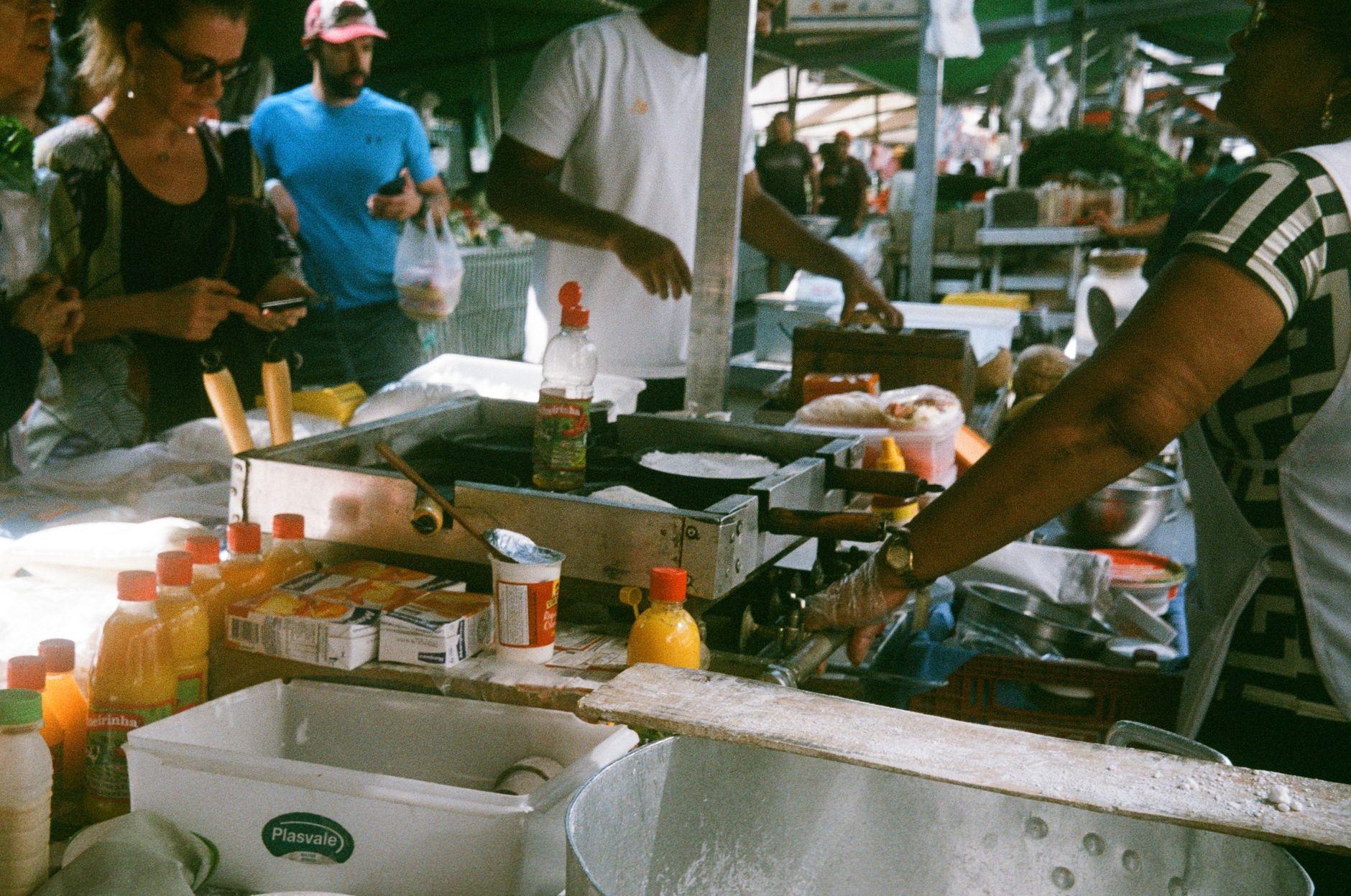

It's a little before noon in Sopocachi, which in La Paz means one thing: salteña hour. The line at the corner stand moves fast. The woman ahead of you takes her salteña, holds her phone over a laminated square taped to the glass case, taps twice, and walks off balancing the pastry so the juice doesn't escape. Then it's your turn, and you hand over a crisp 100 boliviano note fresh from the airport ATM. The vendor's face falls. No tiene sencillo? She digs through a tin of coins, flags down the juice seller next door, and three minutes later you have your change, your salteña is lukewarm, and the line behind you has opinions.
That laminated square is the answer to a question every visitor to Bolivia eventually asks: how do people here actually pay for things? Increasingly, in the big cities, the answer is that square.
The sticker has a name: QR Simple
QR Simple is Bolivia's interoperable QR payment standard. The idea is straightforward. A merchant displays one code, and a customer with any participating Bolivian bank app can scan it and pay in bolivianos, instantly, from their account. One sticker works for everyone, which is why you see the same style of code at salteña stands, pharmacies, mini markets, café counters, and market stalls in La Paz and Santa Cruz.
It matters to understand what QR Simple is not. It is not a single app you download. It's a standard that the banks plug into, the same way Vietnam's ubiquitous counter codes work across that country's banking apps. The vendor doesn't care which bank you use. She cares that the money lands now and that she doesn't have to hunt for change.
Why Bolivians adopted it so enthusiastically
Bolivia is still a cash-heavy economy, and anyone who has spent a week there knows the national sport that comes with it: the search for sencillo. Small change is a scarce resource. Taxi drivers sigh at 50s. Market vendors treat a 200 like a personal insult. Shops will sometimes round your total or hand you a piece of candy instead of coins.
QR payments dissolve that entire problem. The exact amount moves, no change required, and the vendor doesn't have to guard a cash box all day. That practical relief, more than any grand digital vision, is why QR Simple codes have spread so quickly across counters in La Paz and Santa Cruz. It's not everywhere yet, and it thins out fast outside those two cities, but inside them it has gone from novelty to habit.
The part that frustrates visitors
Here's where the salteña line gets awkward again. The apps that scan QR Simple codes are Bolivian bank apps, and Bolivian bank apps require a Bolivian bank account. Opening one as a short-term visitor is somewhere between impractical and impossible, and nobody flies to Bolivia for a week of branch appointments.
This is the gap Moreta Pay exists to close. You top up a wallet from your own bank at home (US bank via Plaid or ACH, SEPA in Europe, UK Faster Payments, Canadian e-Transfer, or an international card), in your own currency. Then you scan the same QR Simple code the local in front of you just used. Before you confirm, you see the amount in bolivianos, the exchange rate, and the merchant's name on one screen. Tap confirm and the vendor is paid instantly in bolivianos, the same as if a paceño had done it. No Bolivian account, no cash, no change negotiation.
Where QR carries you through a day
In La Paz and Santa Cruz, a surprising amount of your daily spending can run through a QR code once you're set up:
- Food: salteña stands, almuerzo spots, cafés in Sopocachi and San Miguel in La Paz, and the café-dense blocks of Equipetrol in Santa Cruz increasingly have a code at the register.
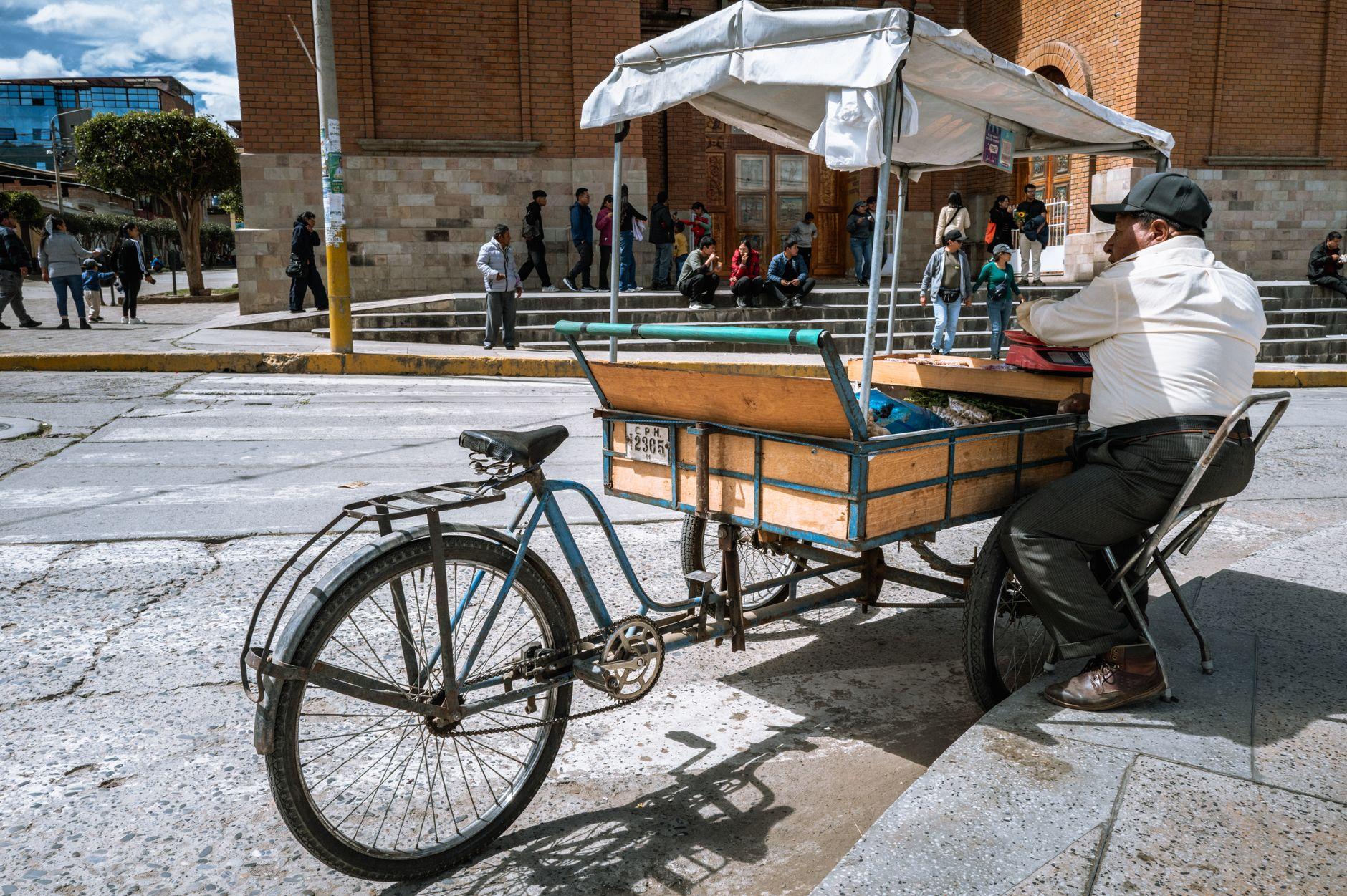
- Markets: plenty of stalls in the bigger city markets now keep a laminated code next to the scale. Not all, but enough that asking "¿Tiene QR?" is a normal question, not a strange one.
- Pharmacies and mini markets: these were early adopters, and they're everywhere.
- Shops and services: barbers, print shops, small boutiques. If there's a counter, there's a decent chance there's a code taped to it.
The rhythm becomes pleasant quickly. You stop doing boliviano arithmetic in your head, stop rationing small bills, and stop apologizing for large ones.
Where you absolutely still need cash
Be clear-eyed about the limits, because they're real. QR Simple's momentum is a big-city story. Once you leave La Paz, Santa Cruz, and to some extent the other larger cities, Bolivia runs on paper money.
- Uyuni and the salar circuit: tour operators, hostels, and comedores in Uyuni town largely expect cash. Bring what you need for the whole excursion.
- Copacabana and Lake Titicaca: cash territory, including the boat to Isla del Sol and everything on the island.
- Rurrenabaque and the lowlands: plan your cash before the flight or bus, not after.
- Transport: micros, trufis, and most street-hailed taxis are cash, in small bills, full stop.
And here's the trap that catches people: few ATMs outside the big cities accept foreign cards. If you arrive in a small town assuming you'll withdraw there, you may spend an afternoon walking between machines that decline you. The workable pattern is to use QR for as much as possible in the cities, and treat cash as something you stock deliberately before heading anywhere remote. We went deep on that logistics problem in our earlier piece on Bolivia's ATM situation, and the short version is: never leave La Paz or Santa Cruz with less cash than your whole side trip needs.
A routine that actually works
Pulling it together, here's the setup that keeps a Bolivia trip smooth:
- Before you fly, set up Moreta Pay and top up your wallet from your home bank, so you land ready to scan rather than ready to queue at an airport ATM.
- In La Paz and Santa Cruz, default to QR. Ask "¿Puedo pagar con QR?" anywhere you don't see a code, because sometimes it lives under the counter.
- Keep a modest cash buffer in small bills for taxis, micros, and the stalls that haven't joined yet. Break big notes at supermarkets, where change is never a drama.
- Before any trip to Uyuni, the lake, the Yungas, or the lowlands, withdraw or set aside enough cash for the entire excursion, plus a margin.
Bolivia rewards travelers who understand its two-speed payment reality: a fast-growing QR economy in the big cities, and a cash economy everywhere else. Handle both well and you'll spend your trip eating salteñas instead of hunting for sencillo. Get Moreta Pay on your phone before you land and the QR half of that equation is already solved.