
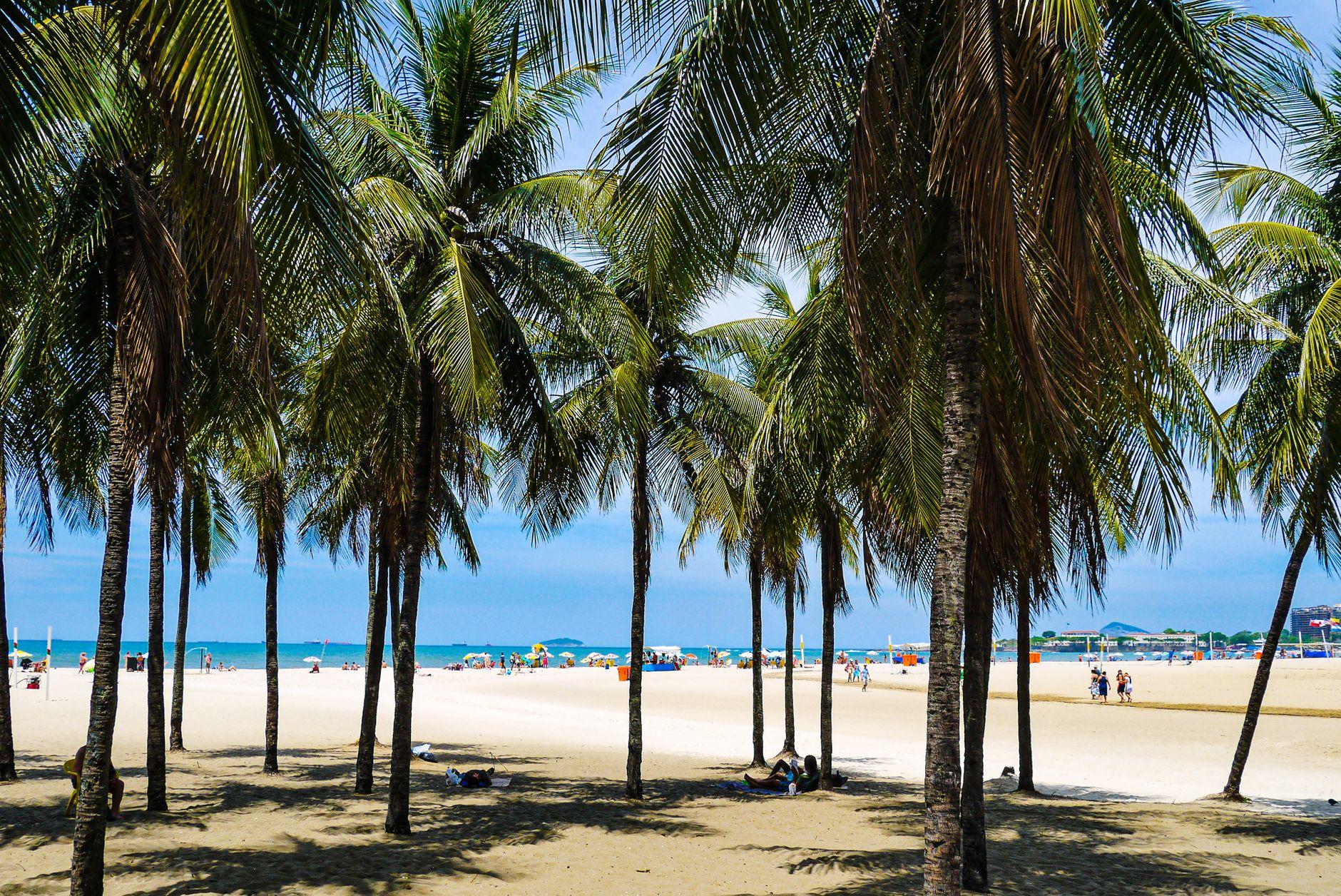
The first clue comes fast. You buy a coconut on Copacabana, reach for a banknote, and the vendor points at a laminated QR code taped to the cooler. "Tem Pix?" You do not have Pix. So begins a negotiation over change for a bill he would rather not touch.
Pix, Brazil's instant payment system run through every Brazilian bank app, is not a niche convenience. It is how the country pays. Beach vendors, Uber drivers settling off-app, market stalls at the feira, your pousada owner, the lady selling brigadeiros outside the metro, all of them show you a QR code before they show you a card machine. Tourists who arrive assuming Brazil works like Europe or the US spend two weeks paying more, waiting longer, and occasionally getting a polite no.
So let's weigh the actual options a visitor has, honestly, with the downsides included.
Option one: carrying reais and hoping for change
Cash still works in Brazil. Nobody will refuse reais at a bakery or a bus station kiosk. If you are heading somewhere remote in the interior, a cash reserve is sensible.
The problems are practical. ATM access for foreign cards can be inconsistent, machines frequently cap withdrawals at modest amounts, and fees stack on both sides, so people end up making repeated trips. If your bank claims to cover those costs, it is worth checking exactly how your debit card handles ATM fees abroad before you count on it. Then there is the street reality: in Rio and São Paulo, locals deliberately carry little cash, and walking out of an ATM with a thick fold of notes is the opposite of blending in. Small vendors also genuinely struggle to break a fifty for a ten-real purchase, because most of their customers paid by Pix and their cash drawer is thin.
Cash is a backup in Brazil. It is a bad primary plan.
Option two: tapping your foreign card on the maquininha
The little card machines, maquininhas, are everywhere, and Brazil is friendlier to international cards than many travelers expect. Supermarkets, pharmacies, mid-range restaurants, and malls will almost always take a foreign Visa or Mastercard.
But three things trip tourists up. First, foreign transaction fees and quiet FX markups from your home bank accumulate across a hundred small purchases, and you only see the damage on your statement later. Second, many small merchants would simply rather not take a card. Pix is faster for them and cheaper for them, so some quote one price for Pix and a higher one for card, or add a surcharge, or just shrug and say the machine is not working today. Third, the moment you leave tourist corridors, the share of places that are effectively Pix-first climbs quickly. A barraca at the Sunday feira in Ipanema, a moto-taxi in Salvador, a tattoo artist in Florianópolis: card acceptance gets patchy exactly where the interesting stuff happens.
Cards are a solid secondary tool in Brazil. They are not the cheapest option, and they are not the option merchants want.
Option three: getting your own Brazilian Pix
The gold standard, obviously, is having Pix yourself. The catch is what that requires: a CPF (Brazil's tax number) and a Brazilian bank or fintech account. Expats who are settling in long-term and have residency paperwork can and should go this route eventually. For a tourist on a two-week trip, or a nomad passing through for a month or two, the bureaucracy rarely makes sense, and some account types remain difficult without local status.
This is the gap that frustrates visitors most. The cheapest, fastest, most universally accepted payment method in the country sits right there, visible on every counter, and the standard tourist toolkit cannot touch it.
Option four: paying Pix QR codes from a travel wallet
This is the newer path, and it is the one built for people in exactly this position. Moreta Pay lets you top up a wallet from your home bank (US bank connection, SEPA from Europe, UK Faster Payments, Canadian e-Transfer) or an international card, in your own currency, and then pay the same Pix QR codes Brazilians scan. You point your phone at the vendor's code, see the amount, the merchant name, and the FX rate before confirming, and the merchant receives reais instantly through Pix.
The honest trade-offs: you need to top up before you spend, which takes a few minutes of planning on the plane or in your hotel. And like any phone-based payment method, it is only as safe as your phone habits, so it is worth understanding what actually happens to a QR payment app if your phone gets stolen, a real consideration in Brazilian cities where phone snatching exists.
What you get in return is access to the ecosystem itself. The coconut vendor's QR works. The Uber driver who asks for Pix instead of in-app payment works. Larger purchases work too, since Pix QR payments through the wallet go up to 16,000 BRL per payment, enough for a surf camp deposit or a month of coworking. And because the rate is on screen before you confirm, there is no statement surprise three days later.
The mistakes, restated as a comparison
Put the four options side by side and the classic tourist mistakes explain themselves.
Mistake: treating Brazil as a cash country. It was one. It is not anymore. Cash now means ATM hunts, change problems, and carrying what locals deliberately do not carry.
Mistake: assuming the card machine settles everything. It settles a lot, at a cost, and it quietly excludes you from the small-merchant economy where Pix is the expected answer.
Mistake: thinking Pix is locals-only, so not even trying. You cannot easily open a Brazilian account as a short-term visitor, true. But paying Pix QR codes no longer requires one. Scanning the same code everyone else scans, from a wallet funded in dollars, euros, or pounds, closes most of the gap.
Mistake: paying Brazilian websites the hard way. Pix QR codes show up at online checkouts too, on Shopee and travel platforms, and often as the preferred way to settle a booking or a bill in Brazil. A wallet that pays QR codes handles those the same way it handles the beach vendor.
What this looks like on an actual trip
A sensible setup for Brazil in 2026 is layered. A modest amount of cash in small notes for the rare holdout. One foreign card for hotels, car rentals, and anywhere that insists on it. And a Pix-capable wallet as the default for everything else, because everything else is where Brazil actually happens: the açaí stand, the feira, the churrascaria that splits the bill eight ways, the guide who takes you up Pedra do Gávea and texts you a QR code afterward.
The conclusion emerges on its own. The best way to pay in Brazil is the way Brazilians pay, and the barrier to joining them is now mostly a download. Set up Moreta Pay and load your wallet before you land, and the next time someone asks "tem Pix?" the answer is yes. Get your wallet ready for Brazil here.