
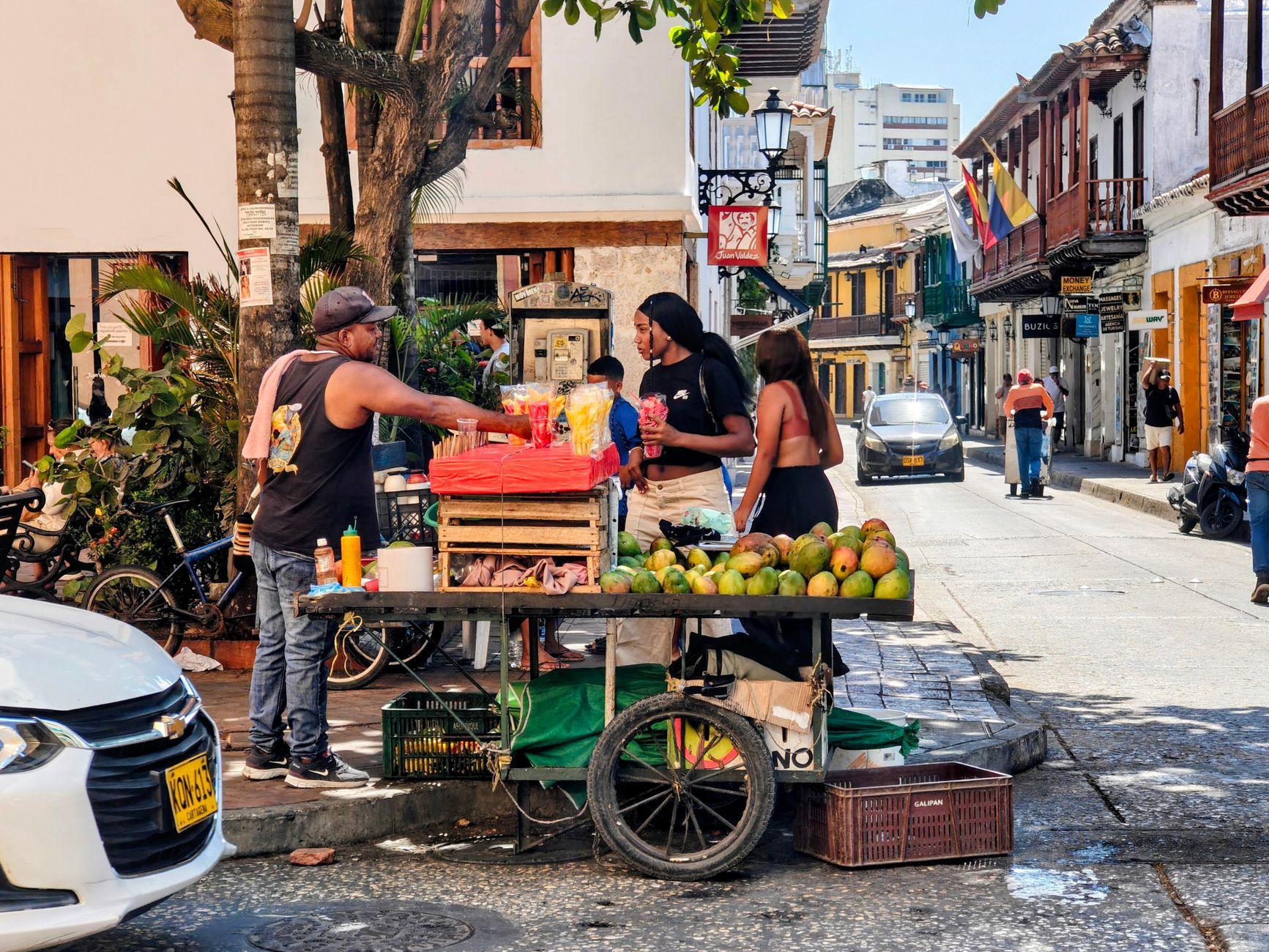
Ask a Colombian how they paid for their last empanada and there’s a good chance the answer involves a phone, not a wallet. Between Nequi, Daviplata, and Bancolombia’s QR codes, everyday payments in Colombia have quietly gone digital, and travelers keep arriving with a stack of pesos and a credit card that half the country would rather not touch. Here are the questions people actually ask before a trip to Colombia in 2026, answered straight.
How do locals actually pay for things in Colombia?
Mostly by scanning QR codes or transferring between digital wallets. Nequi (run by Bancolombia) and Daviplata (run by Davivienda) are the two apps you’ll hear constantly, and Bancolombia QR codes are taped to counters everywhere from Bogotá bakeries to Cartagena fruit stands. A vendor says the total, you scan, you confirm, done. Cards exist, of course, but for small daily purchases the QR sticker on the counter is the default.
Why do Colombians avoid handing over their cards?
Card cloning. It’s a real and widely discussed fear in Colombia, and it shapes behavior. Many locals simply don’t like their physical card leaving their hand, and plenty of small merchants never bothered getting a card terminal in the first place. QR payments solved both problems at once: nothing to clone, nothing to rent. So when you see a Medellín café with a QR code but no card machine, that’s not backwardness, it’s a deliberate choice. Understanding this makes the whole payment landscape click.
Can I just download Nequi or Daviplata as a foreigner?
Realistically, no. Both apps are built for Colombian residents. You’ll typically need a Colombian ID (cédula) and a Colombian phone number, and even people who technically qualify often hit verification walls. It’s the same frustration travelers run into with Yape in Peru: the local wallet everyone uses is effectively closed to short-term visitors. So the question becomes how to join the QR ecosystem without becoming a Colombian bank customer.
So how do I pay those QR codes without a Colombian bank account?
This is exactly what Moreta Pay exists for. You top up a wallet from your home bank (US bank via Plaid or ACH, European SEPA, UK Faster Payments, Canadian e-Transfer) or an international card, all in your own currency. Then in Colombia you scan the same QR code the local ahead of you just scanned. Before you confirm, you see the amount, the merchant name, and the exact FX rate. Confirm, and the merchant is paid instantly in pesos. No local account, no cash counting, and no hidden foreign transaction fees.
Is Medellín really that cashless?
Increasingly, yes, especially in the neighborhoods where digital nomads cluster. In El Poblado and Laureles, specialty coffee shops, coworking spaces, gyms, and even some street vendors lean heavily on QR. It’s entirely possible to spend a full working day in Medellín, coffee, lunch, an afternoon juice, a coworking day pass, without cash changing hands. Bogotá’s Chapinero and Usaquén feel similar. The pattern is familiar from other QR-first cities, but Colombia’s twist is that the card-cloning worry accelerated everything.
Do I still need to carry Colombian pesos?
Some, yes. Keep a modest amount of cash for buses and colectivos, tiny tiendas in small towns, market stalls in more rural areas, tips for guides and porters, and the occasional vendor whose phone battery died. Rural coffee country and remote Caribbean spots are more cash-dependent than the big cities. But the old advice of arriving with a thick envelope of pesos and hunting for ATMs every few days no longer matches how the country actually works. Think of cash as a backup layer, not your primary method.
What about Bre-B? Everyone keeps mentioning it.
Bre-B is Colombia’s push toward instant, interoperable payments, connecting the wallets and banks that used to live in separate silos. For travelers, the practical effect is that QR payments are becoming even more universal across merchants, regardless of which bank the merchant uses. If you’re curious about the bigger story, we wrote about why Colombia fell for Bre-B. The short version for your trip: the QR sticker on the counter is only getting more common, not less.
Can I use QR payments for online bookings too?
Yes, and this surprises people. QR-based checkout isn’t just for physical counters. Moreta Pay also works for QR payments on platforms like Trip.com and Agoda, which is handy when you’re booking a finca stay outside Salento or a last-minute hotel in Santa Marta and want to skip the foreign transaction fee your credit card would quietly add. In supported countries you can handle bills the same way, useful if you’re an expat settling in rather than passing through.
What should I watch for when scanning a QR code in Colombia?
Two habits will serve you well. First, always check the merchant name on the confirmation screen before you approve, exactly as locals do, so you know the code on the counter belongs to the business you’re standing in. Second, confirm the amount matches what the vendor said, since some codes are static and the vendor enters or tells you the total separately. Moreta Pay shows you the merchant, the amount, and the FX rate on one screen before anything moves, so this takes about two seconds.
What’s the smart setup before I land in Bogotá or Medellín?
Do three things before your flight. One, set up your Moreta Pay wallet and connect your home bank or card so you’re not doing it on airport Wi-Fi. Two, top up enough for your first few days of spending in your own currency. Three, get a small amount of pesos for the cash-only edges of the trip (an airport taxi if you’re not using an app, a tip, a rural bus). That combination covers essentially every situation Colombia will throw at you.
Bottom line for paying in Colombia without cash or a local bank?
Colombia runs on QR codes you can’t officially join as a visitor, and on cash that locals themselves are using less each year. The gap in the middle is where most travelers get stuck, overpaying ATM fees or waving a card at merchants who’d rather not take it. Close that gap before you go: set up Moreta Pay and scan the same codes Colombians do, from your first arepa to your last airport coffee.