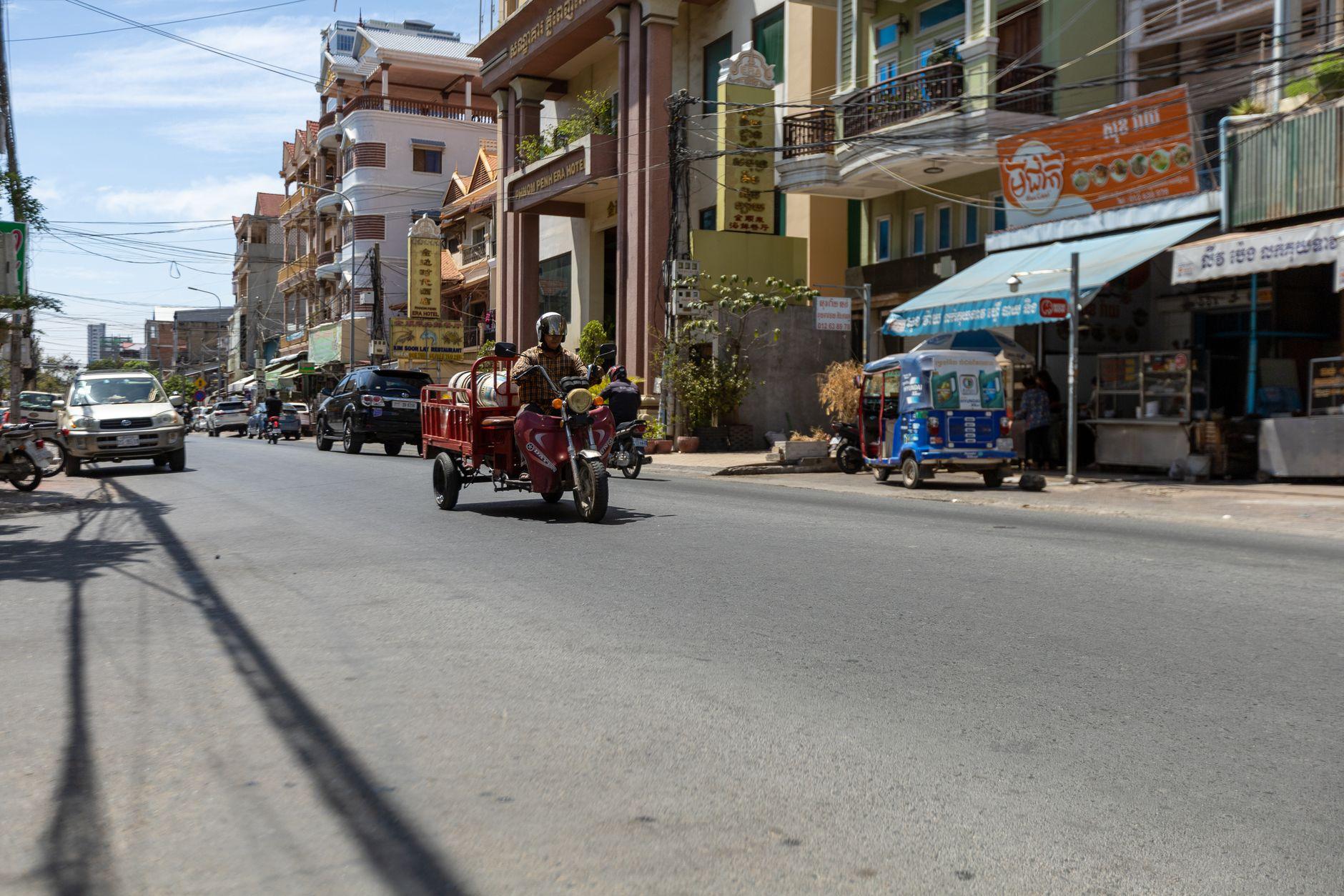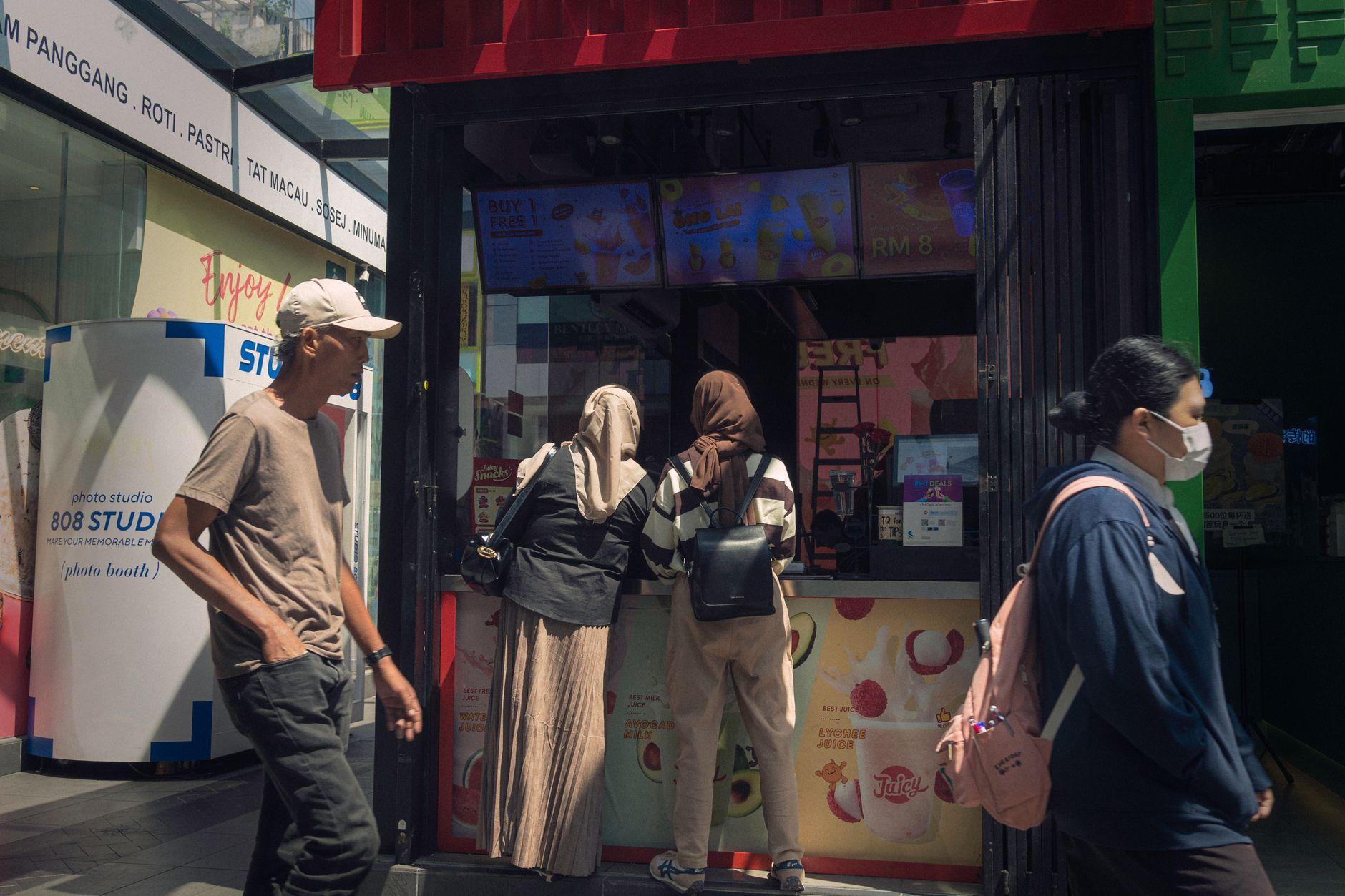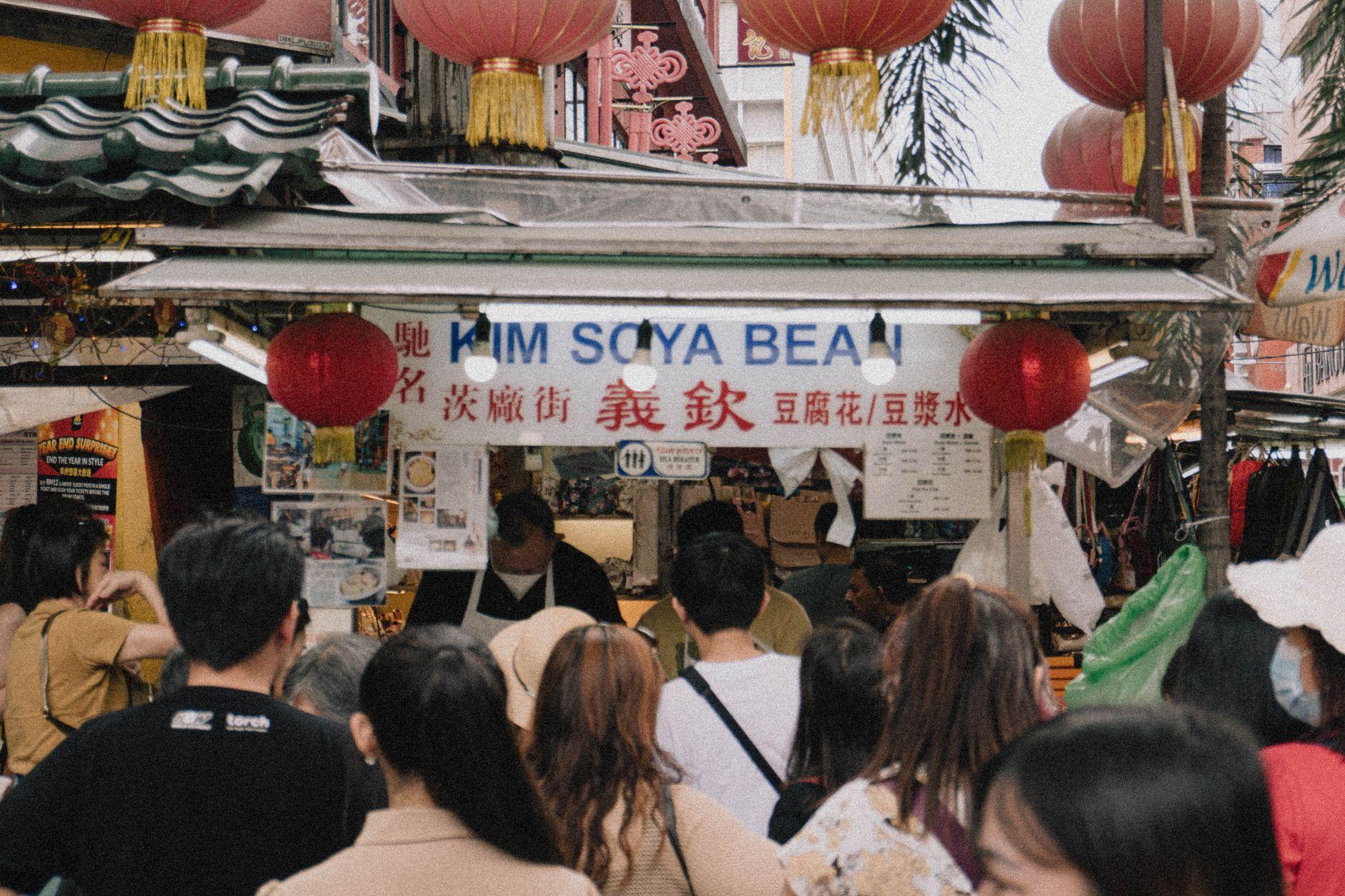

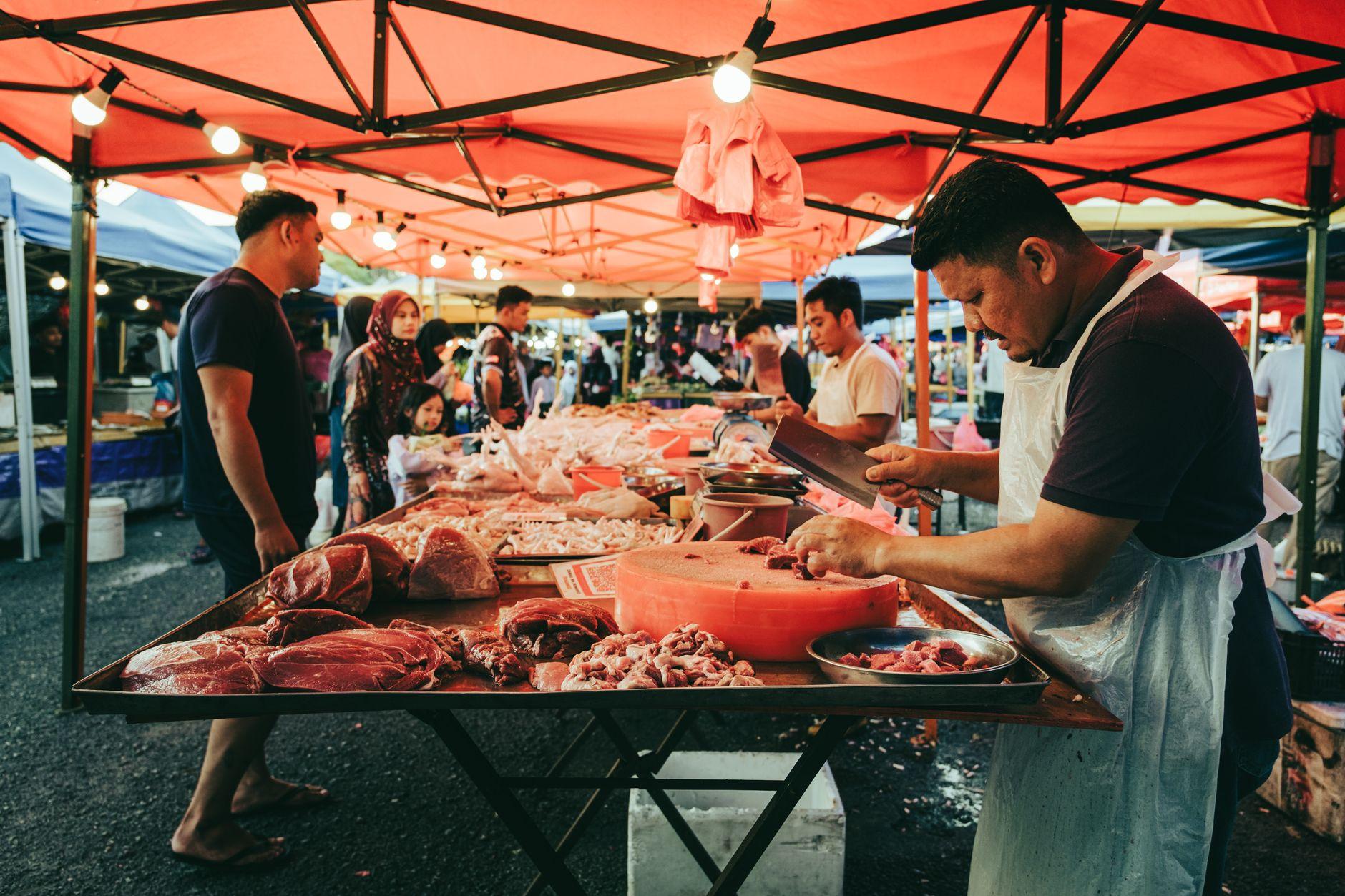
Stand at the entrance of any pasar malam in Malaysia, Jalan Alor in Kuala Lumpur, the stalls along Gurney Drive in Penang, a Tuesday night market in a Johor suburb, and watch what happens at the front of the queue. Some people hand over crumpled ringgit. Most hold up a phone, point it at a laminated sticker clipped to the stall, tap twice, and walk off with their char kway teow. The sticker is a DuitNow QR code, Malaysia's unified payment standard, and the same square works at a satay cart, a kopitiam, a wet market fish stall, and the mall food court.
So if you're a visitor, you have four realistic ways to pay for street food in Malaysia. None of them is perfect. Here's how they actually stack up, option by option, so you can decide before you're holding a dripping plate of nasi lemak with a queue behind you.
Cash: still accepted everywhere, quietly less convenient every year
Let's be fair to cash first. Every hawker in Malaysia takes ringgit. Nobody will refuse your RM10 note, and for a traveler who lands with no setup at all, cash works on minute one. Small purchases at a pasar malam are exactly the kind of transaction cash was made for.
The downsides are the usual ones, plus a few local wrinkles. You need an ATM run, which means ATM fees from your home bank and possibly the Malaysian machine, plus whatever exchange rate your card quietly applies. You'll get big notes from the machine and then spend your first market visit apologizing for paying for RM6 of apam balik with an RM100 note. And increasingly, you'll notice the vendor's own preference: many hawkers now keep less float in the drawer because most of their regulars scan. Cash isn't dying in Malaysia, but it's clearly the backup, not the main channel, and at busy stalls the QR line simply moves faster.
Best for: day one, tiny purchases, older stalls in smaller towns, and as an emergency layer. Worst for: anyone trying to avoid ATM runs and fuzzy exchange rates.
Your foreign Visa or Mastercard: fine in the mall, invisible at the market
Card acceptance in Malaysian cities is genuinely decent. Chain restaurants, cafes, supermarkets, and mall food courts will usually take your foreign card without drama. If your trip were entirely malls and hotel breakfasts, you could almost skip this article.
Street food is a different economy. A hawker running a single wok and a folding table isn't paying for a card terminal, and the economics explain why: QR payments are cheaper for merchants than card acceptance, so even stalls that have gone digital went straight to DuitNow QR and never touched cards. On top of that, your home bank may add foreign transaction fees and apply a conversion rate you only discover on your statement later. A card is a useful thing to carry in Malaysia. It is close to useless at a pasar malam.
Best for: malls, hotels, chains. Worst for: the exact food this article is about.
Touch 'n Go and the local wallets: great if you can get in, and you probably can't
Touch 'n Go eWallet is what most Malaysians use at hawker stalls, and if you could set it up, it would be a strong answer. The problem is the setup. Registration and verification are built around local requirements that foreigners often can't complete, and travelers routinely get stuck partway through with an app they can't actually load or use. We've written a whole guide to why Touch 'n Go turns foreigners away and what longer-stay residents do about it, so we won't relitigate it here.
The short version for a traveler: don't plan your Malaysia trip around getting a local wallet working. Some people manage it, many don't, and you won't know which group you're in until you've burned an afternoon on verification screens. For an expat settling in long term with local documents, it's worth attempting. For a two-week trip through KL, Penang, and Melaka, it's a bad bet.
Best for: long-term residents who clear verification. Worst for: anyone who wants a payment method that works on arrival.
Scanning DuitNow QR yourself: the local method without the local paperwork
Here's the thing the Touch 'n Go wall obscures: the QR code on the stall doesn't belong to Touch 'n Go. It's DuitNow QR, a national standard, and any compatible app can read it. That's what makes the fourth option work. With Moreta Pay, you top up a wallet from your own bank at home (US bank via Plaid or ACH, SEPA in Europe, UK Faster Payments, Canadian e-Transfer, or an international card), then scan the same laminated sticker the locals scan. The app shows you the amount, the merchant name, and the exchange rate before you confirm, converts from your wallet, and the hawker is paid instantly in ringgit.
In practice this feels less like using a travel product and more like being handed a working local wallet without the registration fight. The uncle at the chicken rice stall doesn't know or care that your money started in a US checking account. He sees a normal DuitNow payment land, same as everyone else in the queue. You see exactly what the meal cost in your own currency, with no foreign transaction fee surprise three days later.
The honest caveats: you need a phone with data (a local eSIM solves this cheaply), and you need the stall to actually display a QR code. In cities and tourist-trafficked markets that's the overwhelming majority of stalls now. In a rural morning market, keep some ringgit in your pocket.
Best for: nearly everything a traveler buys at Malaysian markets and hawker centres. Worst for: the shrinking set of cash-only holdouts.
How this plays out over a real market crawl
Picture an evening working through Jalan Alor: satay from one stall, grilled stingray from another, fresh sugarcane juice, a plate of hokkien mee, maybe durian if you're brave. That's five or six small transactions with five or six different vendors. With cash you're counting change in the dark five times. With a card you're not paying at all. With DuitNow QR through Moreta Pay, each one is a scan, a glance at the amount and rate, and a tap, and you're already eyeing the next stall.
It's the same pattern we've seen across the region, from PromptPay at Thai street stalls to Vietnam's laminated VietQR signs: the national QR standard is where street food payments actually live, and the traveler's problem is simply getting access to it. Malaysia's version of that problem is Touch 'n Go's locked front door. The workaround isn't to force the door, it's to use the standard directly.
So the conclusion mostly writes itself. Carry a modest fold of ringgit as your safety layer, keep your card for malls and hotels, skip the local wallet struggle, and do the bulk of your market eating over DuitNow QR. If you want that last piece sorted before your first plate of char kway teow hits the table, set up Moreta Pay before you fly and arrive in Malaysia already able to scan like a local.