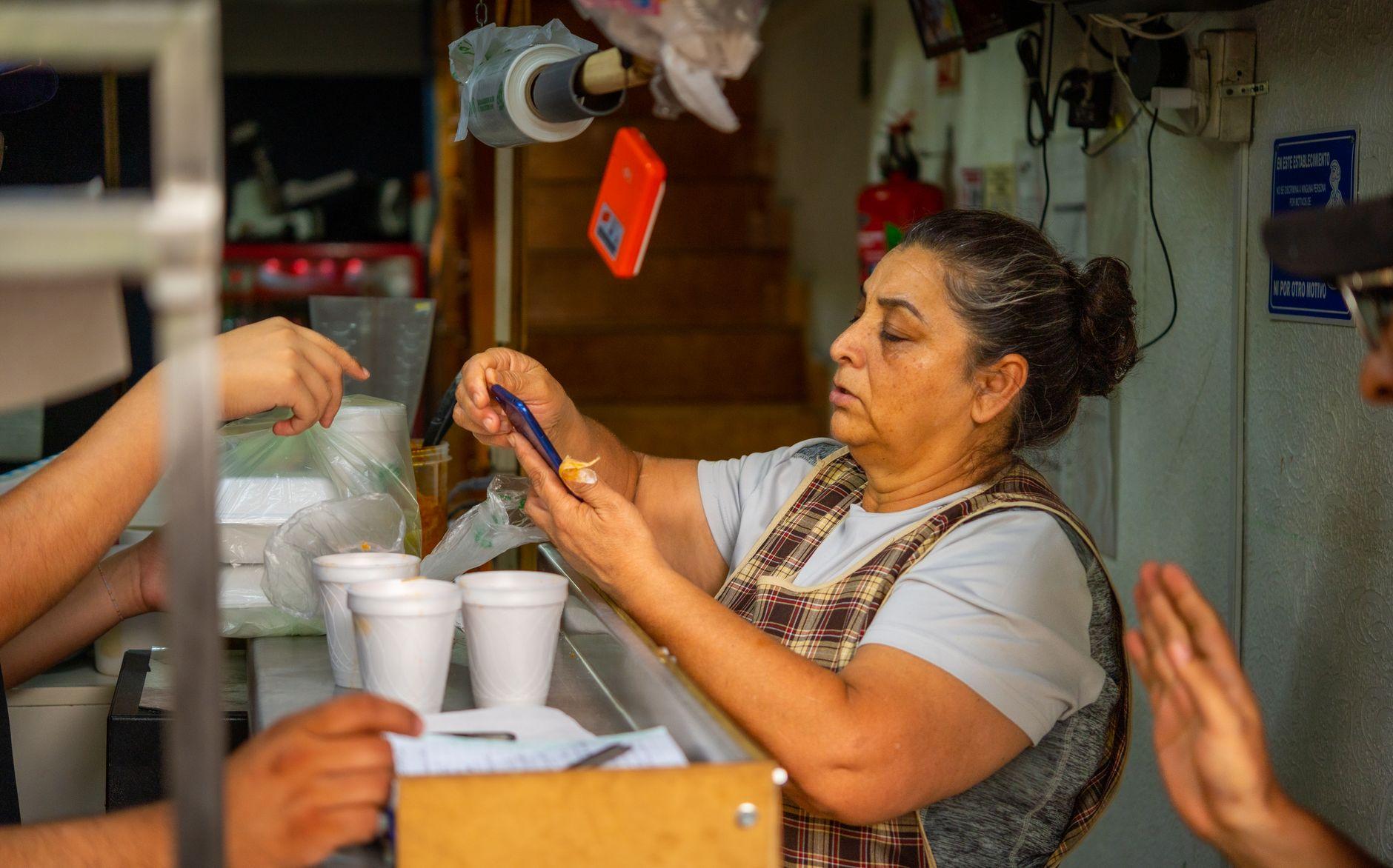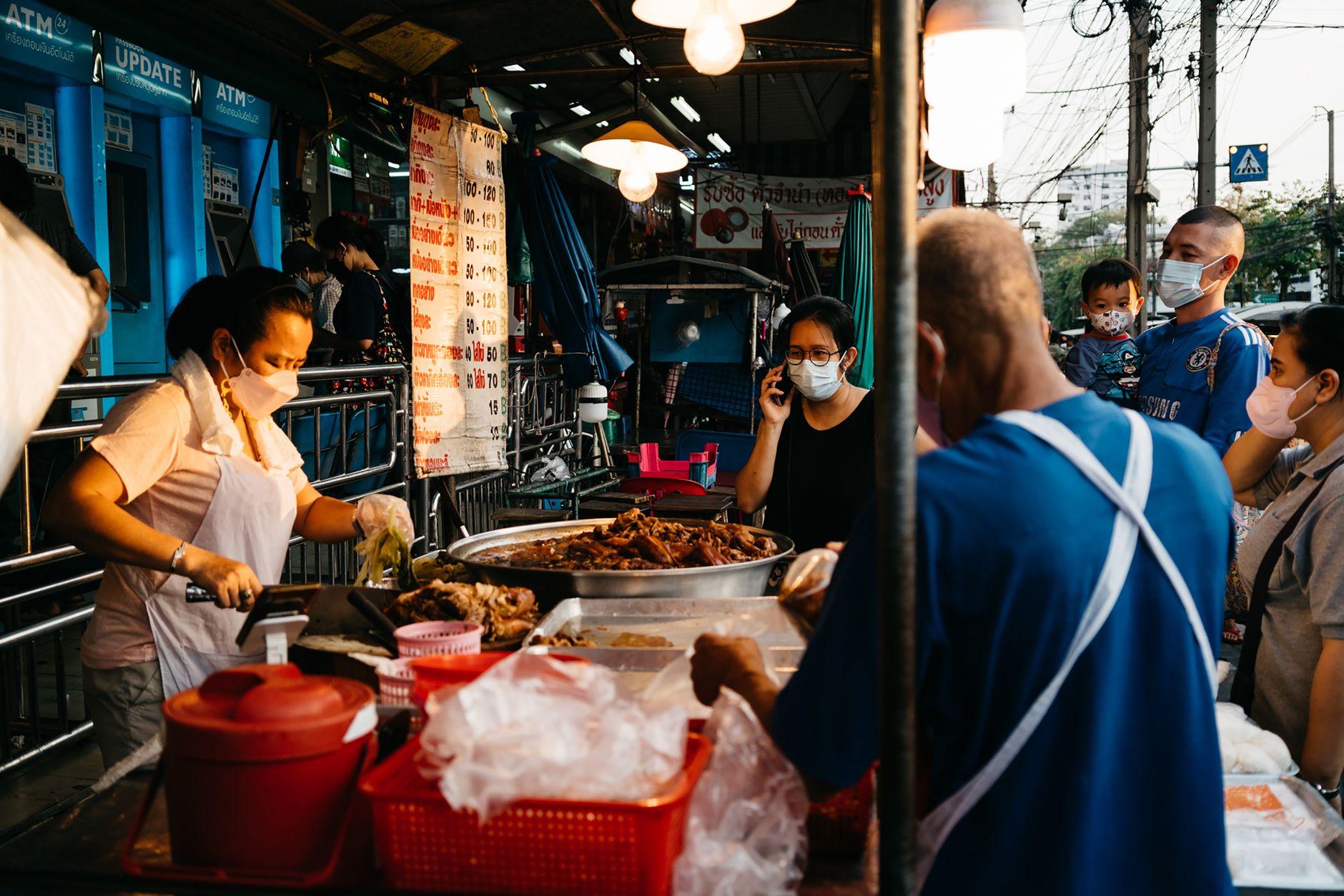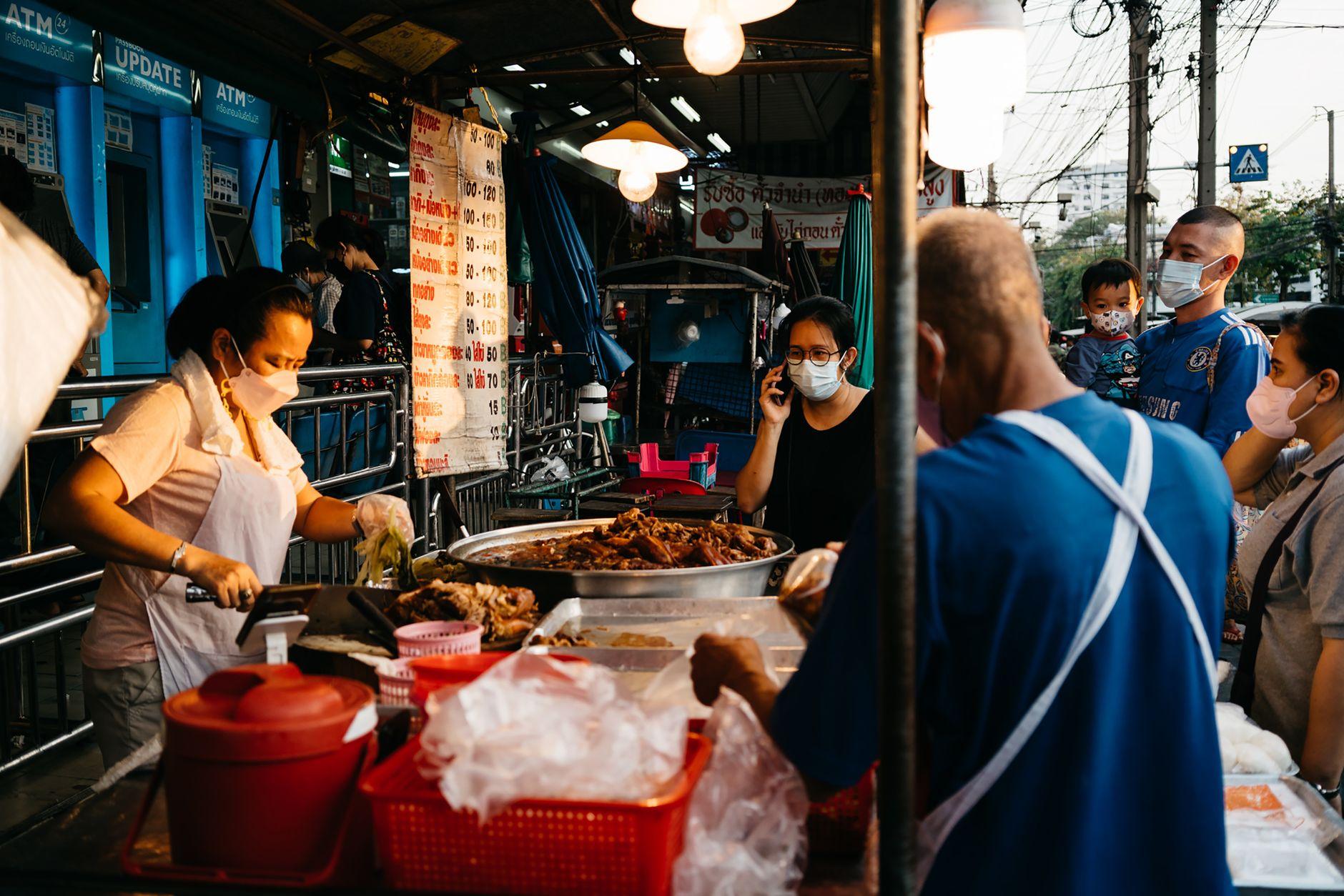

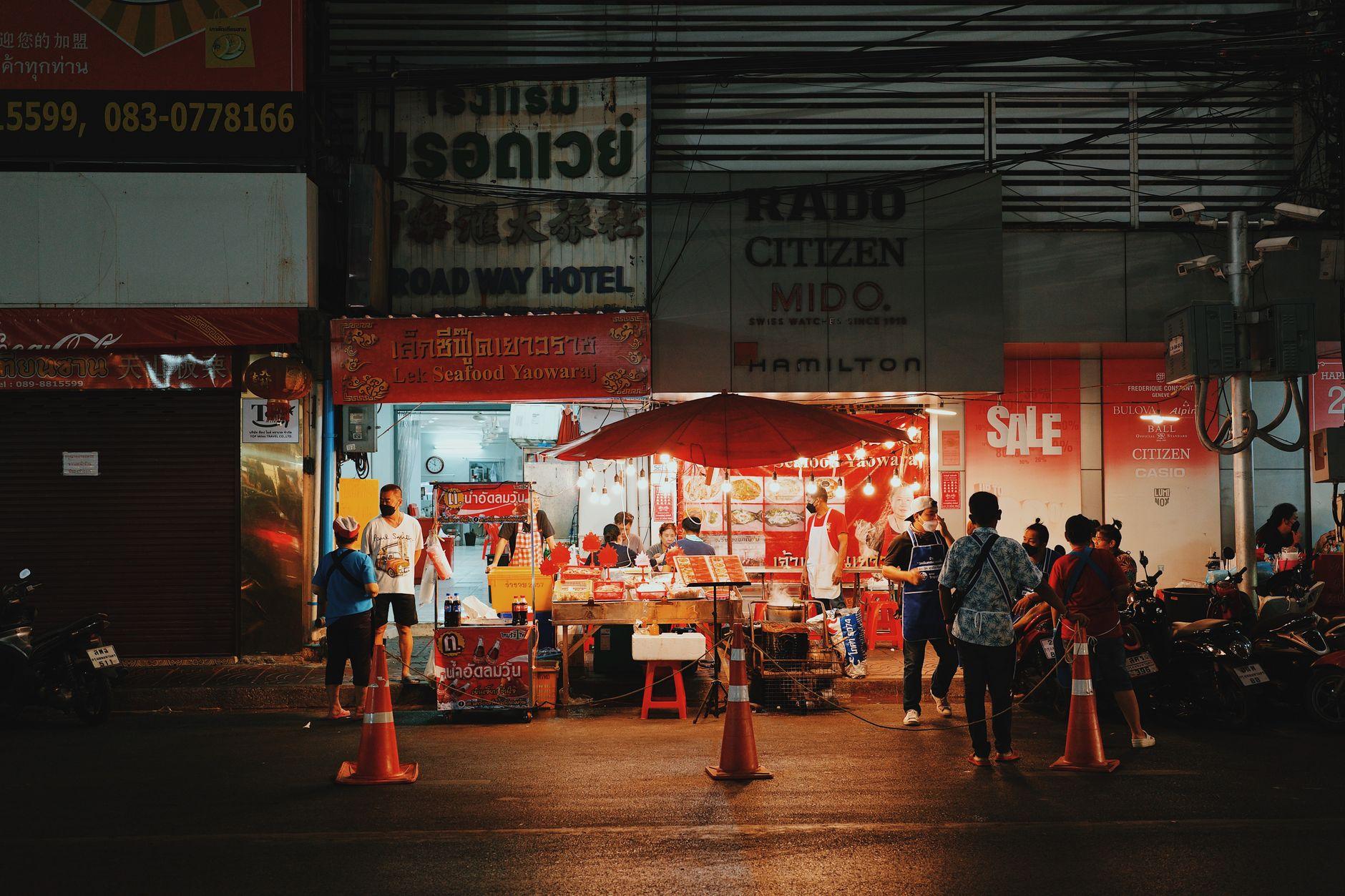
Stand at any night market in Chiang Mai or Bangkok and watch what happens at the counter. A vendor ladles out a bowl of khao soi, the customer glances at a laminated QR code taped to the cart, taps their phone twice, and walks off with their food. No cash changes hands. No card machine appears. The whole transaction takes about four seconds.
That QR code is PromptPay, Thailand's national instant payment system, and it has reached deeper into everyday life than most first-time visitors expect. It is not a big-city thing or a mall thing. It is on noodle carts, fruit stands, motorbike taxi mirrors, and the counter of every 7-Eleven in the country. Which raises the practical question every traveler faces on day one: how are you, with your foreign phone and foreign bank, supposed to pay for that bowl?
There are really four options. Let's weigh them honestly, because each one has a place, and the right mix depends on how you travel.
Option one: cash, the old reliable with a tax on entry
Cash still works everywhere in Thailand. That is its entire argument, and it is a strong one. The grandmother selling grilled bananas from a charcoal brazier will take your 20 baht note without a second look. Markets run on small bills, and nobody will ever refuse them.
The problems start before you have any. Getting baht out of a Thai ATM with a foreign card typically costs around 220 THB per withdrawal, charged by the ATM itself, before your own bank adds whatever it adds. That fee is flat, so travelers end up pulling out large amounts to dilute it, then walking around with thick stacks of notes they did not really want. We wrote a whole piece on how that 220 baht fee quietly shapes a nomad's habits in Thailand, and the short version is that cash is fine as a backup but expensive as a primary strategy.
There is also the small-change dance. Street vendors often cannot break a 1,000 baht note for a 40 baht skewer, so you are constantly rationing your small bills. Pros: universal acceptance, works in power cuts, works in the deepest rural market. Cons: pricey to obtain, annoying to manage, and increasingly unnecessary.
Option two: your foreign card, which mostly stays in your pocket
Visa and Mastercard work fine at hotels, malls, chain restaurants, and anywhere with a proper terminal. But street food stalls and market vendors almost never have one, and plenty of smaller merchants who technically could take cards simply prefer not to. Taxis are frequently cash-or-QR only, which catches a lot of people off guard at the airport.
Even where cards do work, many foreign cards carry foreign transaction fees your bank buries in the statement, and dynamic currency conversion at the terminal can quietly worsen the rate if you are not paying attention. Pros: great for big-ticket spending like hotels and flights. Cons: nearly useless for the daily spending that makes up most of a Thailand trip, which is exactly the spending this article is about.
Option three: a Thai wallet or bank app, if you can get one
Locals pay through their Thai bank apps, which generate and scan PromptPay QR codes natively. If you are a long-term expat with a work permit, a Thai bank account is worth the paperwork, and once you have it you pay like a local in every sense.
For travelers and most nomads, this door is mostly closed. Opening a Thai bank account typically requires residency documentation that a tourist does not have, and policies vary branch to branch in ways that burn entire afternoons. The local-wallet route is the gold standard if you qualify. Most visitors do not, and no amount of friendly persistence at a bank branch reliably changes that.
Option four: a travel wallet that speaks PromptPay
This is the newer category, and it is the one built for exactly this gap. Moreta Pay lets you top up a wallet from your home bank (US bank connection, SEPA, UK Faster Payments, Canadian e-Transfer) or an international card, in your own currency. Then at the noodle cart, you scan the vendor's same PromptPay QR code the locals use, see the amount, the merchant name, and the exact FX rate on screen, and confirm. The vendor gets paid in baht instantly, exactly as if a Thai customer had paid.
Pros: no Thai bank account needed, no ATM runs, no hidden foreign transaction fees, and you see the conversion before you commit rather than discovering it on a statement. It also covers QR-based online checkouts on platforms like Agoda, Trip.com, Lazada, and Shopee, which matters more than you would think when a hotel or ferry booking only offers Thai payment options. Cons: you need a phone with battery and a data connection, and in the rare spot that is genuinely cash-only (think a remote island beach vendor with no sign of a QR code), you still want a few hundred baht in your pocket.
What this looks like at an actual market
Picture an evening at a weekend market. Grilled pork skewers from one stall, mango sticky rice from another, a fresh coconut, a cheap T-shirt, a ride home. Five transactions, five different vendors, every single one displaying a PromptPay QR.
On cash alone, that evening requires an ATM visit, its fee, and enough small bills to pay five people who may not have change. On a foreign card, the evening simply does not happen, because none of those vendors can take it. With Moreta Pay, it is five quick scans, each one showing you the baht amount and what it costs you in your home currency, and you never think about money again until the next meal.
The pattern repeats across the region. Thailand's PromptPay is the local cousin of DuitNow in Malaysia and Pix in Brazil, and if you are hopping borders, the same logic applies the moment you land in Kuala Lumpur.
So what should actually be in your pocket?
Honest answer: a small cash reserve, your foreign card for hotels and flights, and a QR-capable wallet for everything in between. The in-between is where Thailand actually lives. Street food, markets, taxis, 7-Eleven, coffee shops, laundry, the lady who fixes your sandal strap. That layer is QR-first now, and a traveler who can scan PromptPay moves through the country with almost no friction.
Cash has not disappeared, and nobody is saying carry none. But the days when a Thailand trip meant planning your life around ATM locations and withdrawal fees are over, if you want them to be. Set up Moreta Pay before your flight, connect your home bank, and your first scan can be the taxi QR at the airport curb. Get started at moretapay.com and arrive already able to pay like everyone around you.