
Ask five people how to handle money in Argentina and you will get five confident, contradictory answers. Bring crisp hundred dollar bills. Never use your card. Always use your card. Find a cueva. Avoid the cuevas. The problem is that most of this advice was true at some point, for some exchange rate regime, and Argentina's exchange rate regime changes faster than travel forums do. So instead of another list of tips, let's go through the beliefs travelers actually arrive with and check which ones still hold up in 2026.
Myth one: you need to arrive with an envelope of US dollars
This was the golden rule for years, and it made sense when there was a huge gap between the official exchange rate and what your dollars fetched on the street. The gap has widened, narrowed, and shifted repeatedly since then, and so has the rate applied to foreign cards. The honest version of this advice today is: the landscape moves, and a strategy built on a two year old Reddit thread can quietly cost you money.
What has not changed is the hassle side of the equation. Changing dollars means finding somewhere trustworthy, counting an enormous stack of pesos, and then carrying that stack around. If you do change cash at a counter, judge it the way you would anywhere else, by checking the actual rate you receive rather than the advertised commission. But the bigger point is that physical dollars are no longer the only reasonable way for a visitor to get a fair deal in Argentina.
Myth two: cash is how locals actually pay
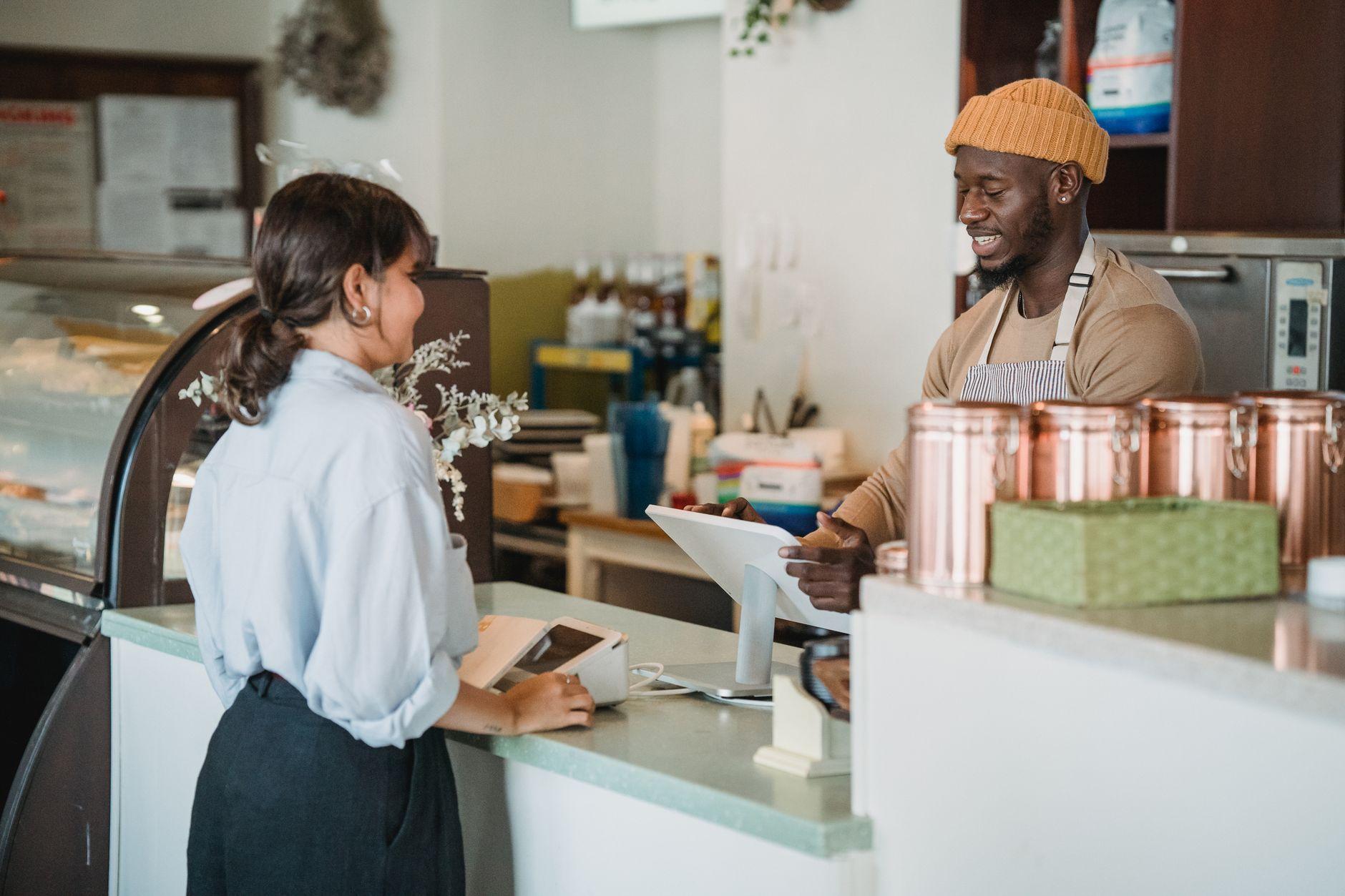
Walk around Buenos Aires, Córdoba, or Mendoza and watch what happens at the register. At the verdulería, the kiosco, the parrilla, the empanada counter, people are pointing phones at QR codes. Argentina built an interoperable QR system, which means the little laminated code taped to the counter works across the major apps. The two names you will see everywhere are MODO, which is backed by the banks, and Mercado Pago, the wallet attached to Mercado Libre that half the country seems to run its financial life through.
Inflation accelerated this shift for a very practical reason. When prices climb, carrying enough banknotes becomes genuinely annoying. Nobody wants to count out a thick wad of bills for groceries, and merchants do not want to count it back. A scan settles the exact amount instantly, no change required, no arithmetic at the till. For locals, cash is increasingly what you use when the signal drops, not the default.
Myth three: those QR codes are useless to you without an Argentine bank account
This is the one that keeps visitors stuck in the cash economy. It is true that MODO expects a local bank relationship and Mercado Pago works best with Argentine credentials, a CUIT or DNI, and a local funding source. Signing up as a short term visitor ranges from painful to impossible, and most travelers give up after the first identity verification screen.
But needing a local account to open a local app is not the same as needing one to pay a QR code. Moreta Pay exists precisely for this gap: you fund a wallet from your own bank at home (US banks via Plaid or ACH, SEPA in Europe, UK Faster Payments, Canadian e-Transfer, or an international card), then scan the same QR code the porteño ahead of you just scanned. The merchant gets paid in pesos instantly, you never opened an Argentine account, and you never touched a stack of banknotes.
Myth four: paying digitally means getting fleeced on the exchange rate
The fear is understandable. Argentina has multiple rates floating around in conversation, official, card, informal, and visitors reasonably assume that anything automatic will quietly pick the worst one. The fix is not to avoid digital payments, it is to insist on seeing the rate before you commit. When you scan a QR with Moreta Pay, the screen shows the amount in pesos, the merchant's name, the exchange rate being applied, and what it costs in your home currency, all before you confirm. If the number looks wrong, you cancel and nothing happens.
Compare that with the two traditional options. With cash, you locked in whatever rate you got on exchange day, and in an inflationary economy that rate ages. With a foreign card at a terminal, you often discover the final cost days later on your statement, sometimes with a dynamic currency conversion markup you did not notice at the time. Transparency at the moment of payment is the whole game in Argentina, and QR done right gives you exactly that.
Myth five: inflation makes budgeting here impossible anyway
Prices in Argentina do move, and a menu photo from six months ago is a work of historical fiction. But this affects how you plan, not how you pay. Since your wallet converts at the moment of each payment, you are not sitting on a pile of pesos losing value in your money belt. You top up in dollars, euros, or pounds, hold your balance in your own currency, and convert only what each cortado, each asado, each taxi actually costs on the day you buy it. For nomads settling in for a few months, the same scan works beyond restaurants too, since QR based checkout also covers online platforms and bill payments in supported countries.
What a normal day looks like once you stop fighting it
Morning café in Palermo: the counter has a QR sticker next to the register, you scan, review, confirm, done before your medialunas land. Sunday feria in San Telmo: the leather stall holder flips over a laminated Mercado Pago code, same routine. Dinner at a neighborhood parrilla: the waiter brings the bill with a QR printed at the bottom. You will still want a few small bills for the odd street vendor or a propina, but the days of planning your Argentine trip around ATM limits and exchange house hours are over. If you are stringing Argentina together with Brazil on the same trip, the muscle memory transfers, since Pix QR codes work for visitors in much the same way.
The myths all share one root: they assume you are locked out of the system locals use. You are not, you just need a wallet that speaks the local QR language without demanding a local bank account. Set up Moreta Pay before your flight, load it from your home bank, and spend your first morning in Buenos Aires eating medialunas instead of standing in line to change money.