
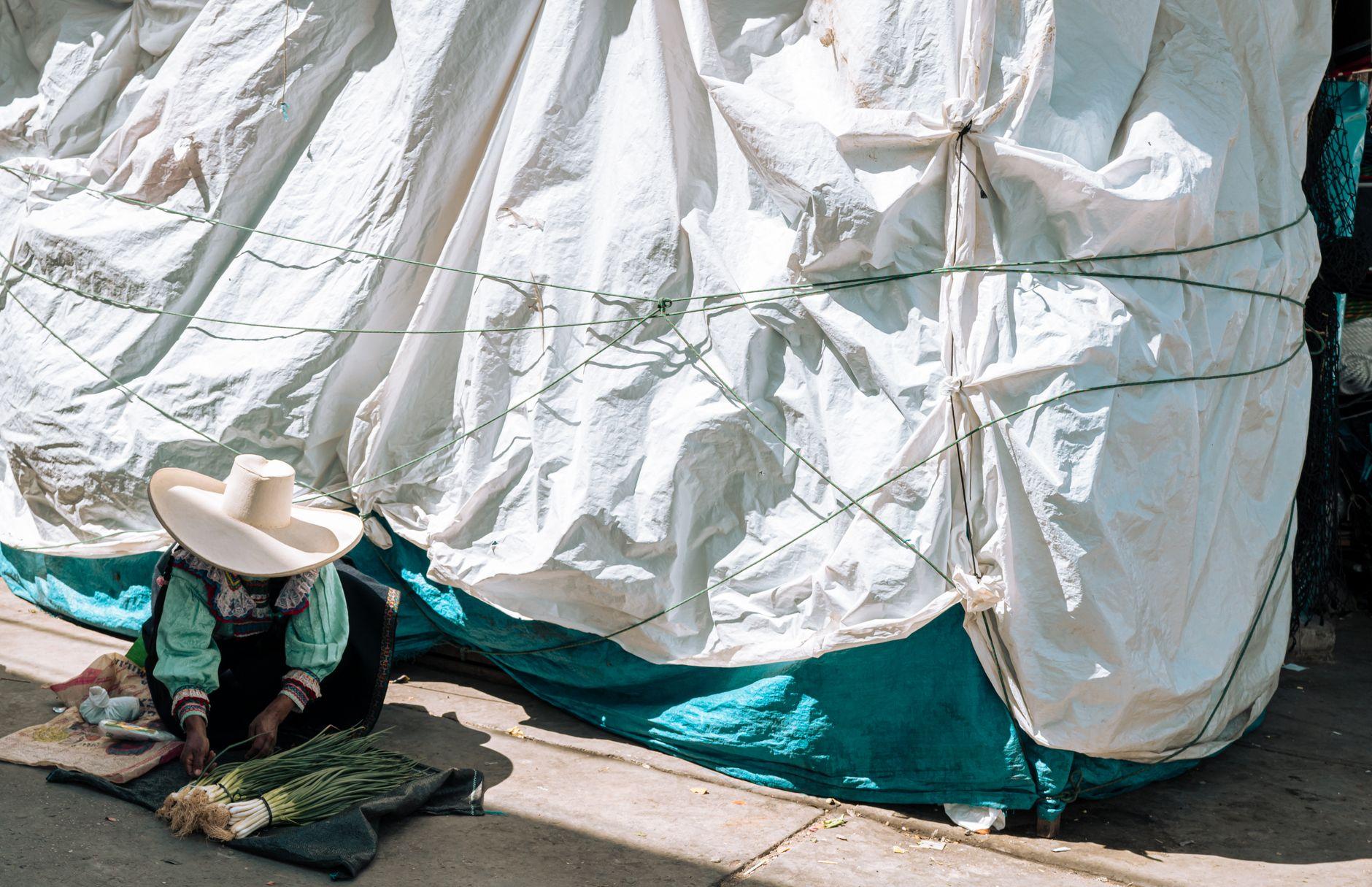
It is just past nine in Mercado Rodríguez in La Paz, and the woman selling you a bag of chirimoyas has already weighed them, bagged them, and quoted the price before you finish asking. You reach for your wallet and realize you only have a 200 boliviano note, which at a fruit stall is roughly as useful as a bar of gold. She sighs, then taps a laminated square taped to the edge of her stall. A QR code. Below it, in marker: QR Simple. The caserita who has sold fruit on this corner for twenty years would rather you scan than hand her a bill she cannot change.
This is the strange, lovely state of money in Bolivia in 2026. One of South America's most cash-driven economies has quietly grown a real QR payment culture in its biggest cities, and travelers who know how to plug into it skip an entire category of headaches. Here is how to pay in Bolivia like someone who lives there, without a Bolivian bank account and without hauling stacks of cash across the Altiplano.
QR Simple, in Plain Terms
QR Simple is Bolivia's interoperable QR standard. The short version: Bolivian banks agreed on one QR format, so a code printed by any bank can be paid from any other bank's app. That one decision is why the fruit vendor, the salteña shop, the pharmacy, and the guy selling phone cases outside the San Francisco church can all show the same style of sticker. Merchants love it because it costs them almost nothing to accept, there is no terminal to rent, and the money lands instantly.
The catch for visitors has always been the first word in "Bolivian bank app." Opening a local account as a tourist is somewhere between tedious and impossible. This is where a wallet like Moreta Pay changes the math: it reads the same standard QR codes locals use, pulls from a balance you topped up from your home bank or card in your own currency, and shows you the merchant name and the exchange rate before you confirm. The caserita sees a normal local payment arrive. You see exactly what left your wallet. Nobody is doing mental arithmetic over the chirimoyas.
The Two Bolivias Your Money Will Meet
Be honest with yourself about geography, because Bolivia will be honest with you. In La Paz and Santa Cruz, QR Simple stickers are genuinely everywhere now: cafes in Sopocachi, almacenes in Equipetrol, market stalls, mid-range restaurants, even some taxi drivers who keep a printed code clipped to the sun visor. Cochabamba and Sucre are catching up in the center of town. In these places you can go most of a day without touching a bill.
Step outside the big cities and the picture flips completely. Copacabana on Lake Titicaca, Uyuni before a salt flat tour, Rurrenabaque at the edge of the Amazon, the small towns along any bus route: these run on cash, mostly small cash, and often exact cash. A tour operator in Uyuni may quote you in bolivianos and expect the full amount in notes before the 4x4 leaves. This is not a country where one payment method covers everything, and pretending otherwise is how people end up stranded. Bolivia has a split personality similar to the one we described in our piece on Mongolia's city-versus-countryside money divide: the capital speaks QR fluently, the rest of the country still speaks paper.
The ATM Problem Is Worse Than You Think
Here is the detail that catches travelers off guard: outside the major cities, very few Bolivian ATMs accept foreign cards at all. Not "charges a high fee." Simply declines, or does not offer an international network option in the first place. Travelers routinely arrive in Uyuni or Copacabana assuming they will withdraw there, then spend an afternoon walking between machines that will not talk to their card.
The rule, then, is blunt: withdraw your cash reserve while you are still in La Paz, Santa Cruz, Cochabamba, or Sucre, where major bank ATMs do work with foreign cards. If your home debit card is unreliable abroad or you travel without one, there are workable alternatives worth setting up before you fly, but none of them involve finding a friendly ATM in a salt flat town at 7 p.m.
And when you do withdraw, break the big notes immediately. Pay for something small at a supermarket or pharmacy with a 100 or 200 and pocket the change. In Bolivia, a fat stack of large bills is not wealth, it is a negotiation problem you will have four times a day.
A Setup That Actually Works Here
The locals' pattern is the one to copy: phone for the city, small bills for everything else. In practice, for a visitor:
Before you land: load your Moreta Pay wallet from home. US bank via Plaid or ACH, SEPA from Europe, Faster Payments from the UK, e-Transfer from Canada, or an international card, all in your own currency. Doing this before the trip means you are not fighting hostel Wi-Fi to fund a wallet while a salteña gets cold.
In La Paz and Santa Cruz: default to scanning. Look for the QR Simple sticker at the counter or taped to the stall. Scan, check that the merchant name matches the business in front of you, check the amount and the FX rate on screen, confirm. The vendor usually hears or sees the confirmation on their own phone within seconds. If a taxi driver has a code, use it; if not, that is what your small bills are for.
Heading out of the cities: count the days, estimate generously, and carry cash in 10s, 20s, and 50s. Tours, remote hospedajes, bus snacks, bathroom attendants at terminals, all cash. Keep the QR habit for when you pass back through a city, and top the wallet up again then.
Moments You Will Recognize Later
The salteña stand at 10 a.m. Salteñas are a mid-morning ritual, not a lunch food, and the good stands sell out. The popular ones in La Paz increasingly have a QR code precisely because nobody wants the line held up by change-counting.
The teleférico and the micro. La Paz's cable car network and the minibuses that swarm the city still mostly want coins and small notes. Budget a pocket of change for transport and treat it as sacred.
The artisan market in Santa Cruz. Haggling ends, you agree on a price, and the vendor flips over a laminated code. Paying by QR here also means you are not flashing a wallet full of cash in a crowded market, which is its own quiet security upgrade.
Booking the next leg online. Flights and hotels through platforms that offer QR-based checkout can be paid the same way from your wallet, which matters when your foreign card keeps getting flagged by a nervous fraud algorithm at home.
Pack Light, Pay Lighter
Bolivia rewards travelers who prepare for both of its personalities. Sort your cash in the big cities, keep it small, and let your phone handle the growing share of daily life that now runs through QR Simple. The vendors have already made the leap; the only missing piece is a wallet that lets you scan what they scan. Set up Moreta Pay before your flight to El Alto, and the next time a caserita taps that laminated square, you will know exactly what to do.