
Ask five travelers how to handle money in Peru and you will get five confident, contradictory answers. Bring dollars. Never bring dollars. Cards work fine. Cards work nowhere. Get Yape. You can’t get Yape. Somewhere under all that noise is a country that quietly rebuilt its everyday payments around two QR wallets, and a set of assumptions that stopped being true a while ago.
So let’s do this the direct way: take the most common beliefs about how to pay in Peru, and check each one against what actually happens at the market stall, in the taxi, and at the counter of a menú restaurant at 1pm.
Myth one: Peru runs on cash, so just load up on soles
This was true for a long time, and it’s the advice most guidebooks still repeat. But spend a morning in Lima, Arequipa, or Cusco and watch what locals actually do. The woman selling emoliente from a cart has a laminated QR code taped to it. The taxi driver has one on the dashboard. The señora at the juice stand in the mercado has hers pinned next to the price list. They’re Yape and Plin codes, the two wallets that dominate daily life in Peru, and locals use them for purchases so small you would feel silly pulling out a card.
Cash still works everywhere, obviously. But the idea that cash is the default is out of date. For millions of Peruvians, the default is scanning a QR code, and merchants often prefer it because they don’t have to make change or worry about what’s in the till.
Myth two: as a visitor, you can just download Yape or Plin
Here’s where a lot of travelers hit a wall. Yape is tied to BCP and the Peruvian banking system; Plin connects wallets from other local banks. Both effectively expect a Peruvian identity document, a local bank relationship, or a local phone number, and usually some combination of the three. For a short-term visitor, setting up either one ranges from painful to impossible. Expats who eventually get residency can manage it, but if you’re in Peru for two weeks of Sacred Valley hiking and ceviche, you are not getting a Yape account before you fly home.
The frustrating part is that the QR codes themselves are just sitting there, on every counter, ready to be scanned. This is exactly the gap Moreta Pay was built for: it lets you scan the same local QR codes Peruvians use, pay from a wallet funded by your own home bank or card, and see the exchange rate before you confirm. The merchant gets paid in soles instantly, and never needs to know or care that you don’t have a Peruvian bank account.
Myth three: cash is at least the safe, simple fallback
Peru is one of the few countries where locals will openly inspect a banknote in front of you, hold it up to the light, and hand it back if they don’t like it. Counterfeit bills are a real, everyday concern, and tourists are warned about them constantly, both as recipients (getting a fake note in your change) and as spenders (having a perfectly good note refused because a vendor is being cautious). Add in the usual routine of ATM runs and airport exchange counters, and “simple” starts to look like a lot of work. We went deep on the cash-handling side of this in our earlier piece on why Peruvians check every banknote twice, but the short version is: the less physical currency you handle in Peru, the fewer things can go wrong with it.
QR payments sidestep the whole problem. There is no note to inspect, no change to count, and no moment where a vendor squints at your 100 soles and shakes her head.
Myth four: your foreign credit card will cover you
In hotels, chain supermarkets, and tourist-district restaurants, yes, your Visa or Mastercard will work. Step outside that bubble and the picture changes fast. The collectivo driver, the market stall, the family-run picantería in Arequipa, the vendor selling alpaca sweaters near the Plaza de Armas in Cusco: many of them either don’t have a card terminal at all or clearly prefer QR. And even where cards are accepted, small merchants sometimes hesitate at foreign cards, or the terminal offers you a conversion to your home currency at a rate you should never accept.
The practical result is a two-tier system. Cards handle the big-ticket, formal economy. Yape and Plin handle everything else, which happens to be most of what makes a trip to Peru memorable.
Myth five: Yape and Plin are rivals, so you need both
They started as competing ecosystems, and for a while a merchant with only a Yape sticker couldn’t take a Plin payment. That divide has largely dissolved as the two systems became interoperable for everyday payments, which is why you’ll often see one sticker where there used to be two. For a visitor using Moreta Pay, the distinction barely matters in practice: you point your camera at whatever QR code the merchant shows you, check the amount, the merchant name, and the FX rate on screen, and confirm. The wallet handles the conversion from your home currency and the merchant sees a normal local payment land instantly.
It’s the same pattern we’ve seen across the region. Brazil consolidated around Pix, and Peru’s wallets have converged in a similar direction: one scan, one confirmation, done.
Myth six: QR is a Lima thing, useless once you leave the capital
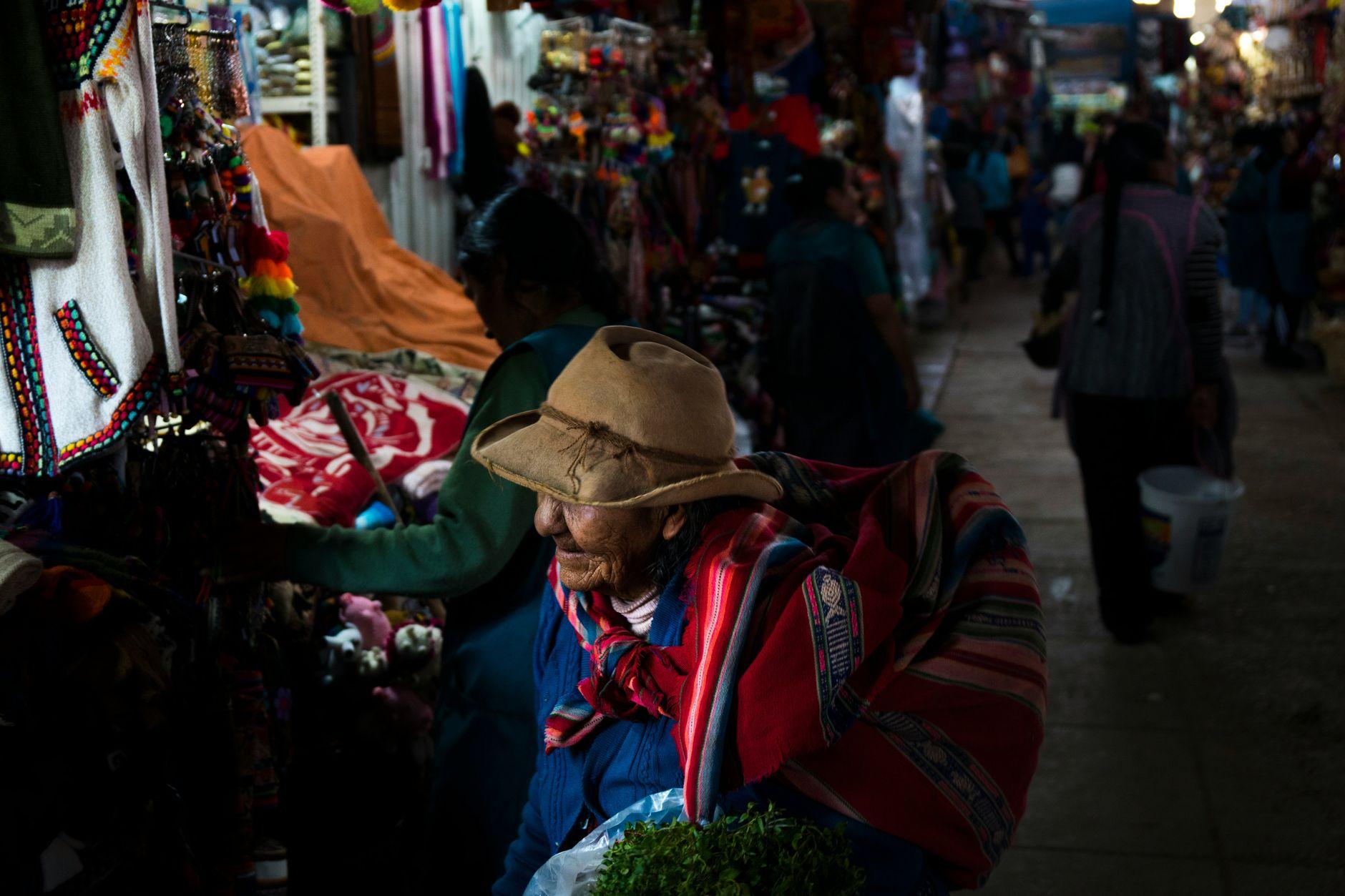
Cusco’s tourist economy might actually be more QR-saturated than Lima’s, precisely because so many transactions there are small and fast. Trekking guides, market vendors in San Pedro, taxi drivers waiting outside the station, the woman renting walking sticks at a trailhead: QR codes turn up in all of it. The same goes for Arequipa, Trujillo, and beach towns like Máncora. Coverage thins out in genuinely remote villages, so a modest cash reserve for the deep countryside is still smart. But “QR is only for the capital” gets the map exactly backwards. It follows commerce, and commerce in Peru follows travelers.
What a realistic Peru money setup looks like in 2026
Put the corrected myths together and a sensible plan falls out on its own. Carry some soles in small denominations for rural stretches, tips, and the occasional holdout vendor. Keep a card for hotels and anything with a formal checkout. And for the huge middle of daily life, the taxis and markets and menús and juice stands, pay by QR the way locals do. Since Yape and Plin won’t open their doors to a short-term visitor, Moreta Pay is the practical way in: top up from your US, European, UK, or Canadian bank, or an international card, scan the merchant’s existing code, and confirm with the rate shown upfront. It also covers QR checkout on platforms like Trip.com and Agoda when you’re booking the next leg from your hostel bed.
Peru without cash isn’t quite the reality yet, but Peru with barely any cash absolutely is. If you’d rather scan than count change and squint at banknotes, set up Moreta Pay before your flight lands in Lima and pay the way the city around you already does.