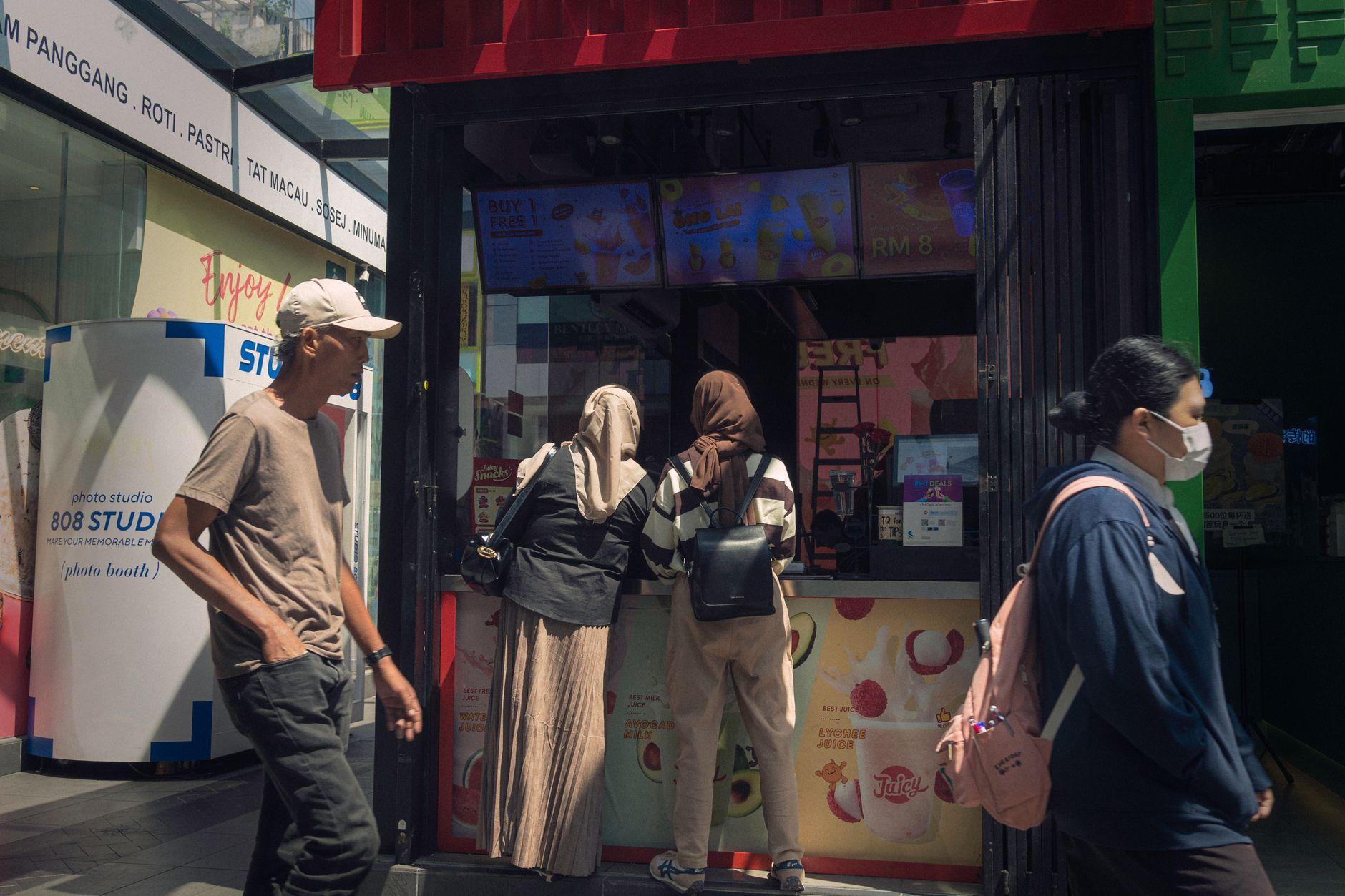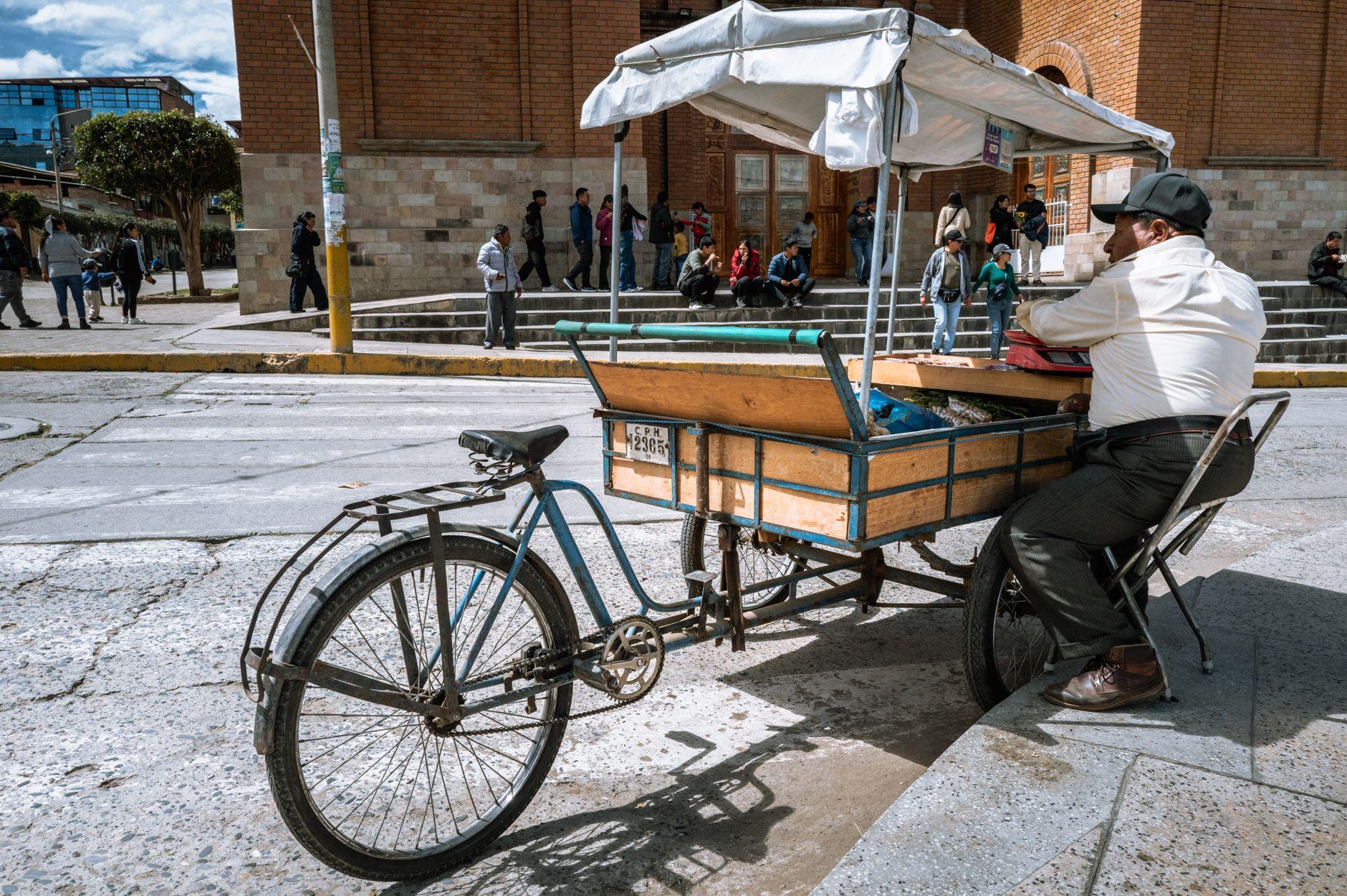

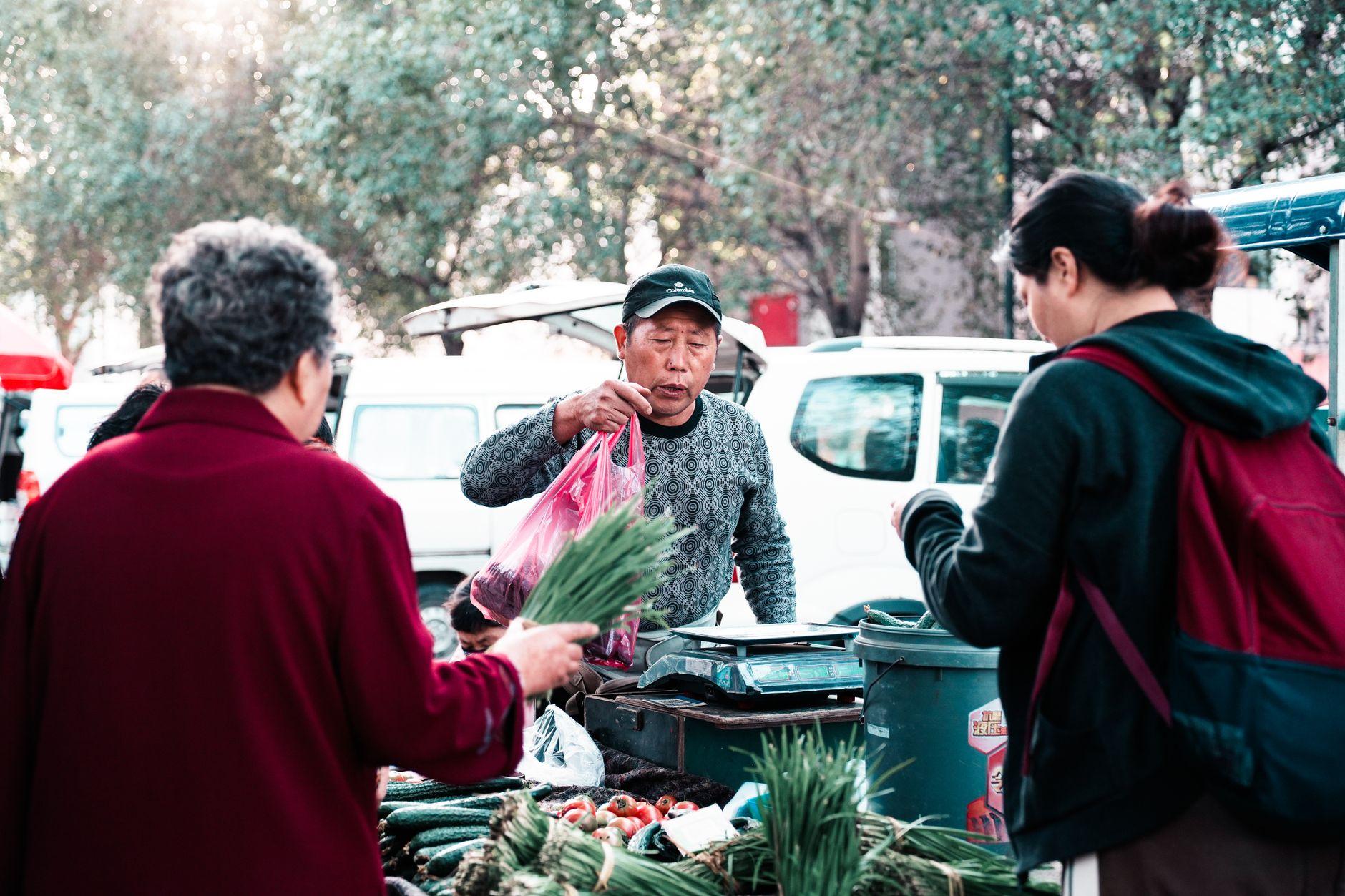
You are standing at a juice counter in Lima's Mercado de Surquillo. The vendor squeezes a papaya, hands you the glass, and points to a laminated QR code taped beside the blender. You scan it from your phone. The screen shows 15 soles, the exact exchange rate, and the merchant's name. You slide to confirm. The vendor's phone chimes. You have just paid a Peruvian QR code the way locals do, without a local bank account or SIM card.
But you funded that payment from home, and the amount you moved from your US bank account was larger than the 15 soles you just spent. A 50 USD top-up cost you roughly 3.5% in fees. A 500 USD top-up cost you 1.5%. The difference is in how fixed and percentage fees stack. Moreta runs a wallet that pays local QR networks in Peru (Yape, Plin) and Colombia (Bre-B), and its published fee schedule shows this structure plainly. The math below uses real numbers.
The practical answer: fund once in a larger amount, then pay or send in small pieces under a flat percentage.
Why does sending 50 USD cost more per dollar than sending 500 USD?
Transfer pricing stacks three layers, and only some of them scale with your amount.
- Fixed fee: a flat charge per transfer. It does not change whether you move 50 USD or 5,000 USD.
- Percentage fee: a share of the amount, so it grows with the transfer.
- Exchange rate markup: the gap between the mid-market rate and the rate you actually get. It behaves like a percentage fee but shows up inside the rate, not as a fee line.
A taxi meter shows why the fixed layer matters. The flag-drop charge is identical for a two-block ride and a 20-kilometre one, so the short ride costs far more per kilometre. A fixed transfer fee is the flag-drop. The percentage fee is the per-kilometre rate.
The formula is simple:
Effective cost % = (fixed fee ÷ amount) + percentage fee + exchange rate markup
Small amounts are the normal case for travelers, not an edge case. The amount you move matters most when choosing how to pay.
What does this look like with real published fees?
Moreta's own fee page shows the effect plainly, because its top-up methods mix fixed and percentage charges.
| Top-up method | Published fee | Small top-up (50) | Large top-up (500) |
|---|---|---|---|
| US bank account (ACH) | 1, USD free over 250 USD | 2.0% | Free |
| SEPA (EUR) | 1.50 USD, free over 225 EUR | Fixed fee applies | Free |
| Faster Payments (GBP) | 1.50 USD, free over 200 GBP | Fixed fee applies | Free |
| Interac e-Transfer (CAD) | 1.5% + 1 USD | 1.5% + heavy fixed share | 1.5% + light fixed share |
| Visa, Mastercard, Amex, Discover, Apple Pay, Google Pay | 2.5% | 2.5% | 2.5% |
| USDC/USDT on Solana | Free | Free | Free |
Every payment then carries one 1.5% fee. Here is the full cost of a US bank top-up spent at a Lima market stall:
- 50 USD: 1 USD top-up fee leaves 49 USD. 1.5% of 49 USD is about 0.74 USD. Total: about 1.74 USD, or 3.5%.
- 500 USD: no top-up fee. 1.5% of 500 USD is 7.50 USD. Total: 1.5%.
The less obvious insight is the crossover. A card top-up costs 2.5%, so above 40 USD it costs more than the 1 USD bank transfer fee, and above 250 USD the bank transfer is free. The cheapest method depends on the amount you move.
How do I compare Wise vs Remitly vs Revolut international transfer fees fairly?
The same formula works for any provider, Moreta included. Wise, Remitly and Revolut each publish their own pricing. Run each provider through the same five steps:
- Enter your exact amount, not a round 1,000 USD.
- Divide the fixed fee by that amount.
- Add the percentage fee.
- Compare the quoted rate to the mid-market rate to find the exchange rate markup.
- Compare the final number that arrives, in soles or pesos.
The cheapest option is whichever lands the most soles or pesos at your amount. Providers can rank differently at 50 USD than at 500, USD so a ranking built at one size can be wrong at another.
If you need to send money to Peru or send money to Colombia through Moreta, the Send screen shows the fee, the exchange rate, the amount that arrives and the expected delivery time before you confirm. Sending costs one 1.5% fee. The recipient options for each country are listed in the app. For payments, the rate is the live rate at the moment you pay plus the 1.5% fee. Moreta says nothing else is added.
You control one markup directly: dynamic currency conversion (DCC). DCC happens when an ATM in Miraflores or a card terminal in Cartagena offers to charge you in US dollars. In that case, the terminal's side sets the conversion rate. Decline it. Always choose to be charged in soles or pesos.
How do visitors pay Yape, Plin or Bre-B QR codes?
Transfer pricing ends up at a counter. At an arepa cart near Cartagena's Plaza de la Trinidad, the vendor has a Bre-B code clipped to the griddle's edge. Behind you, a customer scans it, the phone chimes, and she walks off with her arepa de queso. Done.
According to Peru's Central Reserve Bank (BCRP) in 2025, Yape alone had 17 million users as of February 2025. Colombia has its own instant payment system, Bre-B, run by the Banco de la República, and you can pay through it by scanning a QR code.
The catch for visitors is that these wallets are built for residents, with a local phone number and a local bank account behind them. Moreta Pay closes that gap without either. Here is how a payment works:
- Top up from your home bank or card in your own currency.
- Scan the merchant's Yape, Plin or Bre-B QR code.
- Check the merchant name, the amount in local currency and the exact exchange rate.
- Slide to pay. The merchant receives soles or pesos instantly.
In Peru, the maximum single payment is 10,000 PEN and the weekly limit is 20,000 PEN. In Colombia, the figures are 10,400,000 COP per payment and 20,800,000 COP per week. Brazil's Pix works on the same scan-and-confirm pattern.
Where will I still need cash in Peru and Colombia?
QR coverage has gaps, and no fee formula helps when there is no code to scan. Keep cash for these:
- Public toilets: small change for the attendant at bus terminals.
- Rural transport: colectivos in the Sacred Valley and mototaxis in smaller towns.
- Tips: walking-tour guides in Cusco.
- Places without signal: the app needs mobile data or Wi-Fi at the moment you pay.
Carry about 100 soles in 10 and 20 notes in Peru. In Colombia, carry 50,000 to 100,000 pesos in 2,000 and 10,000 notes. The fixed-fee logic applies to ATMs too: one larger withdrawal beats several small ones.
Do this before you board
- Pick one top-up method and fund above its free threshold.
- Complete identity verification at home. It takes a selfie and a passport.
- Save offline maps and set aside your cash reserve.
Frequently Asked Questions
Is a percentage fee always better than a fixed fee?
No. Above the break-even amount, a fixed fee is cheaper. For example, a 1 USD fixed fee beats a 2.5% card fee on any amount above 40 USD.
What is an exchange rate markup?
It is the gap between the mid-market rate and the rate you receive. It works like a percentage fee hidden inside the rate.
Can I fund spending in Peru and Colombia with stablecoins?
Yes. USDC and USDT on Solana are free to deposit, and that balance can be spent in Peru and Colombia.
Do merchants or recipients need the Moreta app?
No. Only the payer installs it.
Do I need a Peruvian or Colombian bank account or SIM?
No. You only need mobile data or Wi-Fi when you pay.
Is Moreta a bank?
No. Moreta is a Money Services Business.
About Moreta
Moreta Global Inc. is a Delaware corporation, a FinCEN-registered Money Services Business, and part of Y Combinator's Summer 2024 batch. Its app, Moreta Pay, lets travelers, expats and nomads top up in their own currency and pay local QR networks such as Yape and Plin in Peru, Bre-B in Colombia, Pix in Brazil, DuitNow in Malaysia and KHQR in Cambodia. Pricing is one 1.5% fee per payment, plus published top-up fees, with bank transfers free above set thresholds. Every payment shows the merchant, the amount and the exchange rate before you confirm.
Moving small amounts often? Check what each method costs at your real size at https://moretapay.com/.