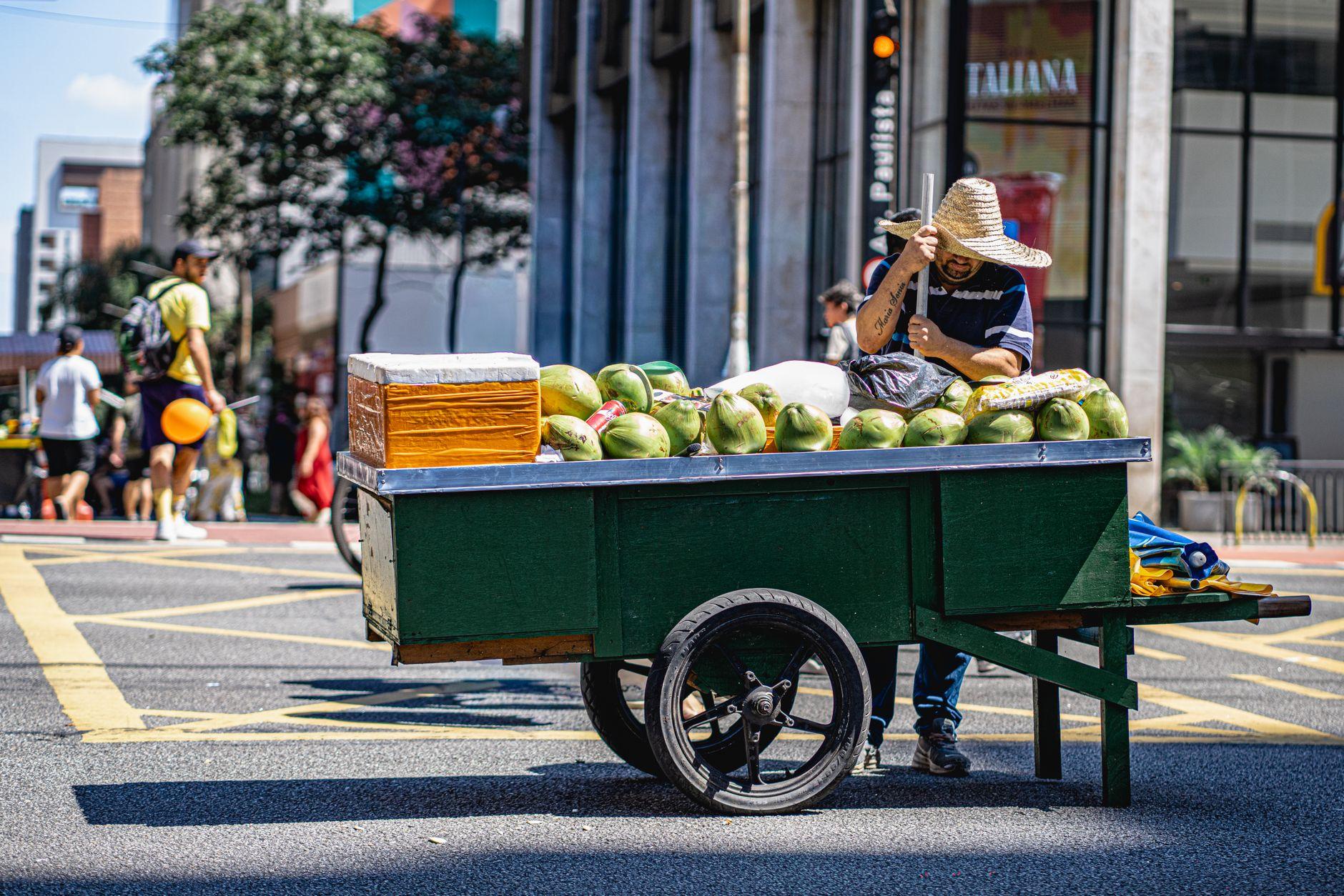

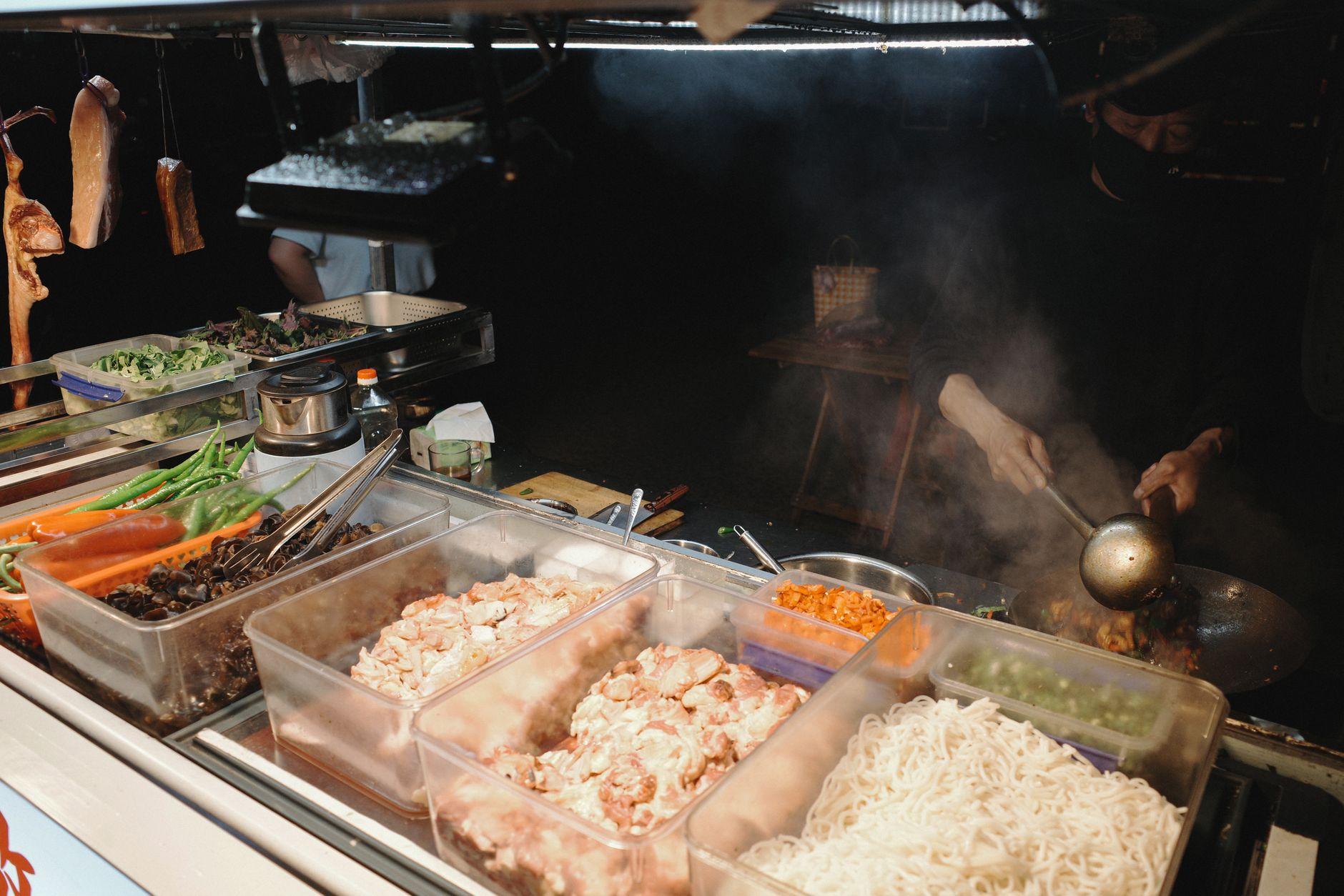
Ask someone who has never been to China how they plan to pay for jianbing at a Beijing breakfast cart or lamb skewers at a Xi'an night market, and you will usually hear one of two answers: "I'll bring cash" or "I'll just use my card." Both answers come from how the rest of the world works. Neither one survives contact with an actual Chinese market stall in 2026.
China skipped the card era almost entirely and went straight from cash to phone payments. The result is a country where the humblest vendor, the auntie selling tanghulu off a bicycle, expects you to scan a QR code, and where your careful stack of crisp yuan notes can produce an audible sigh. Here are the myths worth unlearning before you land.
Myth 1: Cash is king, especially at street stalls
This is the big one, and it is exactly backwards. In most countries, the smaller and scrappier the vendor, the more likely they want cash. In China, it is the opposite. Street food stalls and wet market vendors were among the earliest and most enthusiastic adopters of WeChat Pay and Alipay, because QR codes solved real problems for them: no counting change with greasy hands, no counterfeit note worries, no cash box to guard.
Renminbi is legal tender and a vendor is supposed to accept it, but the practical reality travelers report again and again is different. The stall owner may have no change for your 100 yuan note. They may wave you toward the laminated QR code taped to the counter. At busy stalls with a queue behind you, fumbling with cash marks you instantly as the person slowing everything down.
Myth 2: My Visa or Mastercard will work somewhere
Foreign card acceptance in China is minimal outside international hotels, airport shops, and some high-end mall retailers. The night market, the noodle shop, the taxi, the fruit stand, the hole-in-the-wall dumpling place everyone on the internet told you about: none of them have a card terminal, and most never did. China's merchants went from a cash drawer to a printed QR code without ever installing the card infrastructure that travelers assume exists everywhere.
So the usual traveler fallback plan, "cash for small stuff, card for everything else," fails on both ends in China. Small stuff wants QR, and everything else also wants QR.
Myth 3: QR payments are only for locals with Chinese bank accounts
This used to be largely true, and it is the myth with the most outdated blog posts still floating around. For years, the WeChat Pay and Alipay ecosystems were effectively closed to anyone without a Chinese bank account and phone number, and visitors regularly got stuck unable to pay at restaurants and taxis despite having money in three currencies on their person.
Today you have more options. The vendor's QR code is just an address pointing at their account, and you do not necessarily need to be inside the Chinese banking system to pay it. Moreta Pay lets you scan the same merchant QR codes locals use, with your wallet funded from your home bank or card in your own currency. You scan the stall's code, see the amount, the merchant name, and the exact FX rate before confirming, and the vendor gets paid in yuan on the spot. If you are curious how these networks actually differ under the hood, we unpacked that in who actually runs the QR code you're scanning.
Myth 4: All QR payments work the same way
Not quite, and knowing the difference saves you an awkward thirty seconds at the counter. At a street stall, you will almost always see a static printed code, often laminated and faded by cooking steam, sometimes two codes side by side (one for WeChat Pay, one for Alipay). You scan it and type in the amount the vendor tells you, then show them the confirmation screen. They usually have a little speaker that announces the payment out loud, which is their receipt.
At supermarkets, chain bakeries, and convenience stores, it often flips: the cashier scans a code on your phone instead. We covered when each mode applies in scan or show, and China is the country where you will encounter both within the same city block. At markets specifically, assume you are the one scanning.
Myth 5: I'll just set everything up when I land
Risky. Your first hours in China are exactly when you most need working payments (airport water, metro or taxi, that first meal) and exactly when setup is hardest. The Great Firewall means some apps and verification services behave differently than at home, your foreign SIM may be roaming unreliably, and identity verification steps that involve passport photos and card linking do not always succeed on the first try, especially at midnight after a long flight.
The smarter sequence is to arrive already able to pay. Set up and fund your wallet before departure, while you still have fast internet and your home bank's app working normally. Moreta Pay tops up from a US bank connection, ACH, SEPA, UK Faster Payments, Canadian e-Transfer, or an international card, all of which are far easier to do from your sofa than from an arrivals hall.
Myth 6: Worst case, there's always an ATM
You can find ATMs in Chinese cities, and some will dispense yuan to a foreign card. But treat this as a backup, not a plan. You run into the usual problems: machines that reject foreign cards, withdrawal limits, and the simple fact that the cash you just withdrew circles you straight back to Myth 1, standing at a stall whose owner would really rather you scanned the code. Many travelers end their trip with a drawer of unspent notes, which creates its own quiet cost when you convert them back.
Keep a modest cash reserve for genuine edge cases (a temple donation box, a very rural stop, a dead phone battery). Just do not build your eating strategy around it.
Your first night market, played correctly
Here is how the evening actually goes when you arrive prepared. You walk the stalls, pick the one with the longest local queue, and order by pointing. The vendor says a number or shows it on a calculator. You scan the laminated code, enter the amount, glance at the merchant name and FX rate on your screen, and confirm. The speaker chirps, the vendor nods, skewers change hands, total elapsed time about ten seconds. No change counted, no card declined, no apologetic retreat to find an ATM.
China without cash is not a stunt or a challenge. It is simply how the country already works, and the only question is whether you join the system or spend your trip working around it. Get Moreta Pay set up before your flight and walk into that first night market able to scan like everyone else in the queue.