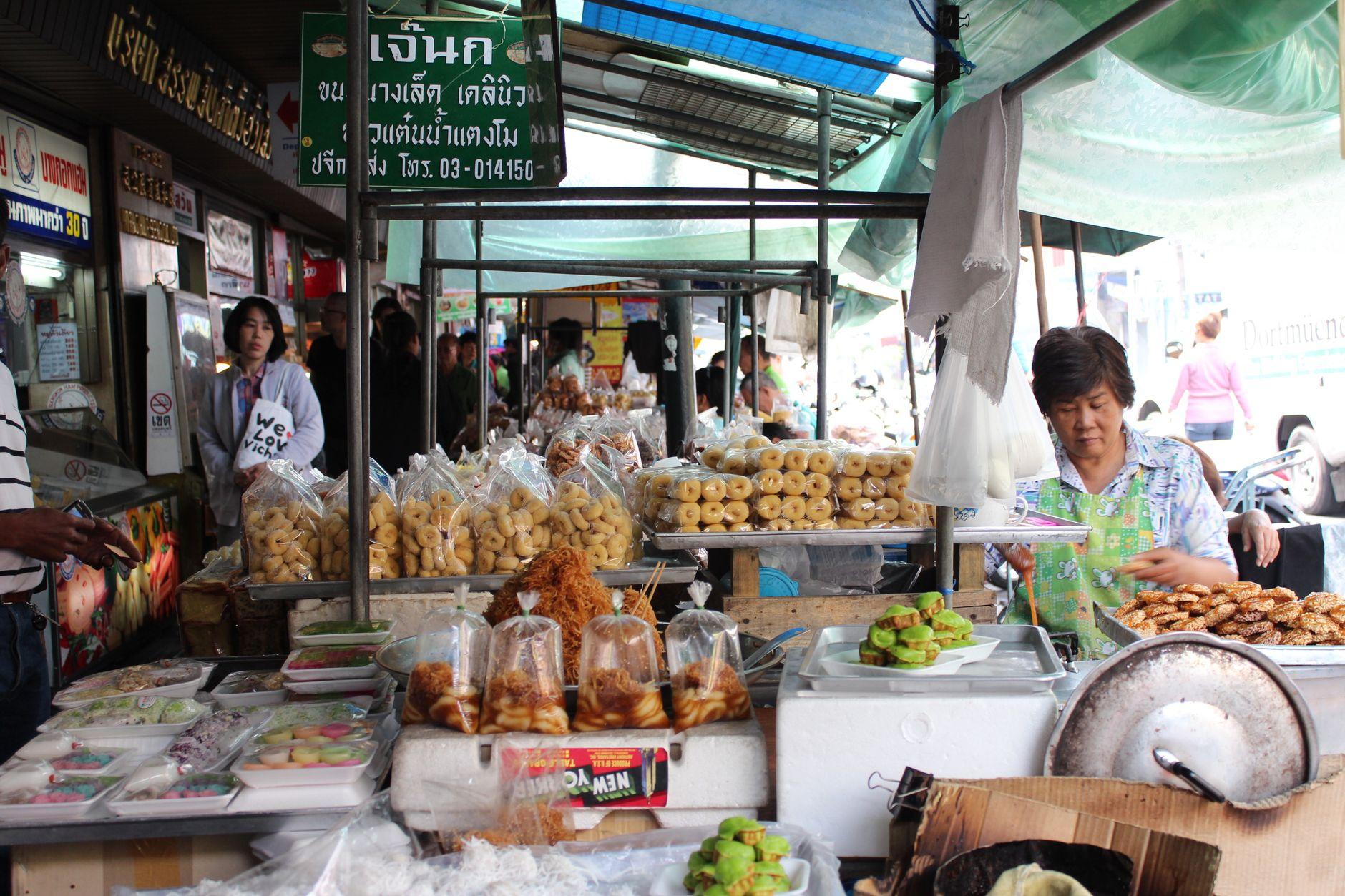

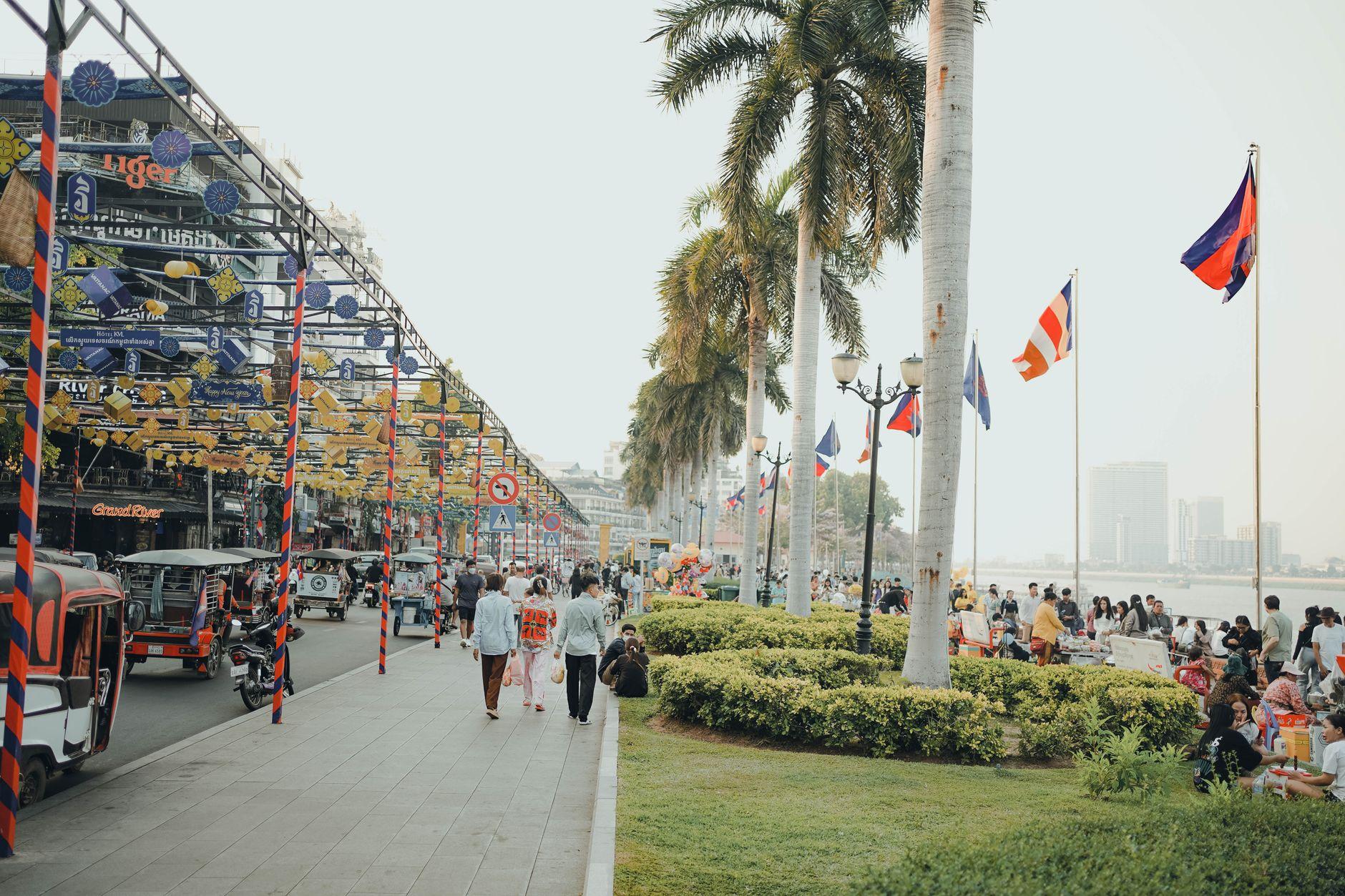
Cambodia has a way of making confident travelers feel like beginners again. You arrive thinking you have the money situation figured out (bring dollars, done), and within a day you are standing at a market stall in Phnom Penh holding a ten dollar bill while the vendor hands you back a confusing fan of riel notes, and a local next to you pays in two seconds by pointing a phone at a QR code.
Most of the money mistakes tourists make in Cambodia come from a handful of beliefs that are either outdated or only half true. Let's go through them one by one.
Myth 1: "Cambodia runs on US dollars, so cash dollars are all I need"
This is the big one, and it is only partly right. US dollars are accepted almost everywhere for larger amounts, and prices in hotels, tour agencies, and many restaurants are quoted in dollars. So far, so convenient.
Here is what the myth leaves out. Anything under a dollar is handled in Cambodian riel, which means every dollar purchase generates riel change. Buy a two dollar iced coffee with a five, and you may get dollars back, or riel, or a mix, depending on what the cashier has in the drawer. Within a few days your pockets are stuffed with small riel notes that you mentally round down to zero and never quite spend.
On top of that, dollar bills get inspected. A torn corner, a small pen mark, or a worn old-series note can get a bill politely refused, and there is not much you can do about it mid-transaction. Travelers who arrive with a thick envelope of mixed-condition dollars often find a chunk of it is effectively unspendable.
The dual currency system is charming in theory and a constant low-grade hassle in practice. Which brings us to the next myth.
Myth 2: "QR payments in Cambodia are only for locals"
Cambodia has one of the most unified QR payment systems in Southeast Asia, and most visitors have no idea it exists. It is called KHQR, and it runs on the Bakong system operated through the National Bank of Cambodia. The practical effect: one standard QR code format that works across banks and wallets, printed on laminated cards at market stalls, taped to tuk-tuk dashboards, and sitting on the counter of nearly every cafe and minimart.
Tourists assume this ecosystem is closed to them because they do not have a Cambodian bank account. That used to be true. It is not anymore. With Moreta Pay you top up a wallet from your home bank or card in your own currency, then scan the same KHQR codes locals use. You see the amount, the merchant name, and the exchange rate on screen before you confirm, the wallet converts to local currency, and the vendor is paid instantly. No Cambodian account, no SIM-card registration gymnastics, no begging a stranger to pay for you while you hand them cash.
And the dual currency confusion from Myth 1? It evaporates. A QR payment is for the exact amount, in the right currency, every time. No riel change, no arguing over a creased dollar bill, no mental math at the till.
Myth 3: "I'll just put everything on my credit card"
Cambodia is not a tap-your-card country outside of a specific bubble. Upscale hotels, international restaurants in Phnom Penh and Siem Reap, and some bigger shops take cards, often with a surcharge passed on to you. Step outside that bubble (markets, street food, tuk-tuks, small guesthouses, most local restaurants) and a card is a decorative piece of plastic. The real everyday payment methods in Cambodia are cash and KHQR, in roughly that historical order, with QR gaining ground fast.
So the realistic plan for how to pay in Cambodia is not "card everywhere." It is a QR wallet for the everyday stuff plus a modest amount of cash for the genuinely offline moments, like a remote countryside stop or a vendor whose QR card has wandered off.
Myth 4: "ATMs are the cheap, sensible way to get riel"
Cambodian ATMs will happily dispense US dollars or riel, but the operator fees on foreign cards are among the steeper ones in the region, and they stack on top of whatever your home bank charges. If you are curious how Cambodia compares to its neighbors, we broke the numbers down in our country-by-country guide to ATM fees across Southeast Asia and Latin America.
The mistake is not using an ATM once. It is building your whole trip around repeated withdrawals, paying the fee each time, and then overshooting on the last one so you leave the country with leftover cash. Leftover riel is particularly painful because it is hard to exchange outside Cambodia, so whatever you do not spend tends to become a souvenir. We covered why leftover currency quietly costs travelers twice, and riel is a textbook case.
Paying by QR flips the model: you convert only what each purchase actually costs, at a rate you see before confirming, and there is nothing left over to lose on the way out.
Myth 5: "Street vendors and tuk-tuk drivers are cash-only anyway"
Walk through Phsar Thmei or the old market in Siem Reap and count the KHQR cards. The noodle stall takes QR. The fruit lady takes QR. The tuk-tuk driver who picked you up outside Angkor Wat almost certainly takes QR, because Bakong made it essentially free and effortless for small merchants to accept it. Many drivers actively prefer it, since it saves them from carrying change and counting bills at night.
The irony is that the tourist fumbling with dollar bills is often the least modern payer at the market. Locals scan and go. With a wallet like Moreta Pay connected to your own bank back home, you can do exactly the same thing, down to paying for a fifty cent bag of mango with no change involved at all.
Myth 6: "QR codes stop working once I'm back at my laptop"
One more that surprises people: KHQR-style payments are not just a street-level thing. Booking platforms used across the region, like Agoda and Trip.com, offer QR-based checkout in supported markets, and the same scan-review-confirm flow applies. For longer stays, QR can also cover bills in supported countries, which matters if you are an expat or a slow-traveling nomad settling into Phnom Penh, Kampot, or Siem Reap for a few months rather than a few days.
What a sensible Cambodia money setup looks like in 2026
Strip away the myths and the plan is short. Bring a small amount of crisp, newer US dollars for the handful of situations that still want cash. Expect riel in your change and spend it on small things rather than hoarding it. Skip the repeated ATM runs. And put a KHQR-capable wallet on your phone before you land, so the dual currency puzzle becomes someone else's problem.
Cambodia already built the rails. Bakong and KHQR mean one QR standard from the capital to the countryside, and visitors no longer have to watch from the sidelines. Load up Moreta Pay from your home bank, scan the same codes the locals do, and let the riel change stay in the vendor's drawer where it belongs. Set up your wallet before your flight to Phnom Penh and arrive already knowing how you will pay.