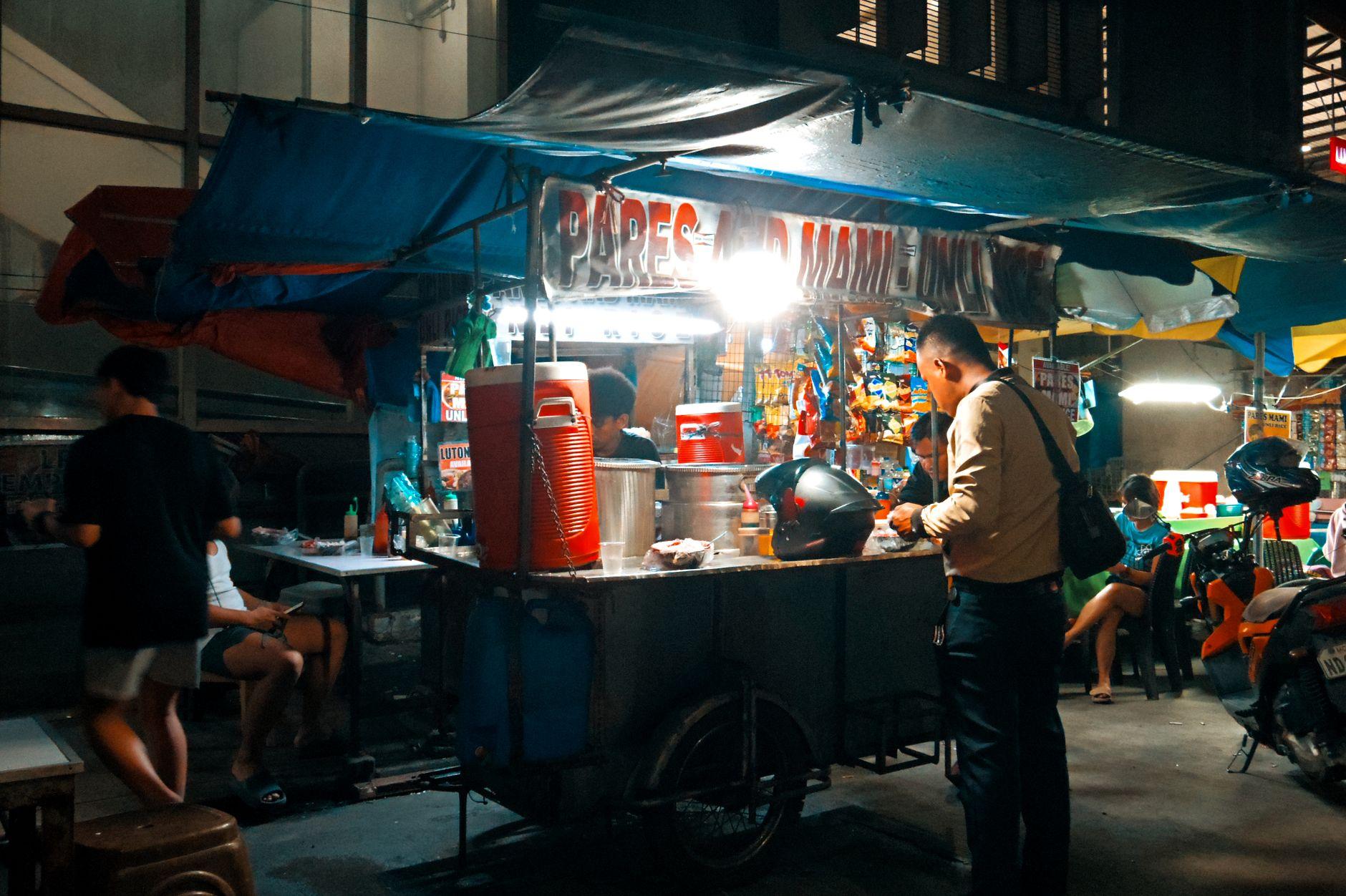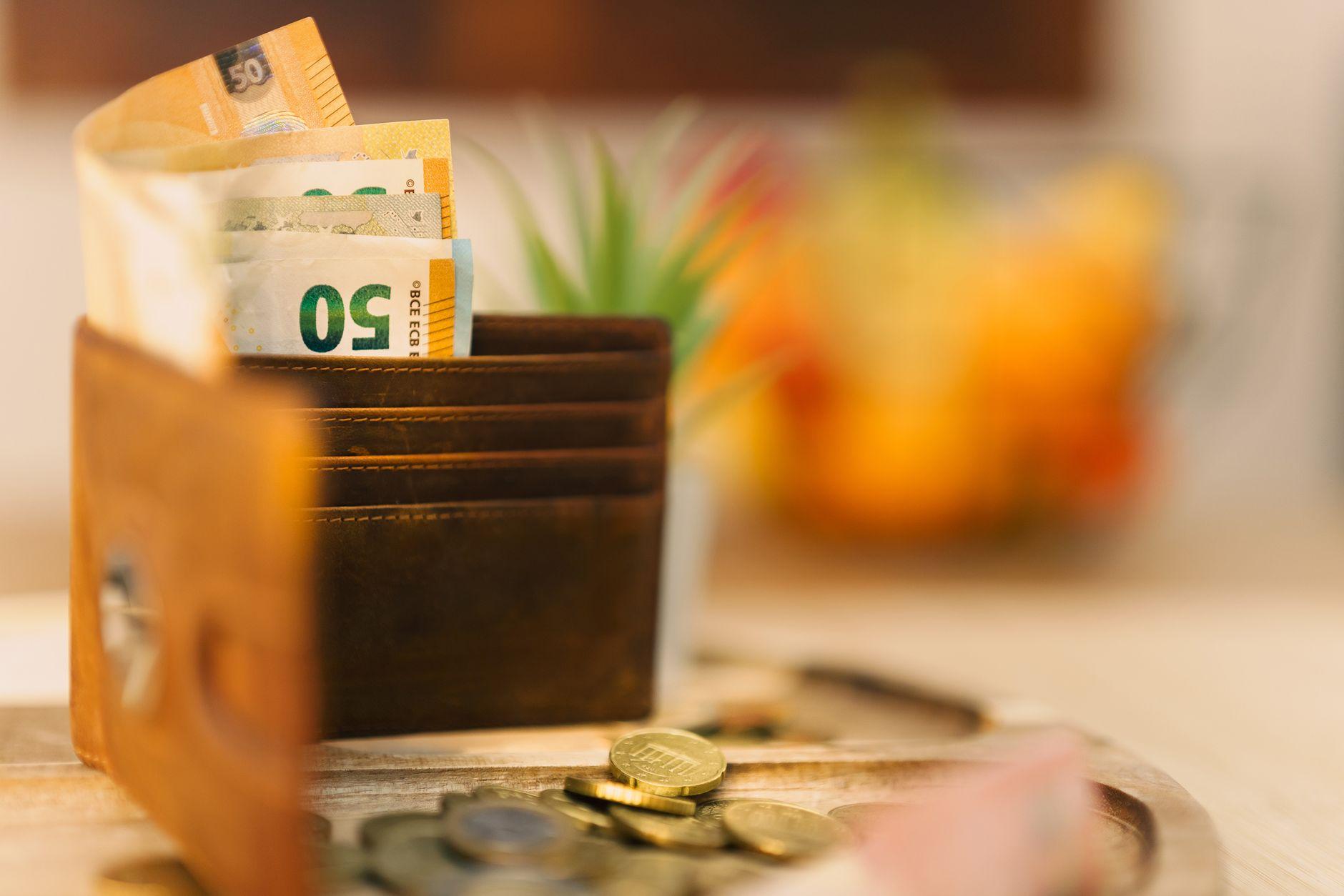


The grilled Mekong fish in Luang Prabang costs more kip than your wallet can physically hold, the ATM just charged you a fee that stung, and the papaya salad lady is pointing at a laminated QR code clipped to her umbrella. Paying for street food in Laos raises the same handful of questions for almost every traveler, so here are the answers, straight up.
Do street food stalls in Laos really take QR payments?
In Vientiane and Luang Prabang, increasingly yes. The national standard is called LAO QR, and it has been spreading fast through exactly the places travelers eat: the night market along the Mekong in Vientiane, the food alley off Sisavangvong Road in Luang Prabang, the morning markets where vendors sell khao jee baguettes and bags of sticky rice. Locals scan these codes with their bank apps and the money lands instantly, so vendors love them. A grilled chicken stall with no electricity beyond a single lightbulb will often still have a QR code taped to the cart.
Outside the two main tourist cities, coverage thins out. Smaller towns and rural markets are still overwhelmingly cash, so treat QR as your primary tool in the cities and your bonus tool everywhere else.
Can a foreigner actually use LAO QR?
Not through the local apps, no. Those require a Lao bank account, which requires residency paperwork you almost certainly do not have as a visitor. This is the same wall travelers hit with local wallets across the region, and it is the gap Moreta Pay was built for. You top up a wallet from your home bank or card in your own currency, then scan the same LAO QR codes locals scan. You see the amount, the exchange rate, and the merchant name before you confirm, and the vendor gets paid in kip on the spot. No Lao bank account, no local SIM registration dance, no asking a stranger to pay for you while you hand them cash.
Why does everyone complain about the kip?
Because of the zeros. Kip comes in huge denominations, and even a modest street food dinner runs to tens of thousands of kip, so a day of eating and tuk-tuks means a genuinely thick stack of notes. Your wallet stops closing. You start doing mental math with five zeros while a queue forms behind you at the tam mak hoong stall. It is charming for about two days.
This is the quiet argument for going QR-first in Laos: every payment you scan is a stack of notes you never had to withdraw, count, carry, or fumble. The exact amount moves, down to the last kip, and nobody has to hunt for change.
Should I just rely on ATMs then?
Plan around them rather than on them. Lao ATMs typically have low withdrawal limits and high fees, which is a rough combination: you cannot pull out much at once, and each small withdrawal costs you. Travelers end up making repeated ATM runs, paying repeated fees, and still carrying that brick of kip. Keep a cash reserve, absolutely, but let it be a reserve, not your entire payment strategy. Use QR where it exists and let cash cover the gaps.
How does paying at a stall actually work?
Simpler than you expect. Point at the food, get a nod and a price, open Moreta Pay, scan the vendor's LAO QR code, check the merchant name and the kip amount, confirm. The vendor's phone chimes or they glance at their screen, and that is it. Many codes are static, meaning you type in the amount yourself, so confirm the price out loud or watch them tap it into a calculator first. For a bowl of khao piak sen at a plastic table, the whole exchange takes less time than counting out notes.
Is QR fine for tiny amounts, like a bag of sticky rice?
Yes, and vendors do not mind. Locals scan for small purchases constantly, so nobody blinks at a QR payment for a snack. If anything, small purchases are where cash hurts most, because breaking a large kip note for something cheap either annoys the vendor or drains their change float. Scanning the exact amount is a small kindness both ways.
What do I do when a stall is cash only?
Pay cash, cheerfully. Rural markets, roadside grills between towns, and older vendors who never adopted a smartphone will want kip in hand. Two habits help. First, hoard small notes: when you do pay cash somewhere, use big notes at busier stalls that can break them, and save the small stuff for the places that cannot. Second, do not let your reserve run to zero just because Vientiane spoiled you with QR codes. The moment you leave the city, the math changes.
I'm coming from Thailand. Is it the same system?
Related, but not identical. Thailand runs on PromptPay and the QR habit there is deeply established, which we covered in our piece on Thai street food payment myths. Laos is earlier in the same curve: the standard exists, the stickers are multiplying, but adoption is patchier and more concentrated in the big two cities. If you are doing the classic overland loop, it is worth knowing that Cambodia's stalls have their own QR standard too, and Moreta Pay works across these networks with the same wallet, so you are not resetting your payment setup at every border.
Any etiquette I should know at Lao markets?
A few things go a long way. Greet with a sabaidee before pointing at food. Do not haggle over cooked food prices, that is for souvenirs, not soup. If you are scanning a QR code, show the vendor your confirmation screen if they seem unsure, since some are still new to seeing foreigners use it. And buy the Beerlao from the same stall you are eating at rather than carrying one in, it is just good manners and it is cold anyway.
So what is the actual plan for eating my way through Laos?
Land with a wallet topped up before you arrive, so your first khao jee at the morning market is a scan, not an ATM hunt. Make one deliberate cash withdrawal for a reserve of kip, and protect your small notes. In Vientiane and Luang Prabang, look for the LAO QR sticker first and scan whenever you see one. Everywhere else, expect cash and be pleasantly surprised when a code appears. Set up Moreta Pay before your flight and the papaya salad lady's QR code stops being a mystery and starts being the easiest part of your day.