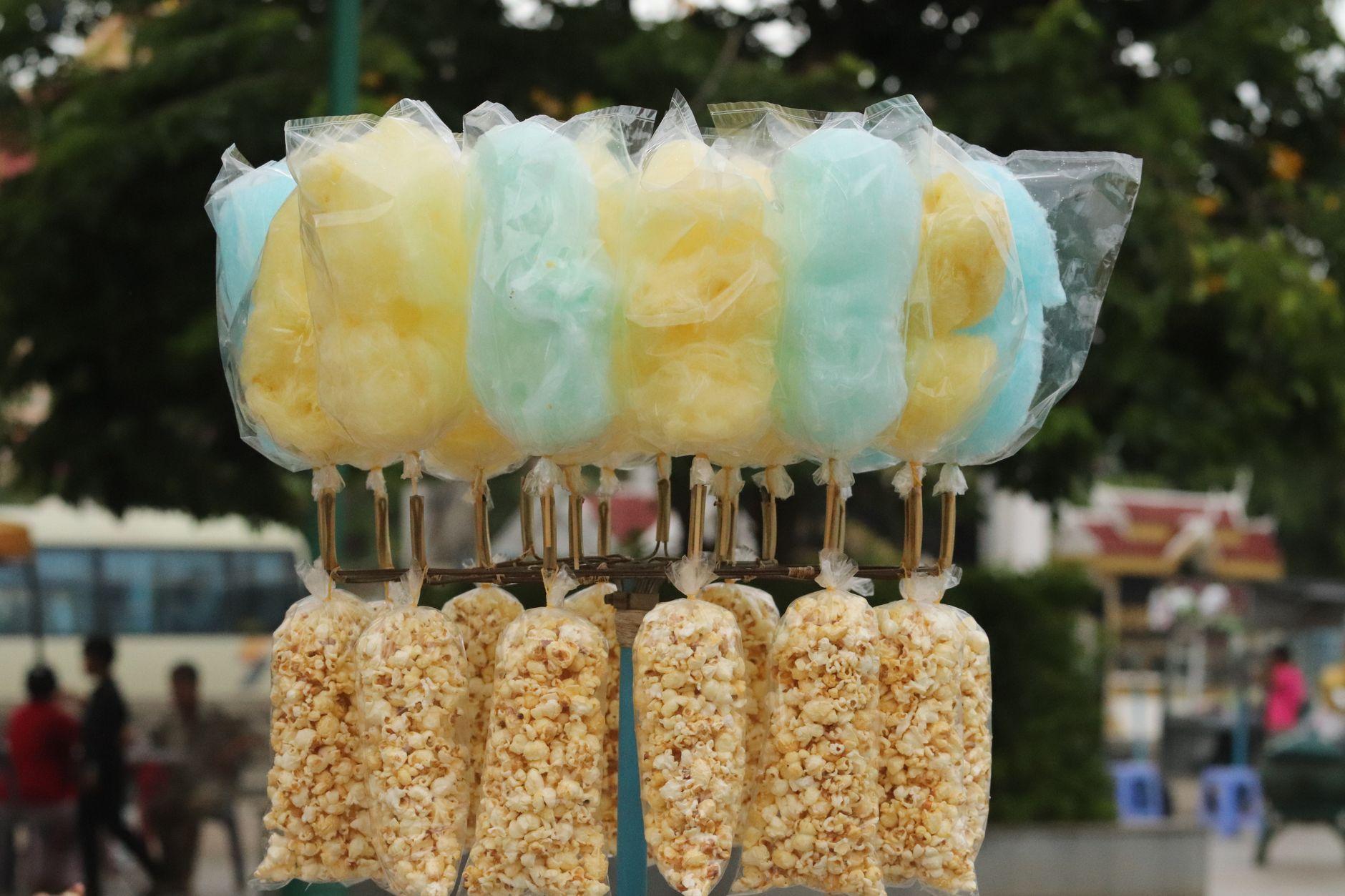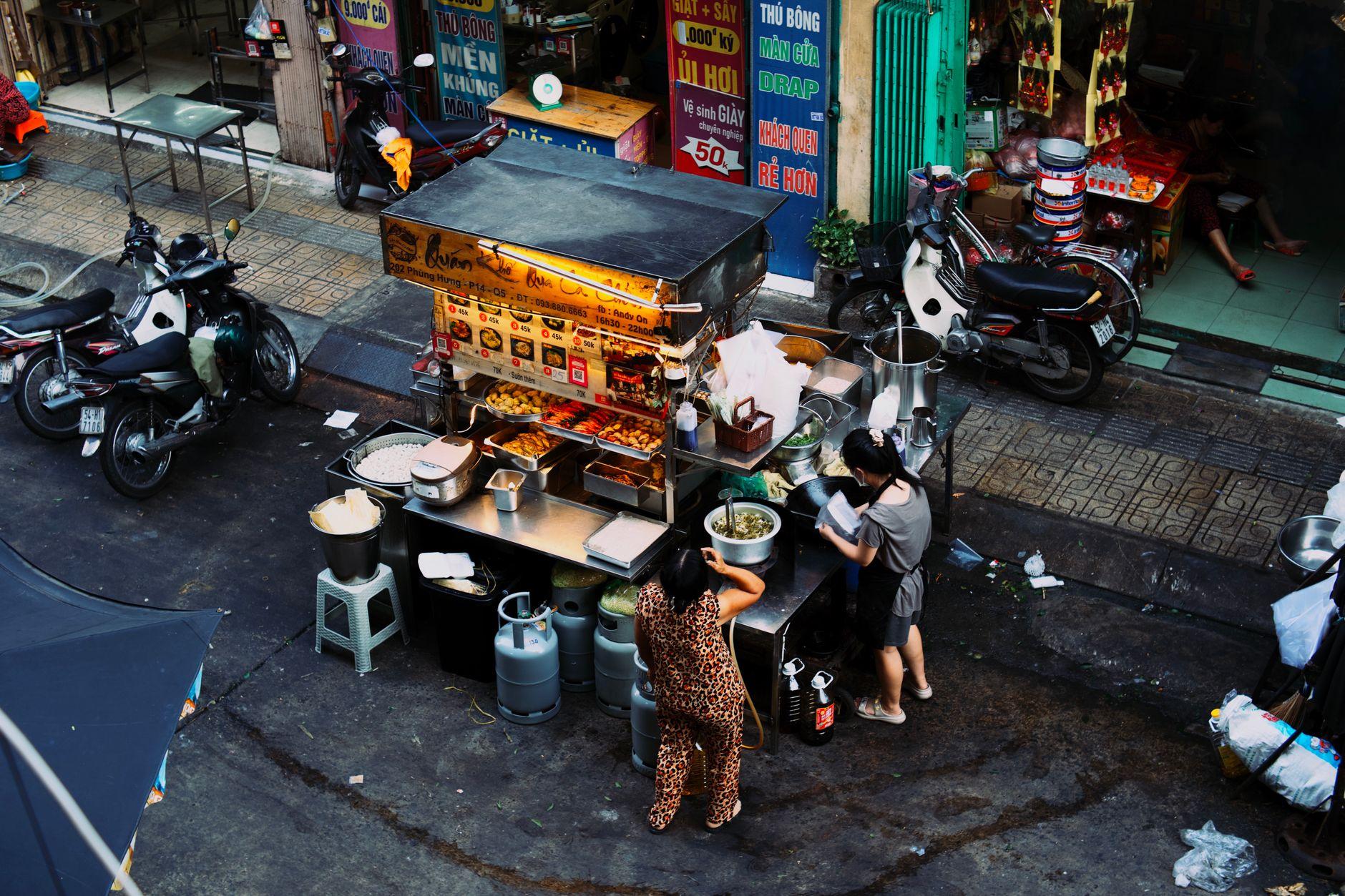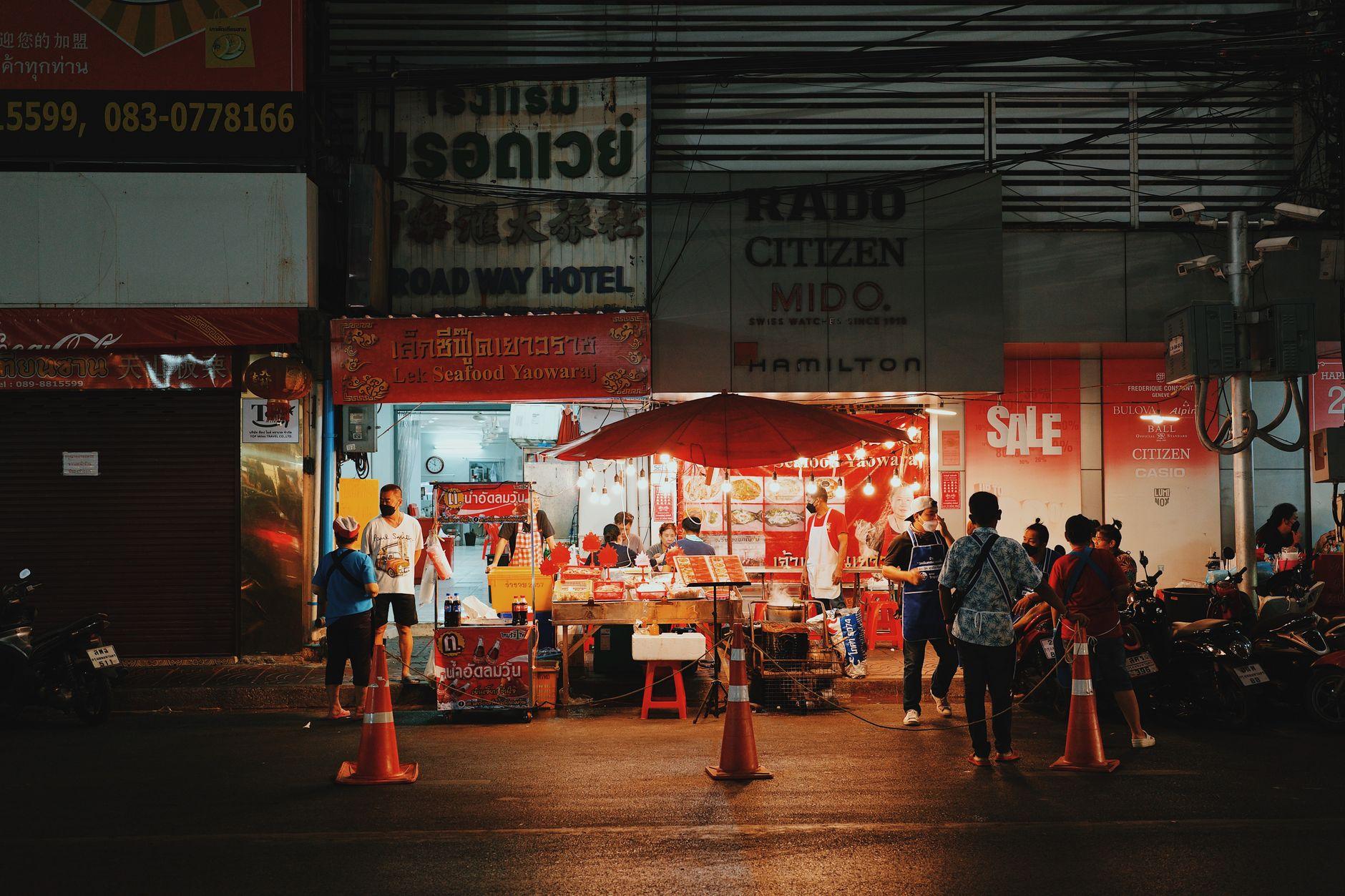

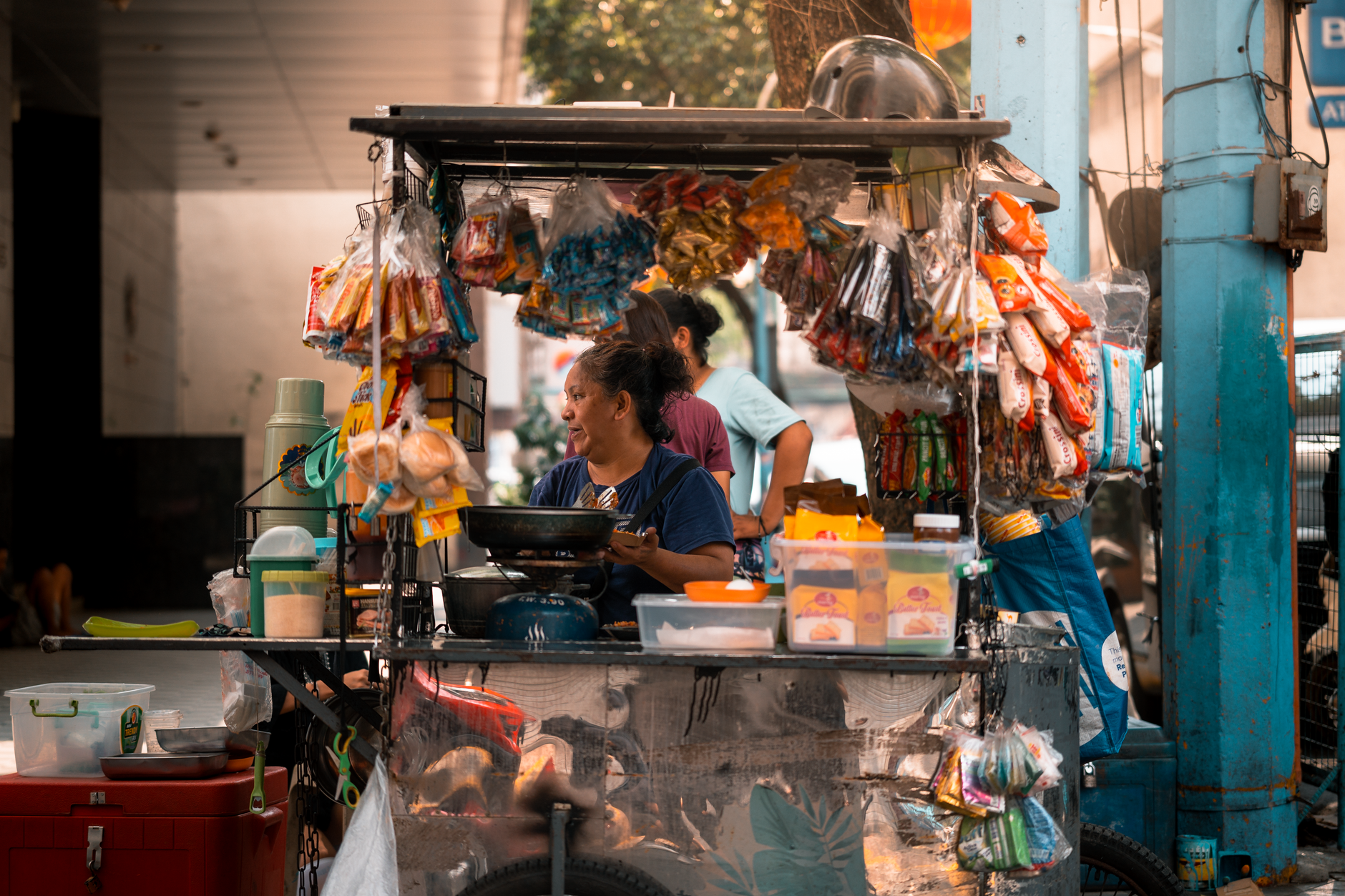
Somewhere between the kwek-kwek cart in Quezon City and the dried fish stalls of Cebu's Carbon Market, most travelers discover that everything they assumed about money in the Philippines was half right at best. The country is simultaneously more digital and more cash-bound than the guidebooks suggest, and which version you meet depends entirely on where you're standing. So let's go through the common beliefs one at a time and sort out what actually happens when you're hungry at a palengke with a wallet full of the wrong things.
Belief: "The Philippines runs on cash, full stop"
Walk through a Manila night market and count the laminated QR codes. The taho vendor has one. The woman selling banana cue has one taped to her cooler. The carinderia with four plastic tables has one stuck to the wall next to the menu. The Philippines adopted a national QR standard called QR Ph, and it ties together the big wallets (GCash and Maya) and the banks, so a single printed code can accept payment from almost any Filipino's phone. In Metro Manila, Cebu, Davao, and most tourist towns, scanning is completely normal at exactly the kind of stalls travelers assume are cash-only. The cash-only Philippines still exists, but it's a regional reality, not a national one. We'll get to that.
Belief: "Fine, I'll just download GCash when I land"
This is where most travelers hit the wall. GCash and Maya are built around a Philippine mobile number and local identity verification, and getting fully set up as a foreigner, especially one who just cleared immigration at NAIA, ranges from tedious to impossible depending on your documents and your patience. Plenty of visitors burn their first afternoon on SIM registration and app verification only to get stuck at a step that assumes they live there. If you want the longer version of that saga, we covered it in our FAQ on whether you actually need GCash to survive the Philippines. The short version: the local wallets are excellent for locals and hostile to tourists.
The workaround is simpler than fighting the signup flow. Moreta Pay scans the same QR Ph codes that GCash and Maya users scan, but it runs off your existing wallet funded from your home bank or card. No Philippine SIM, no local ID, no verification queue. The isaw vendor sees a normal payment land. You see the amount, the exchange rate, and the merchant name before you confirm. That's the whole transaction.
Belief: "My Visa or Mastercard will cover me"
At an SM mall, yes. At a hotel in Makati, yes. At a fishball cart, a tricycle, a sari-sari store, or a stall in Divisoria, absolutely not. Card terminals in the Philippines live where rents are high and transactions are large. The entire layer of the economy where street food and market shopping happens skipped cards and went straight to QR. If your plan for the Philippines is "I'll just tap my card," your plan works for about thirty percent of the things you'll actually want to buy, and almost none of the delicious ones.
Belief: "There's always an ATM nearby"
In cities, sure. But the Philippines is seven thousand islands, and the whole point of going is that you won't stay in the cities. Port Barton has famously operated without a reliable ATM. El Nido's machines run dry when the ferries are full. Siargao has a handful for the entire island, and after a long weekend they can all be empty at once. Island-hopping trips routinely strand travelers with a dead card, a drained machine, and a boat leaving in an hour.
The practical rule: withdraw more than feels comfortable before you leave a city, because the next working ATM might be a boat ride away. And wherever QR Ph codes do appear in beach towns (and they increasingly do, because vendors there have the same change-shortage problems as everyone else), paying by scan preserves your precious cash for the places that truly can't take anything else.
Belief: "Vendors prefer cash anyway"
Not as much as you'd think, and the reason is change. A market vendor doing hundreds of small transactions a day spends real energy breaking thousand-peso bills, guarding a coin box, and arguing over five pesos. A QR payment arrives exact, instant, and uncounterfeitable. In Manila and Cebu, many vendors now visibly prefer the scan, and some stalls will wave away your large bill and point at the code instead.
The honest caveat: in the provinces, cash is still king. A remote carinderia in Samar or a roadside stand in the Cordilleras may have never printed a QR code, and signal can be patchy besides. The right mental model for the Philippines is two zones. In the scan zone, QR is often the easiest option for everyone involved. In the cash zone, small bills (twenties, fifties, hundreds) are worth more than their face value, and a crisp thousand-peso note is a social inconvenience. Plan your bill denominations the way you plan your ferry schedule.
Belief: "QR codes are only for stalls and shops"
QR Ph shows up online too. Shopee and Lazada checkouts, Agoda and Trip.com bookings, even utility bills in supported countries can be settled through QR-based payment flows. For an expat settling into Cebu or a nomad doing a Siargao season, that matters: the same Moreta Pay wallet that pays for your lechon at the market can pay for the fan you order on Shopee and the island transfer you book on Trip.com, all without a local bank account. Travelers who've dealt with the equivalent walls elsewhere in the region (Malaysia's local wallets are similarly closed to foreigners) will recognize the pattern: the national QR standard is open, the local apps are not, and the trick is joining the standard without the app.
What the corrected picture looks like
So here's the Philippines after the myths are cleared away. The cities and tourist towns scan, and you can scan with them from day one if you bring your own QR-capable wallet instead of fighting GCash's signup. Cards are a mall-and-hotel tool, not a market tool. ATMs are a city resource to be stockpiled from, not an island amenity to be counted on. Cash still rules the provinces, so carry small bills there, and let QR handle the rest so your pesos last longer between machines.
Top up Moreta Pay from your US, UK, European, or Canadian bank (or an international card) before your flight, and the first grilled skewer you buy off a Manila sidewalk can go through the same QR Ph code every local uses, with the rate shown before you tap confirm. Set up your wallet before you land in the Philippines, then spend your energy deciding between isaw and balut instead of hunting for an ATM.