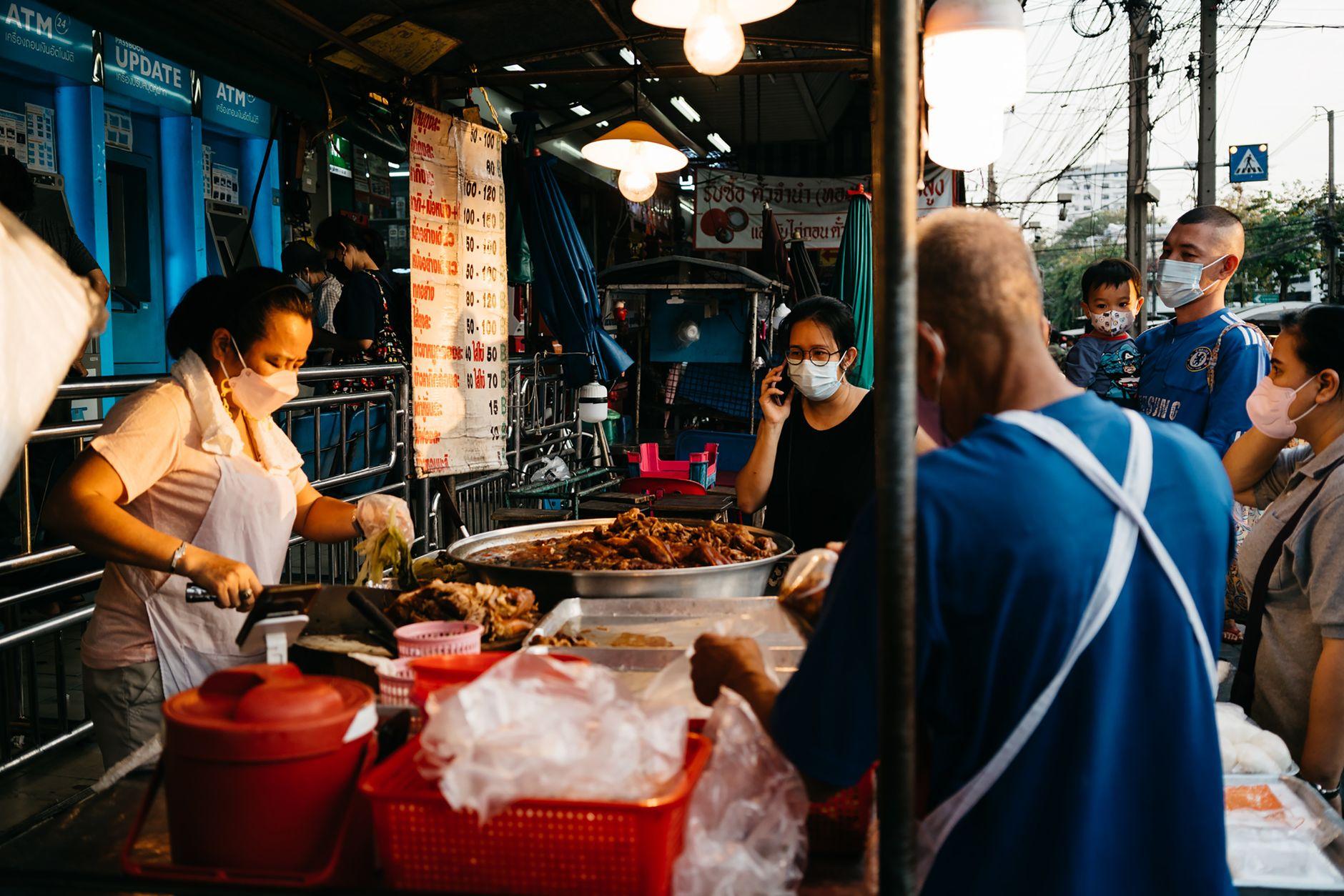

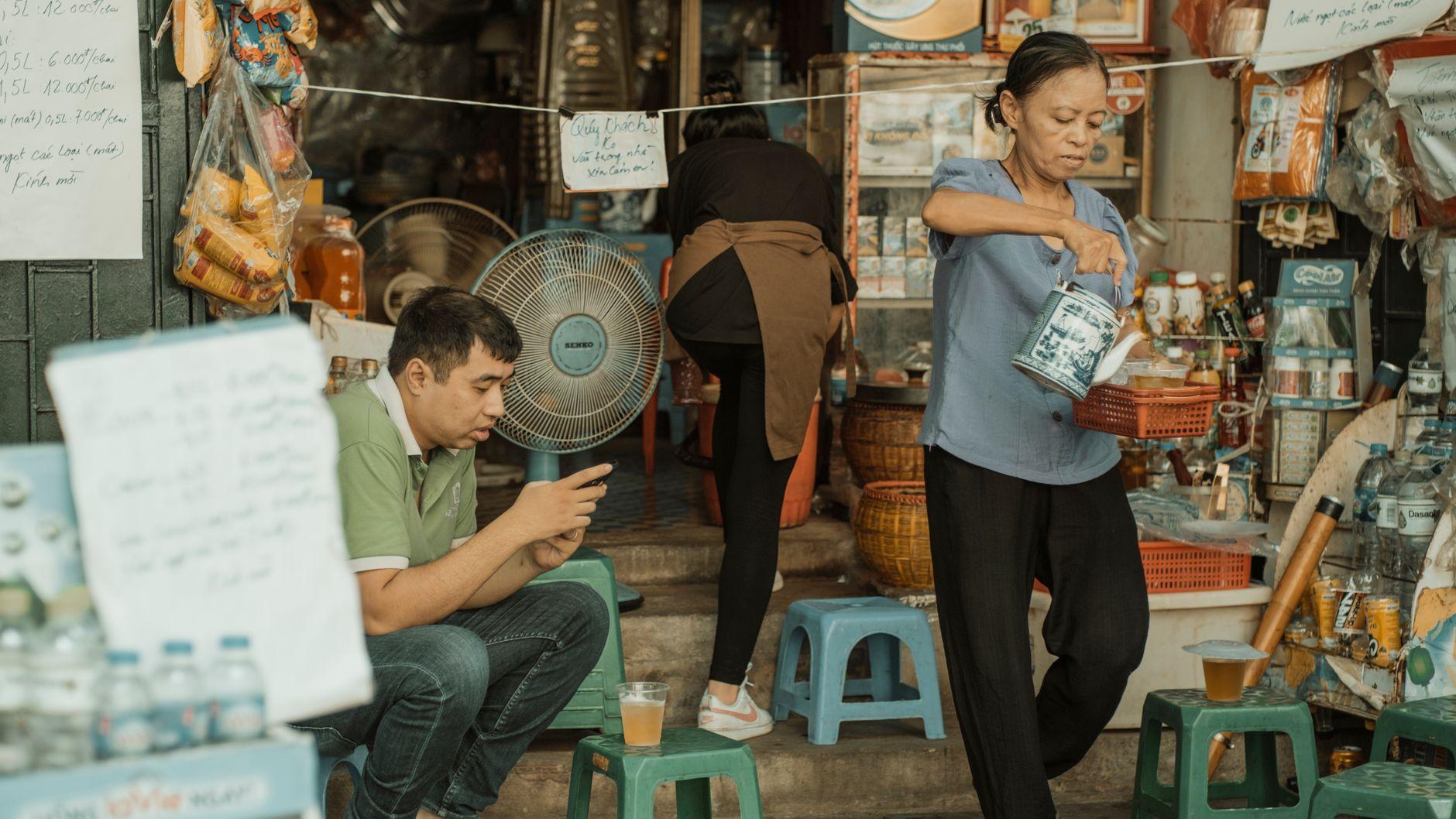
Ask ten travelers how to handle money in Vietnam and you will hear the same advice, repeated with total confidence: bring crisp dollars, withdraw big stacks of dong, keep small bills for street food, and do not even try your foreign card outside a hotel lobby. Some of that advice was true once. A lot of it quietly expired while the country wrapped itself in QR codes. Here are the beliefs that cost visitors the most, taken apart one at a time.
Myth one: Vietnam is a cash-only country
Cash is still everywhere in Vietnam, no argument there. Markets take it, taxis take it, your hotel will happily take it. But "cash is accepted" and "cash is required" are different claims, and the second one stopped being true faster than most guidebooks noticed.
The thing that changed everything is VietQR, the national QR standard that lets anyone with a Vietnamese bank app pay anyone else by scanning a code. Walk through District 1 in Ho Chi Minh City or the Old Quarter in Hanoi and look at the counters: the banh mi cart has a laminated QR code taped to the glass. The ca phe sua da stand has one propped against the sugar jar. The lady selling mangoes from a bicycle has one hanging from the handlebars. Locals scan, a confirmation chimes on the vendor's phone, done. Nobody counts change.
So the honest version of the myth is this: Vietnam is a cash-optional country where the QR option is often faster, and where the person in front of you in line is probably scanning, not paying with notes.
Myth two: the ATM is the cheapest way to get dong
This one survives because it feels logical. Banks are official, exchange kiosks look sketchy, therefore the ATM must be the fair deal. In practice a withdrawal in Vietnam can get clipped in several places at once: a fee from the Vietnamese ATM operator, a fee from your home bank for using a foreign machine, and whatever exchange rate your card network applies without showing you first. None of those appear on a screen you can compare. You find out when your statement arrives, long after the money is spent.
And because withdrawal limits per transaction are often modest relative to the fees, travelers respond by withdrawing large amounts to "make the fee worth it," which just creates the next problem: walking around with a thick brick of dong you now feel obligated to spend.
The alternative is to skip the conversion-via-plastic entirely. With Moreta Pay you top up a wallet from your home bank or card in your own currency, then pay Vietnamese merchants by scanning the same VietQR codes locals use. Before you confirm, you see the amount, the exchange rate, and the merchant's name on one screen. Nothing is hidden until the statement. If a trip through Thailand is also on your itinerary, the same approach works with PromptPay there without changing anything in your setup.
Myth three: your foreign Visa or Mastercard will carry you through
In Singapore or Seoul, maybe. In Vietnam, foreign card acceptance thins out dramatically the moment you step away from international hotels, big malls, and chain restaurants. The neighborhood pho place does not have a card terminal. The tailor in Hoi An does not have one. The motorbike mechanic definitely does not have one. What they all have is a QR code, because a printed code costs the merchant almost nothing while a terminal costs money every month.
Travelers who assume card acceptance end up in a frustrating loop: try the card, get an apologetic head shake, go find an ATM, pay the fees from myth two, come back. Reading the landscape correctly saves you that entire detour. In Vietnam the question is not "do you take cards," it is "can I scan."
Myth four: QR payments are only for people with a Vietnamese bank account
This was the real barrier for years, and it is the myth with the most recent expiry date. VietQR codes resolve to Vietnamese bank accounts, and the apps locals scan with (their bank apps, mostly) require local accounts to set up. A tourist on a two-week trip or an expat waiting months for residency paperwork could see the codes everywhere and use none of them.
That is exactly the gap Moreta Pay closes. You connect a funding source from home (a US bank via Plaid or ACH, SEPA in Europe, UK Faster Payments, Canadian e-Transfer, or an international card), load your wallet in your own currency, and scan the vendor's VietQR code like anyone else. The wallet converts to dong at a rate you approve on screen, and the merchant is paid instantly, through the same rails they already use. From their side of the counter, you look like a local customer. No Vietnamese bank account, no local SIM registration dance, no explaining yourself.
Myth five: you should exchange a big pile of money at the airport "to be safe"
Airport exchange counters price in your urgency, and they know a tired arrival will not comparison shop. The safety argument also inverts quickly: a large amount of cash is something you now have to guard for the rest of the trip, split between bags, and count in public. A sensible 2026 version of "being safe" in Vietnam is the opposite shape. Carry a small cash cushion for the genuinely cash-only moments (some rural stops, a few older market stalls, the occasional parking attendant), and let QR handle the daily volume of coffees, meals, groceries, and shopping. If you want the full picture of where small cash still genuinely wins across the region, the micro-fare problem is the honest exception to know about.
Myth six: QR is only for in-person street payments
The codes on café counters are the visible part, but Vietnam's QR rails extend online too. Platforms travelers actually use here, like Shopee for ordering things to your hotel or apartment, and Agoda or Trip.com for rooms and trains, offer QR-based checkout in supported flows. Instead of typing a foreign card number and hoping it is accepted (see myth three), you scan the payment code on screen and confirm. For expats settling in, paying bills through QR in supported countries follows the same pattern, which matters a lot more in month three than it does on day three.
What the corrected picture looks like
Put the six corrections together and a different Vietnam emerges from the one in older advice threads. You land with your wallet already funded from home. You keep a modest amount of dong for edge cases. Everything else, from the first iced coffee to the last-night seafood dinner, is a scan, a glance at the rate and the merchant name, and a tap to confirm. No ATM pilgrimages, no mystery conversion on next month's statement, no brick of banknotes in the hotel safe.
Vietnam's QR ecosystem is open to you; you just need the right key. Set up Moreta Pay before you fly and arrive scanning like you have lived there for years.