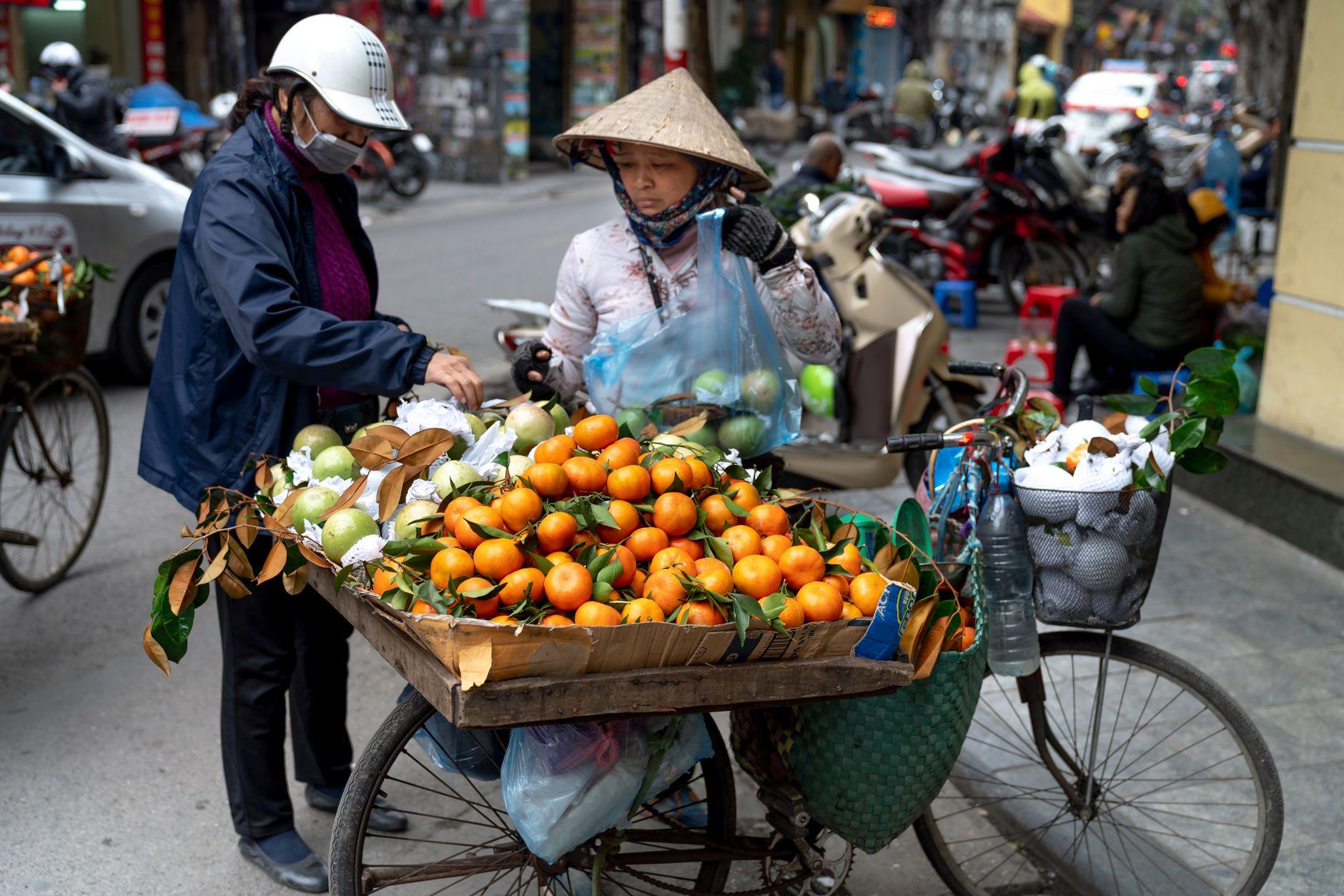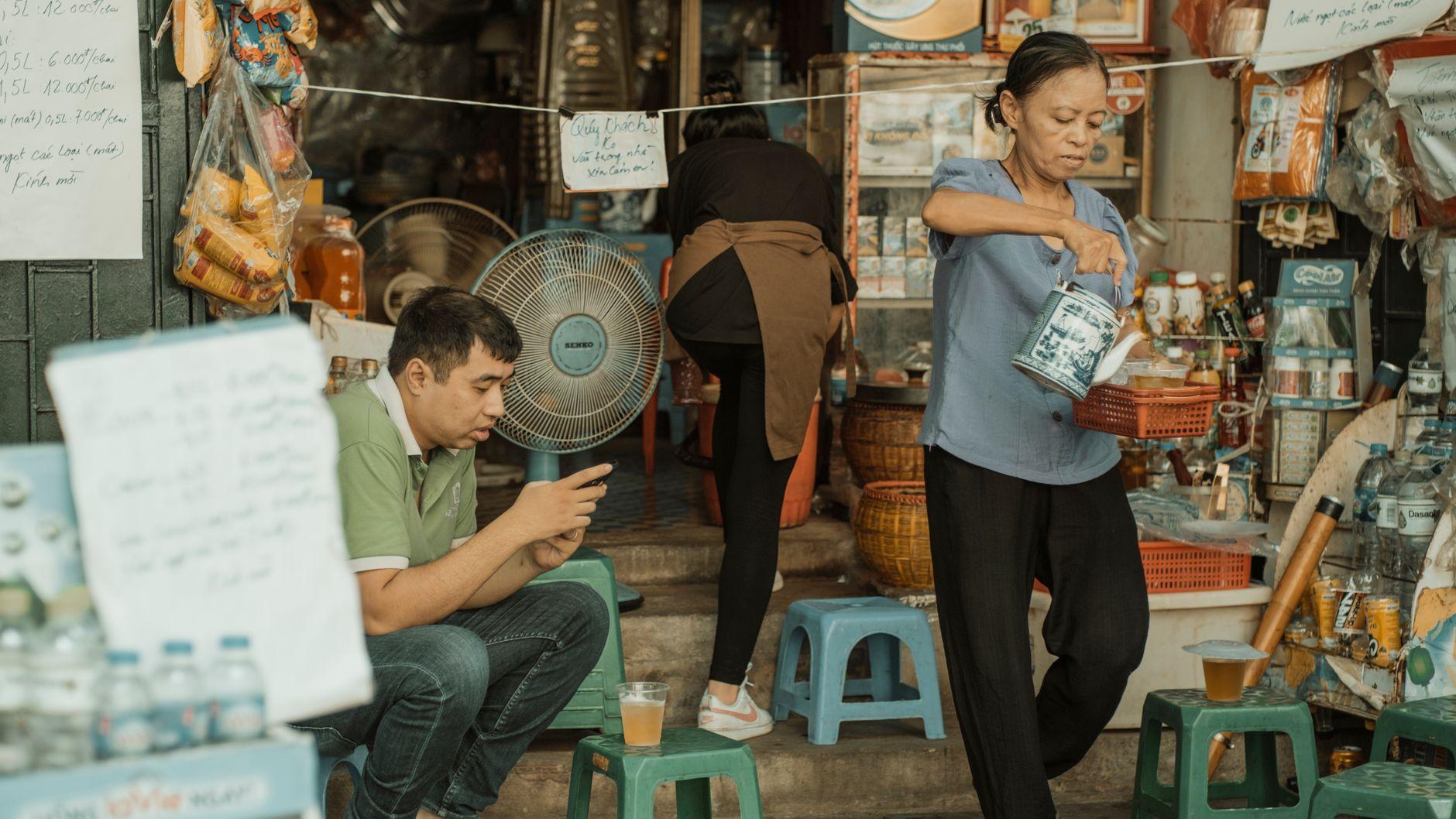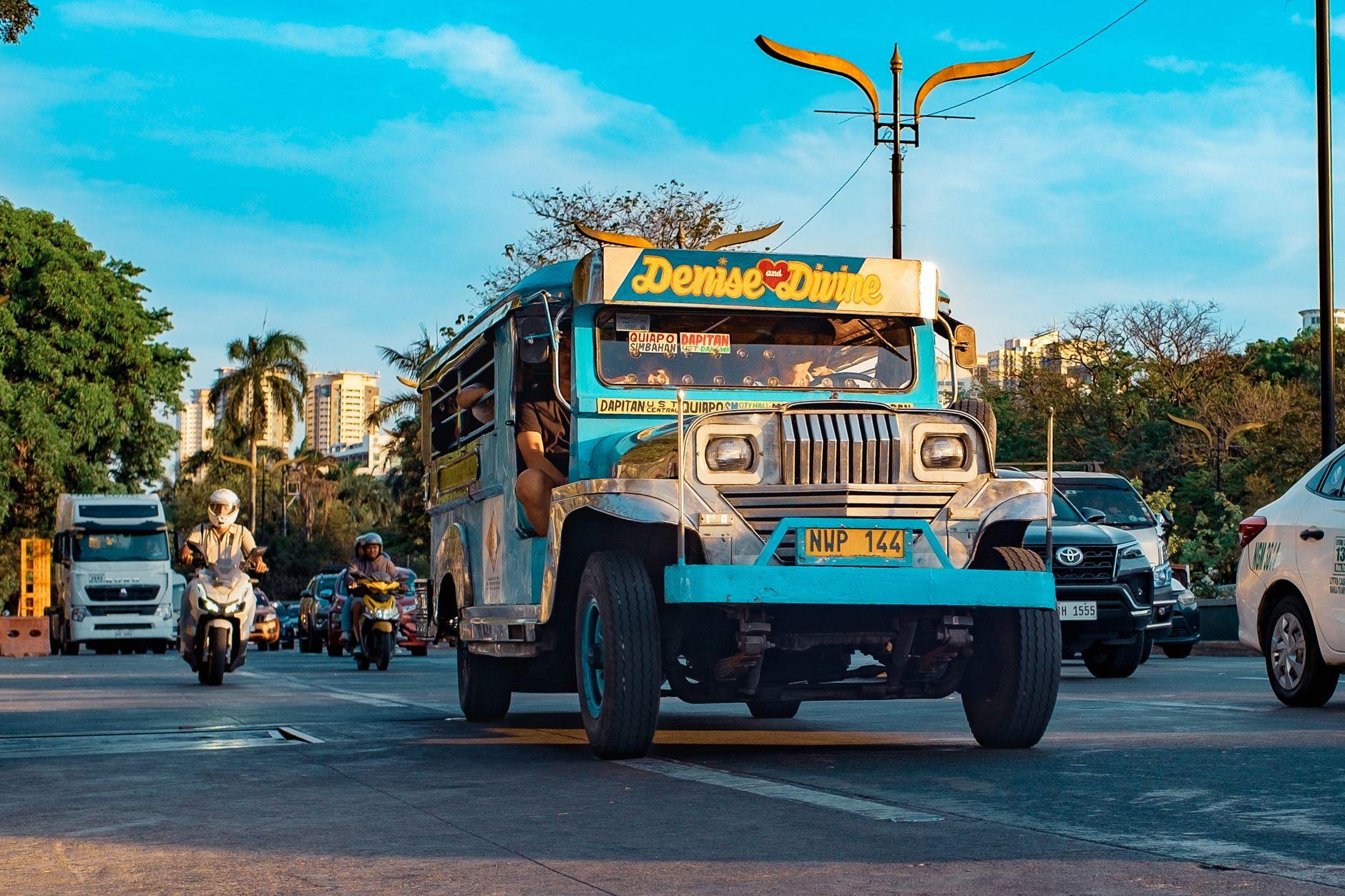

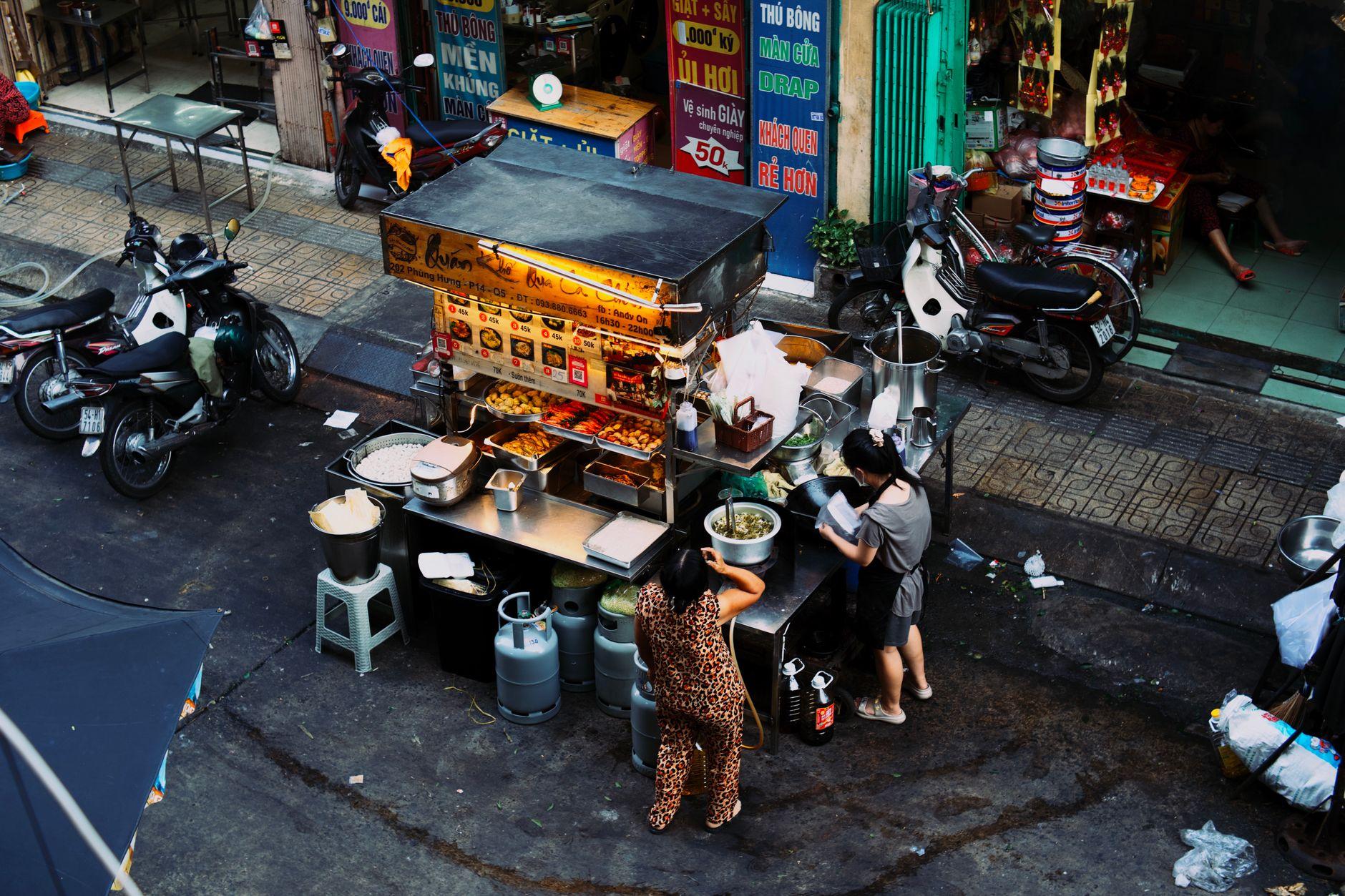
It's just past seven in the morning on a side street in Hanoi's Old Quarter. The bánh mì cart has a line of motorbike commuters, a stack of baguettes still warm from the bakery down the block, and, zip-tied to the front of the glass case, a laminated card with a QR code on it. The woman ahead of you doesn't reach for her wallet. She points her phone at the card, taps twice, shows the vendor her screen, and rides off with breakfast. Total transaction time: maybe four seconds.
Then it's your turn, and you're holding a 500,000 dong note the airport ATM gave you, watching the vendor's face fall because breaking a big bill at 7am means emptying her change drawer.
That moment, in miniature, is the whole story of paying at street food stalls and markets in Vietnam right now. Here's what's actually going on and how to be the person who taps twice instead of the person holding up the line.
That laminated card is VietQR, and it's everywhere
Vietnam's QR payment system runs on VietQR, a standard that links a QR code directly to a merchant's bank account. Every major Vietnamese bank app can scan one, which is why the same laminated card works for a customer banking with Vietcombank, Techcombank, or anyone else. Because the barrier to entry is basically "have a bank account and print a piece of paper," adoption has raced far past the fancy retail sector. You'll see VietQR codes at phở stalls with plastic stools, at the woman selling mangoes off the back of a bicycle, at the cà phê sữa đá window that only exists between 6am and 10am, and taped to poles at wet markets in Da Nang and Can Tho.
Some are laminated. Some are printed on paper and going soft in the humidity. Some are displayed on a cracked phone screen the vendor holds up. They all work the same way.
The catch for travelers: those bank apps require a Vietnamese bank account, which requires residency paperwork you almost certainly don't have. This is where an app like Moreta Pay changes the math, because it lets you scan the same VietQR codes locals use and pays the vendor in dong from a wallet you topped up in your own currency back home. No local account, no workaround, just the same four-second transaction the motorbike commuter did.
Cash isn't dead, but it's demoted
Let's be fair to cash. Plenty of vendors still prefer it, especially older sellers at traditional markets and anywhere in the countryside. You should carry some dong in Vietnam, ideally in small notes (10,000, 20,000, 50,000), because a street vendor's entire margin can disappear into making change for a big bill.
But cash has quietly shifted from "the way you pay" to "the backup." Locals increasingly settle even tiny purchases by QR, and vendors have adjusted their expectations accordingly. The practical setup for a traveler in 2026 looks like this: a modest cash float in small notes for the holdouts, and a QR-capable app for everything else. If you're still planning around the cash-first advice from a few years back, it's worth reading why that older Vietnam money advice no longer holds up.
Your foreign card will not save you here
A quick reality check, because this surprises people who've traveled elsewhere in Asia: Vietnam is not a tap-your-Visa country outside of hotels, malls, and upscale restaurants. Street stalls don't have card terminals. Most market vendors don't. A lot of neighborhood cafes don't either. The infrastructure jumped straight from cash to QR without much of a card era in between, so your contactless card that worked fine in Bangkok convenience stores mostly stays in your pocket here.
That's why the QR question matters so much more in Vietnam than in some neighboring countries. It's not a convenience upgrade. For huge swaths of everyday spending, QR or cash are the only two doors.
How the payment actually goes at a stall
The choreography is simple once you've seen it, but worth walking through so your first time isn't awkward:
- Order first, pay after. At most stalls you eat, then settle up. The vendor tells you the amount, often by typing it on a calculator or their phone if there's a language gap.
- Scan the code they point to. Busy stalls sometimes have two or three laminated cards for different accounts. Wait for the vendor to indicate which one. In Moreta Pay you scan it, and the merchant name attached to the account appears on your screen along with the amount in dong, the FX rate, and what it costs in your home currency, all before you confirm anything.
- Enter the amount carefully. Vietnamese dong comes with a lot of zeroes, and vendors often quote prices in shorthand ("forty" means 40,000). Double-check you haven't typed 400,000 for a bowl of bún chả.
- Show the confirmation screen. Vendors get a bank notification, but at a loud market they may not hear it. Turning your phone around with the success screen visible is the universal gesture. Some vendors will wave you off before you even finish turning it, because they heard the ping.
Where this gets genuinely fun
Once QR paying becomes reflex, Vietnam's food scene opens up in a way that's hard to overstate. The best meals in the country are frequently the least formal ones: the crab noodle lady who sets up on a corner for three hours a day, the night market in Hoi An, the grilled-everything alley behind a Saigon market that gets going after dark. These are exactly the places where cards fail and where fumbling with change slows everything down. Being able to scan the taped-up code like a local means you order based on what smells incredible, not on what your remaining small bills can cover.
It also extends past food. The same VietQR habit covers your Grab-adjacent motorbike parking fees, market souvenirs, tailors in Hoi An, and, since Moreta Pay handles QR-based online checkouts too, your Shopee orders and Trip.com bookings while you're in the country.
A one-paragraph packing list for your wallet
Land in Vietnam with this and you're set: a small amount of dong in notes of 100,000 and under, a phone with an eSIM or local SIM so you have data at the stall, and a QR payment app funded before you fly (Moreta Pay tops up from a US bank via Plaid or ACH, SEPA in Europe, UK Faster Payments, Canadian e-Transfer, or an international card). Keep the cash for the rare holdout vendor and scan for everything else. If you're routing through Thailand on the same trip, the muscle memory transfers, since Thai street stalls run a very similar QR routine on PromptPay.
The bánh mì cart isn't waiting for tourism infrastructure to catch up to you. The laminated card is already there, zip-tied to the glass, ready to go. Get yourself set up to scan it before you land: put Moreta Pay on your phone and pay Vietnam's markets the way Vietnam actually pays.