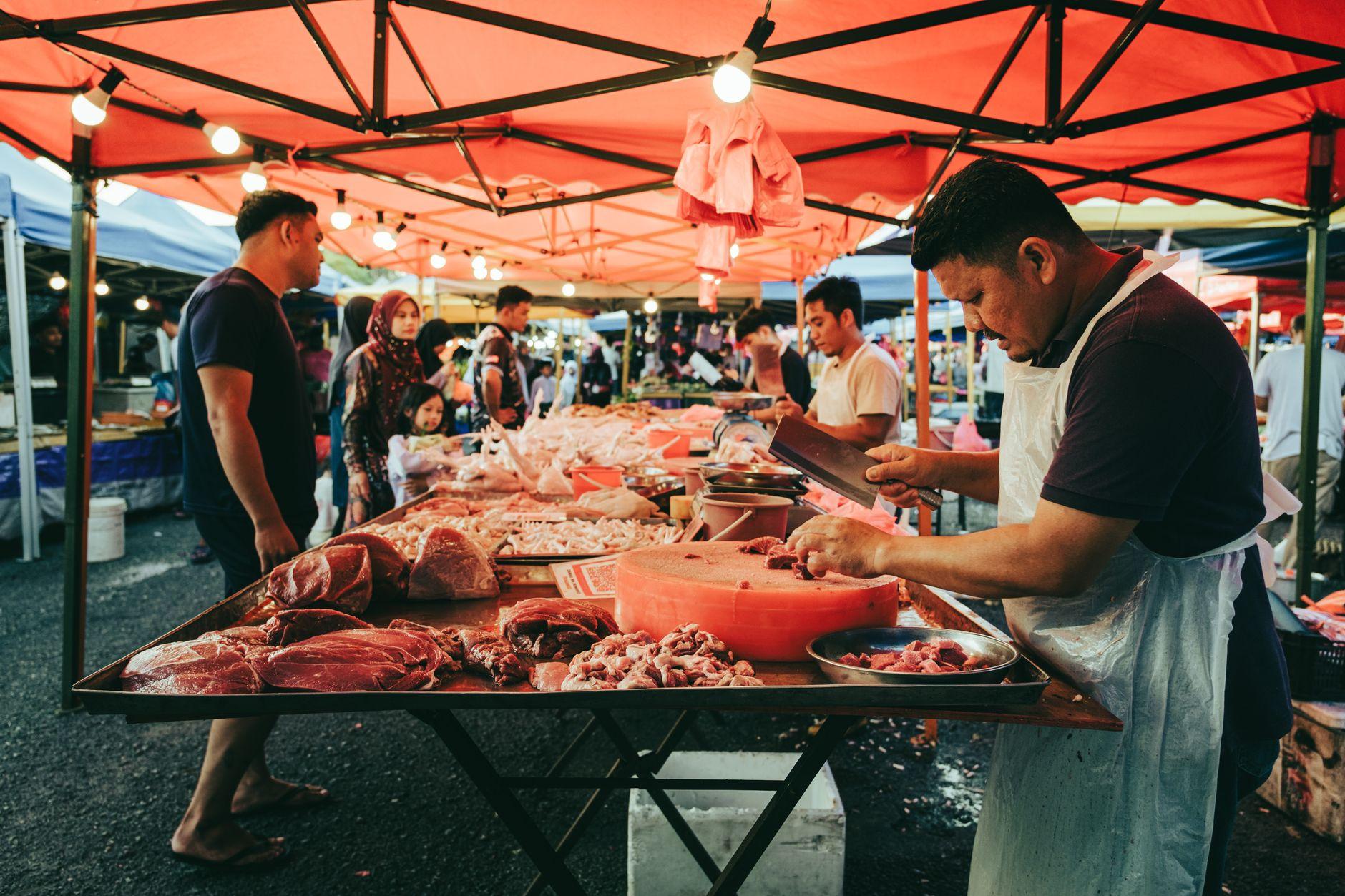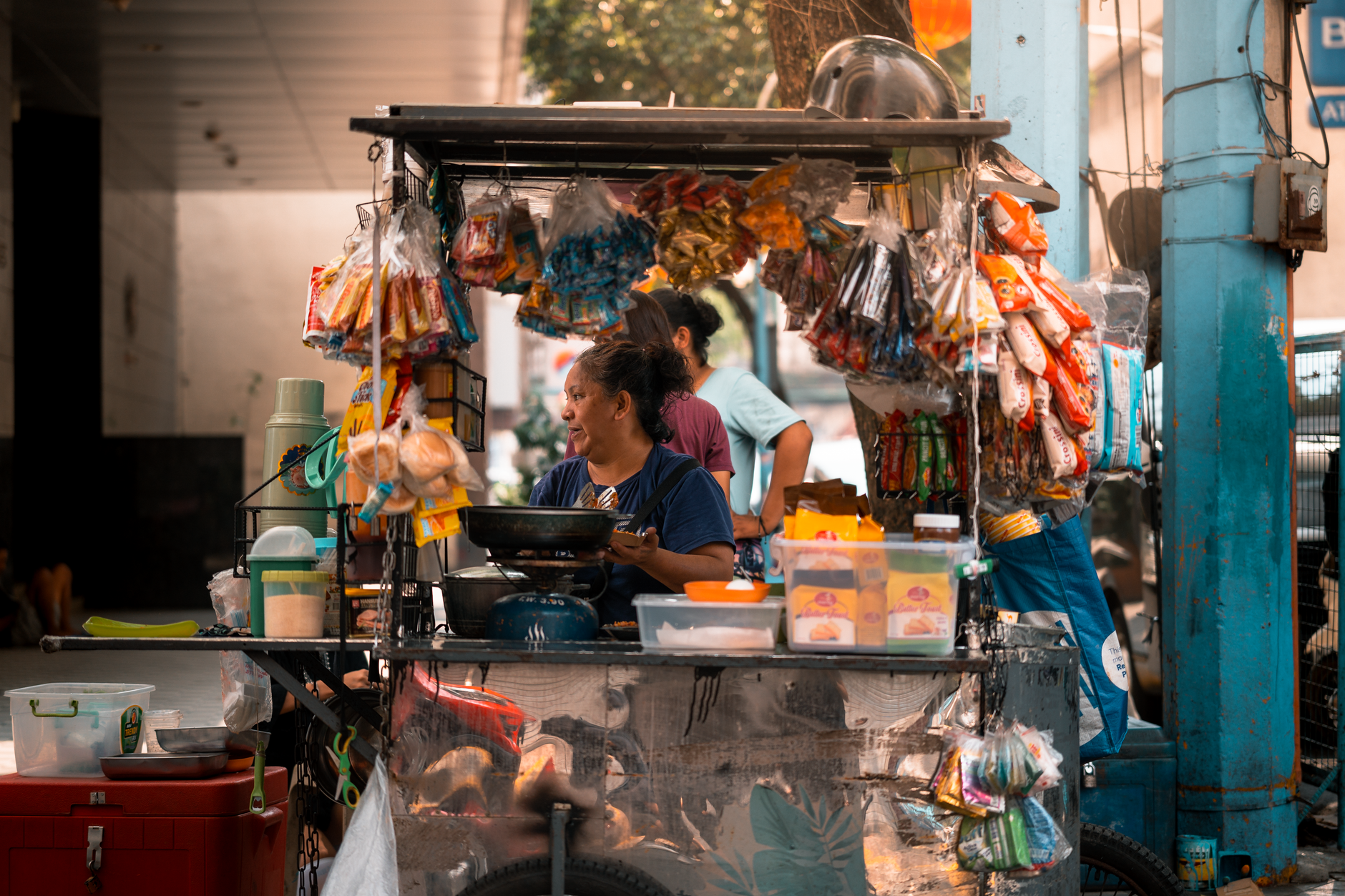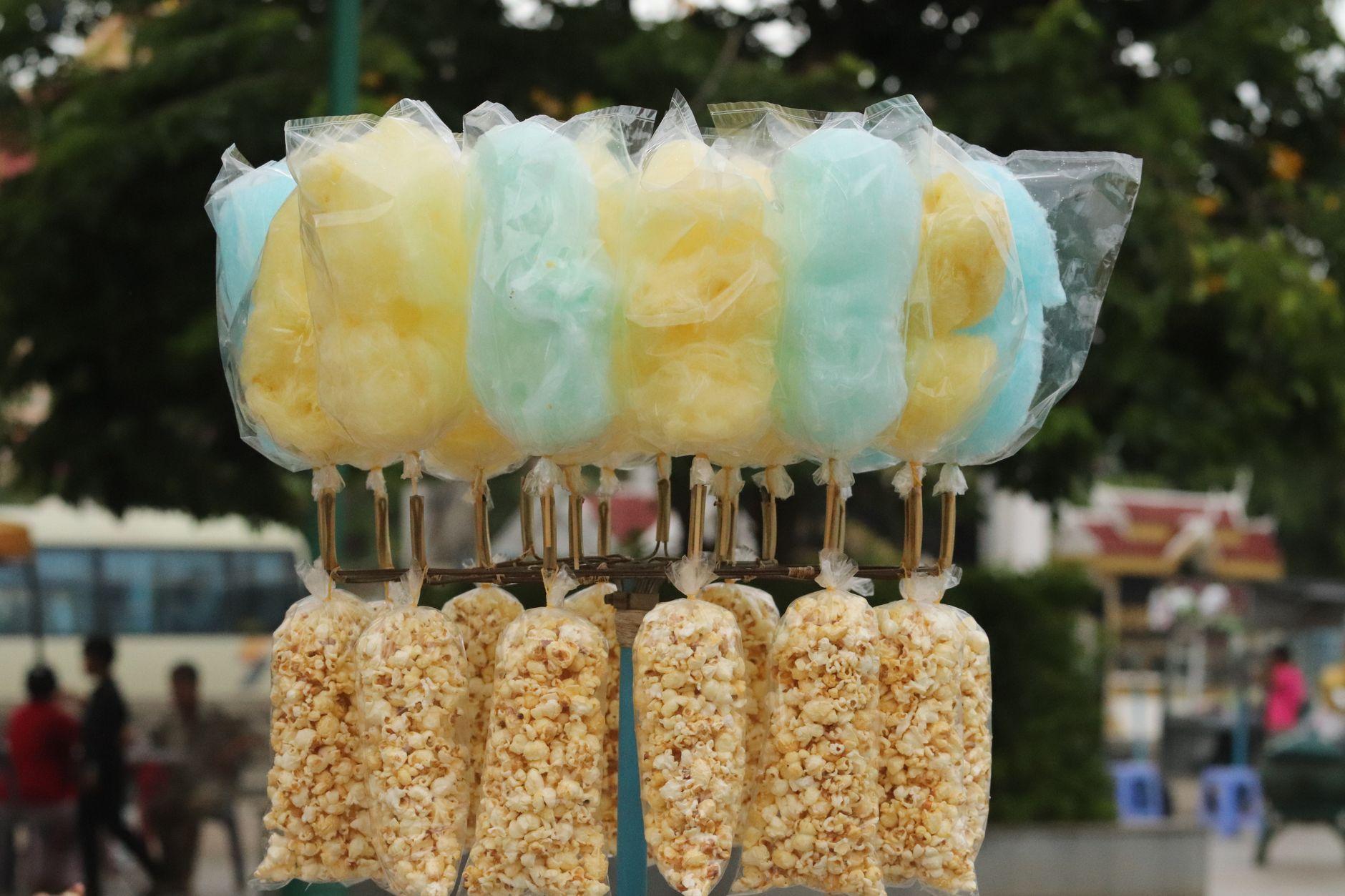

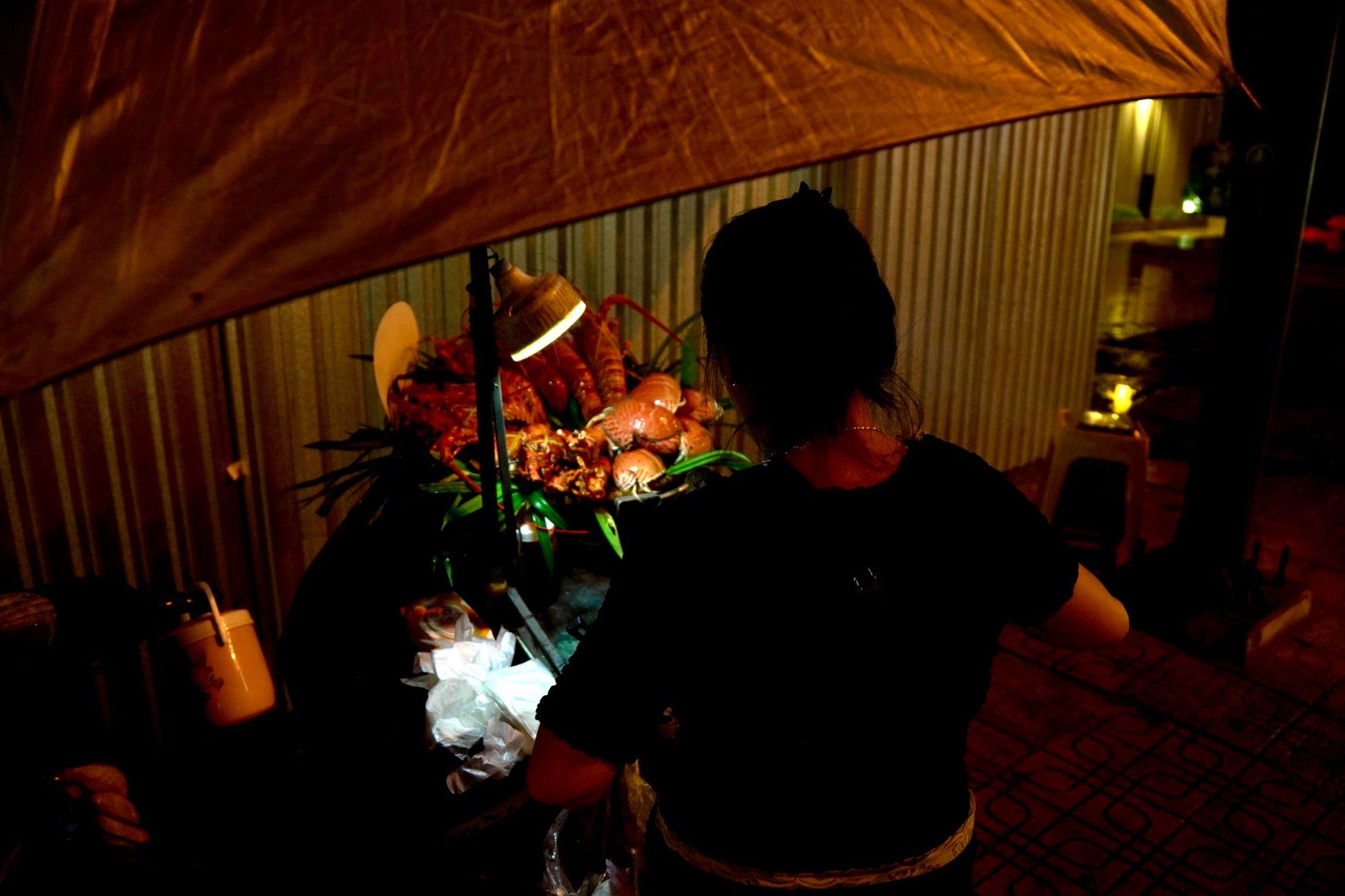
The grilled Mekong fish at the Luang Prabang night market costs 40,000 kip. You hand the vendor a 100,000 kip note, she squints at it, calls to her neighbor, rummages through a tin box, and eventually hands you back a brick of small bills that turns your wallet into a doorstop. The woman next to you, a local, holds up her phone, taps twice at the laminated card zip-tied to the stall's umbrella pole, and walks off with her fish in about four seconds.
That laminated card is a LAO QR code, and it has quietly changed what paying for street food in Laos looks like. If you are heading to Vientiane or Luang Prabang in 2026 and wondering how to pay in Laos without turning every meal into a math problem, this is the piece to read.
Why the kip makes markets harder than they should be
The Lao kip comes in big denominations, and street food comes in small prices. A bowl of khao piak sen, a sticky rice basket, a fruit shake, a bag of grilled bananas: these are small purchases, and when you pay cash for a day of them, you accumulate notes fast. The wallet that felt fine at breakfast is bulging by dinner, and you are doing arithmetic with lots of zeroes every single time, often by headlamp at a night market stall.
Vendors feel this too. Nobody running a sticky rice stand wants to break your biggest note at 7 a.m. before anyone else has bought anything. Showing up at a market with only large bills from the ATM is the single most common friction travelers hit in Laos, and it is entirely avoidable.
The ATM trap that makes everything worse
Here is the part that catches people off guard: ATMs in Laos tend to have low withdrawal limits and meaningful fees per withdrawal. So the obvious plan, pull out a big pile of kip once and live off it, does not really work. You end up making repeated small withdrawals, paying a fee each time, and you still walk away with the same oversized notes that vendors struggle to change.
This is exactly the situation where going cashless in Laos stops being a convenience and starts being a strategy. Every meal you pay by QR is a meal that did not come out of your limited, fee-laden ATM allowance.
LAO QR: the laminated card on every other stall
LAO QR is the national QR standard, and in Vientiane and Luang Prabang it has spread well beyond cafes and hotels into the places travelers actually eat. Morning market produce ladies, noodle soup stalls, the sausage grillers along the riverfront, fruit shake carts near the tourist streets: a surprising number of them now have a printed QR code taped to the cart, propped against the condiment tray, or hanging from the awning.
Locals scan these with their Lao banking apps. As a visitor, you cannot open a Lao bank account for a two week trip, which used to mean you were locked out of the whole system. That is where Moreta Pay comes in: you top up a wallet from your own bank or card at home, in your own currency, then scan the same LAO QR codes locals use. The app shows you the amount in kip, the exchange rate, and the merchant name before you confirm, the wallet converts on the spot, and the vendor gets paid instantly in kip. No Lao bank, no special merchant setup on their end, no awkward pantomime about change.
We went deeper on the overall money landscape in our guide to what has changed about money in Laos, but for market eating specifically, the short version is this: QR is no longer the exception at stalls in the two big tourist cities. It is becoming the default.
A night market food run, scan by scan
Here is what a realistic evening at the Vientiane night market or Luang Prabang's food street looks like when you lean on QR:
- The buffet plate stall. Fixed price, fast line, QR card taped to the table. Scan, check the amount matches what the vendor says, confirm. You are through faster than the person counting notes behind you.
- The skewer grill. You point at four skewers, the vendor types the total into her phone or just tells you the number. You enter it, show her the confirmation screen, done. Showing the success screen is the local etiquette; vendors want to see it.
- The fruit shake cart. Smallest purchase of the night, and honestly the best use case. A tiny purchase paid by QR is a tiny purchase that did not require anyone to find change.
- The grandmother selling sticky rice baskets at the edge. No QR, cash only, and she would prefer small notes. This is why you still carry some kip (more on that below).
If you have already traveled through Thailand and gotten used to scanning PromptPay for every bowl of noodles, the rhythm here will feel familiar, just a step earlier in its rollout. The same habits that work at a Thai khao soi stall transfer almost directly, and Moreta Pay works across both systems from the same wallet.
How much cash you still actually need
Do not go fully cashless in Laos yet. Outside Vientiane and Luang Prabang, and at the oldest or most informal stalls even inside them, cash is still the answer. Tuk-tuk drivers, village markets on a Kuang Si waterfall day trip, the sticky rice grandmother: kip territory.
The practical balance for most travelers: keep a modest reserve of kip, deliberately broken into small notes (buy something cheap with a big note early, at a minimart or busy stall that can handle it), and pay by QR everywhere a code is displayed. Your cash lasts far longer, you visit the ATM less, and each withdrawal's fee gets spread across a much smaller share of your spending.
Three habits that make this smooth
Top up before you are hungry. Fund your wallet over hotel wifi in the morning, not while a queue forms behind you at a grill.
Always read the confirmation screen. Amount in kip, FX rate, merchant name. It takes two seconds and it is your protection against typos, theirs or yours.
Ask with the phone, not with words. Holding up your phone with a questioning look is universally understood at Lao stalls. If they take QR, the laminated card appears immediately.
The night markets of Laos are one of the best cheap-eating experiences in Southeast Asia, and the money part should be the easiest bit of your evening, not the hardest. Set up Moreta Pay before you land and the laminated QR card on the umbrella pole becomes yours to use too.